Wall angels have been my 'saviour' for improving my posture and back mobility without really trying - here's how to do them
The experts (including an osteopath, personal trainer, and Pilates instructor) all agree that wall angels are worth adding to your routine


Shortly after discovering that I've started to groan when picking things up from the floor, I discovered wall angels. My back has felt stiffer than it did when I was in my 30s, and I've been worried that the hours spent at my desk every week have been giving me a 'hump' for a while, but this was eye-opening.
I regularly do strength training at home, Pilates roll-ups in my bedroom, and get outside for a walk in a weighted vest often, so I think I'm fitter than most. However, this told me I'd missed something off the list of exercise benefits. It was time to bring my back, shoulder, and neck mobility up to scratch.
I heard about wall angels from a friend with the same goal, and then spoke to a selection of experts to discover the benefits of this underrated movement. As one of the best back exercises, wall angels engage your scapula (shoulder blades) and easily correct your posture.
What are wall angels?
Wall angels (sometimes known as a 'V to W' exercise) are an easy exercise that focuses on posture and mobility. It's done standing up and leaning against a wall, and you move your arms up and down slowly, going from a V-shape above your head to a W-shape (with your head as the middle) near your shoulders.
This exercise isn't only useful for improving your back mobility and posture, says osteopath Anji Gopal from the BackCare Foundation. It can be useful to work out whether you need support in this area, as the wall "gives us instant feedback on how the body is positioned".
She says: "We get used to rounded shoulders, through work and phones and life, so it can be helpful to lean against the wall to remember what not hunching feels like."
How to do wall angels
- Stand with your heels about 15 to 20cm away from the wall, with your buttocks, back, shoulders, and head touching the wall.
- Keeping your knees 'soft', try to maintain a neutral spin.
- Bring your belly button towards your spine, holding your ribcage against the wall and your lower back slightly away from it.
- Tuck your chin to your chest, and try to keep the back of your head against the wall.
- Bring your arms up into a V above your head, with the backs of your hands touching the wall.
- Bend your elbows and slide your hands down the wall until they are just above your shoulders while inhaling.
- Hold your arms in this position for a count of 5.
- Exhale, and slide them up to a V again.
- Aim for five to 10 repetitions.
Floor alternative to wall angels
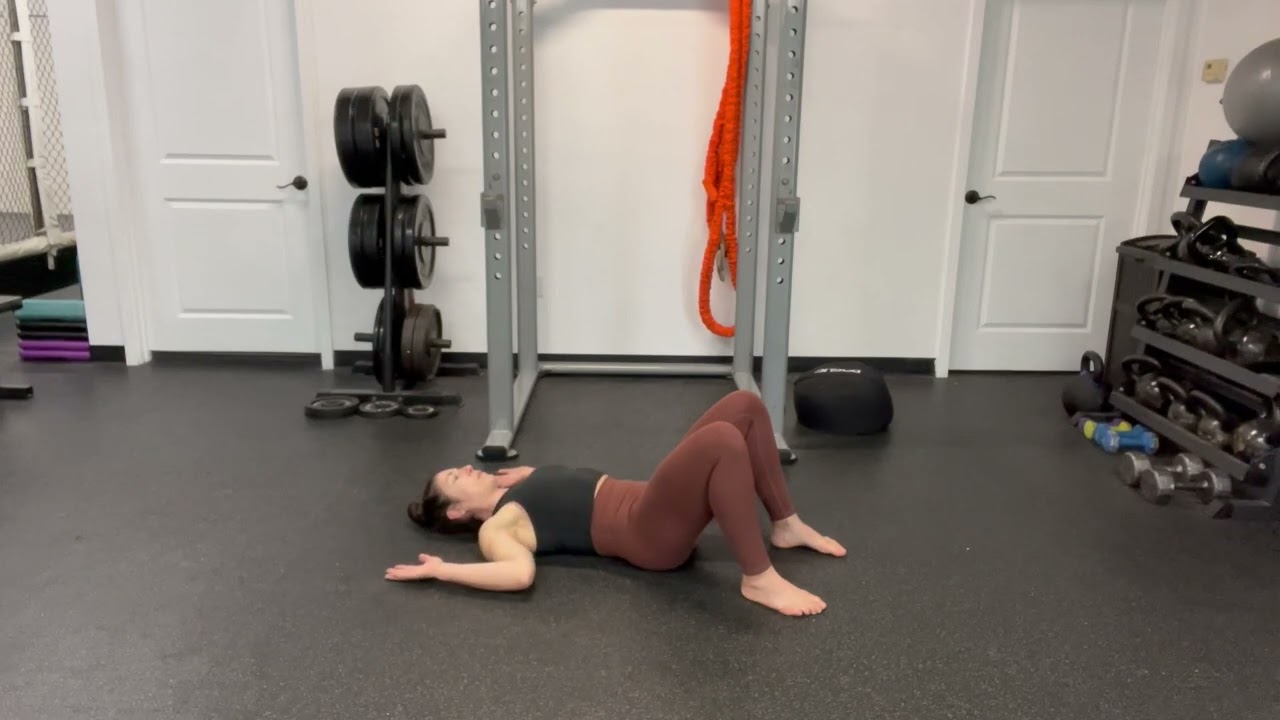
If you have trouble with this position for any reason, you can do floor angels instead. As the name suggests, this is the same movement but on a thick yoga mat instead of against a wall.
Here's how to do it:
- Lie on your back, knees and elbows bent.
- Slide your arms upwards until your hands meet overhead or as close as possible.
- Take a breath in and out.
- On the exhale, bring your arms back down as far you can, making a 'W' shape with your head between your arms.
Benefits of wall angels
1. Relieving tension in the upper back
Wall angels can help relieve tension in the upper back, which is particularly useful for those of us who work hunched over a desk. Rebecca Dadoun, a certified Pilates teacher and the founder of Pilates Prescription, says the exercise "won't fix" back pain or aches, but they "do create more space and movement in commonly stiff areas".
She says: "By gently mobilising the shoulder blades, wall angels help release tension in the upper back and shoulders."
2. Boosts scapula control
Wall angels “help you reconnect to the muscles that stabilise your shoulder blades,” says Rebecca. She says this will improve your posture and support healthier movement patterns. “It’s less about building brute strength and more about coordination and control,” she explains.
Better scapula control could also help you master other resistance training exercises, as most of them, including deadlifts, chest presses, and pull-ups, require some back engagement.
“They bring awareness to alignment, gently engaging postural muscles so your body relearns how to hold a more upright, supported position,” says Rebecca.
3. Stretches out the back muscles
Wall angels also stretch other muscles in the upper body, including the chest and muscles on the front of the shoulder.
For those who love an upper-body dumbbell workout or similar, this exercise can be an effective way to loosen up muscles that become tight and shortened through exercises like the bench press.
4. May boost strength
If you're new to working these muscles, you may find that wall angels are all you need to start building upper-body strength, as it'll be a challenge you're not accustomed to.
Anji says once you've mastered your technique and improved your posture, you can add dumbbells and kettlebells, or resistance bands, to work your muscles even harder.
5. Improves core strength
Wall angles might be a back exercise, but they are also one of the better core exercises to do at home.
“Connecting the movement pattern with the breath will naturally help with core connection, leading to a stronger core," says PT, Pilates instructor, and London fitness coach Fiona Kavanagh.
Your core muscles need to stay strong to keep your trunk stable, which is another reason why these exercises can be so effective.
How often should you do wall angels?
Wall angels can be done every day without issue for most people, the experts agree. “While the benefits will differ from one client to the next, I recommend these to be done daily, especially if they have a very physical job or are sedentary," says Fiona.
"Anyone who spends a great deal of time in a hunched-forward position, like a desk worker, content creator, or beautician, would benefit immensely from adding daily wall angels."
The brilliant thing about them, Anji adds, is that "there's a wall pretty much everywhere, so if you notice you're slumping or hunching, stand up, stand against a wall, roll those shoulders, and stand up."
