Goodbye, plank - I swapped it for the dead bug exercise, now my core and lower back are stronger than ever
It's been a year since I started doing the creatively-named dead bug exercise in favour of the classic core exercise


I won't lie - I've never been a fan of the plank exercise, and in the summer last year, I decided I needed to work on my core strength. Looking at options, the dead bug exercise appealed the most, having done it in my Pilates workouts a few times.
All you need to do a dead bug is a comfortable, thick yoga mat or a comfortable spot on the floor, if you're doing this core exercise at home. I quickly got stronger doing this move, so I added in a couple of light dumbbells a few months ago and saw my strength skyrocket, so I'd recommend doing that when you can.
As the name might suggest, the dead bug is done lying on your back with your legs at a 90-degree angle and arms straight up. It takes a moment to get your head around, but when you do, you'll see the benefits for your joints, lower back, and full-body stability, as well as core strength.
What is the dead bug exercise?
The dead bug is a core exercise, but it also engages muscles in the hips, back, and pelvic floor, making it a great go-to for anyone looking to build full-body fitness in a strength workout or Pilates workout at home.
It involves lying on your back and extending the opposite arm and leg, while bracing your core and pressing your lower back into the floor.
This one is a functional exercise, too. It mirrors real-life movement, says Rachael Sacerdoti, a certified personal trainer, strength specialist, and the founder of It's So Simple. "We are constantly moving our limbs in different directions while needing our core to stay stable, and dead bugs train this skill precisely," she says.
"They teach your body to maintain perfect spinal alignment while your arms and legs are moving independently. This translates to better posture, more control, and improved balance."
How to do dead bugs
- With a yoga mat underneath, lie down on your back with your knees bent.
- Bring your knees up into a 'tabletop' position (that's with your knees bent at 90 degrees), keeping a natural curve in your spine.
- Make sure your lower back stays on the floor, though.
- Raise your arms and point them straight up to the ceiling.
- Push your right leg forward while raising your left arm over your head at the same time. Make sure to do it in a controlled manner, so you can keep your core engaged.
- Bring your arm and leg back to the starting position.
- Switch and repeat the movement on the other side.

I use the Stakt Mat for my dead bug exercises. It's thicker than most at 12mm thickness, so it's very comfortable to lie down on, and folds lengthways so you can also use it as a yoga block for stretching.

I appreciate that the £115 price tag of the Stakt mat isn't suitable for everyone, and there are plenty of good alternatives. This 6mm mat from Gaiam is my second favourite and still offers enough support under the back to be comfortable.

The most common mistake I see people make with dead bugs is using a weight that's too heavy. 1 to 5kg is enough to see results, and I'd always recommend going lighter to begin with to avoid discomfort and potential injury.
Can you do dead bugs with weights?
Adding weights to your dead bug exercise is a "brilliant way to challenge your core even further", agrees Rachael. "I'd recommend progressing to dead bugs with weights, but only once you've mastered the basic movement," she says. "It's a simple way to increase the intensity, without compromising your form."
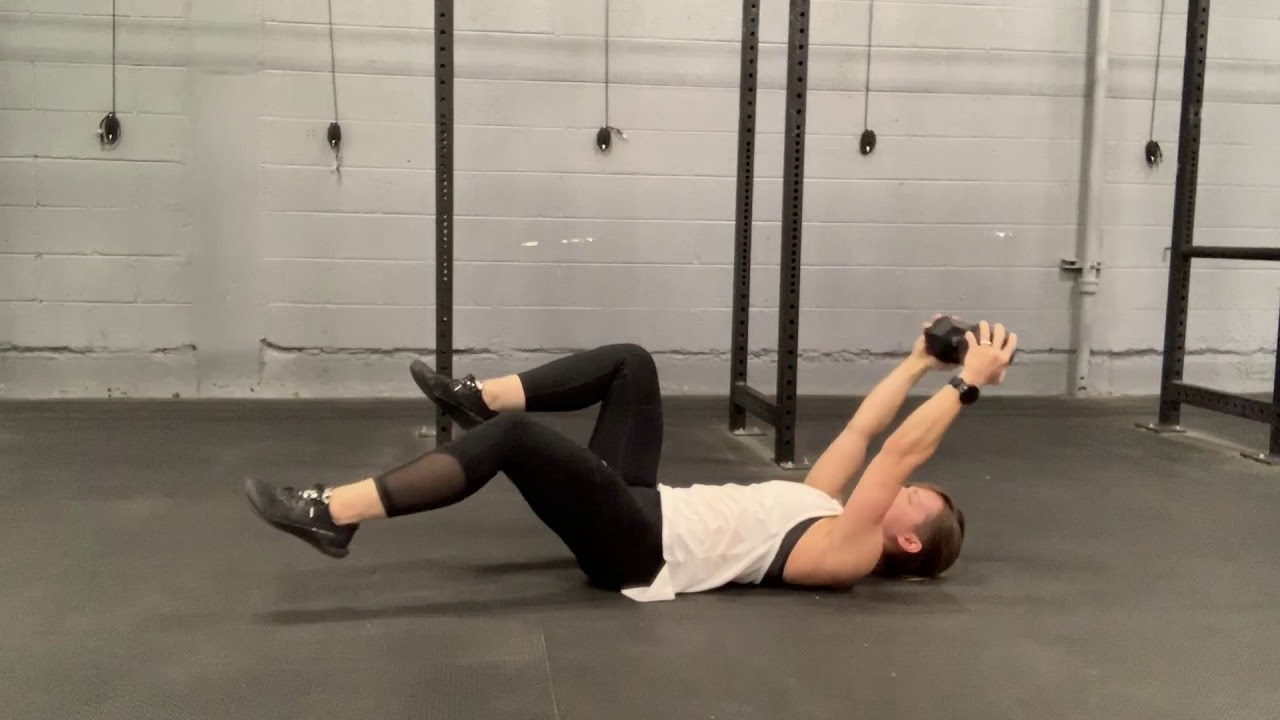
How to do dead bugs with weights
- Pick up a set of light dumbbells or wrist weights.
- Keep your lower back gently pressed into the mat throughout the movement and complete the dead bug as before.
- If you feel your back arching, you've gone too heavy too soon.
- If two weights are too much, start with a single dumbbell with both hands above your chest while performing the leg movements.
- Once that feels comfortable, graduate to holding weights in each hand and/ or adding ankle weights for extra burn.
How often should you do dead bugs?
Typically, to see benefit from an exercise, you need to do it a few times a week, but the dead bug is lower-impact than many other strength exercises. You could do it every day if you wanted to.
Do the exercise for three sets of 15 repetitions per side to maximise strength, and hold the position at the top (where your legs and arms are the furthest away from each other) for at least one second.
What muscles do dead bugs work?
- Core: The dead bug focuses on the rectus abdominis, the muscles that run straight down the middle of the belly; the transverse abdominis, stabilising muscles that wrap around the spine; and the obliques, muscles on both sides of your middle that help with rotating and bending over sideways.
- Lower back muscles: The rector spinae muscles and the multifidus, which sit around the spine and help you bend over and sit up straight, are a focus.
- Hip flexors: If you're a runner, hiker, cyclist, or you spend a lot of your day sitting down, you'll want to work these small muscles. They sit at the front of the hip and help you bend your legs.
- Pelvic floor muscles: These sit in a sling between the front of the pelvis and the tailbone, supporting our organs. As you brace your core, you engage the pelvic floor muscles.
Plank vs dead bugs
- For beginners: Both the plank and the dead bug are good options for those new to strength training. "They are perfect for women at any fitness level," says Rachael.
- For lower back pain: If you're like me and the plank feels uncomfortable, then the dead bug is a great alternative. "As they are performed lying down, they are ideal for managing niggling lower back pain or wrist issues," she says.
- For convenience: "Both of these body-transforming exercises require minimal equipment but deliver maximum results," says the trainer. "You can also fit them into a busy schedule."
- For everyday life: Being one of the best exercises for longevity, the dead bug can help you stay mobile for longer in life. "They are an absolute game-changer for anyone needing functional strength," she says.
- For endurance: Planks will likely be the better choice. "They work wonders for your entire core, building up that enviable endurance when performed correctly," says the personal trainer. "When your hips start to sag, you're not getting those tummy-tightening benefits anymore."
