I switched to the Copenhagen plank a year ago - 4 ways it's better than the traditional one for building core strength and stability as a beginner
The Copenhagen plank is as challenging as it is rewarding and leaves few muscles untouched, making it brilliant for building strength and stability


If you're a runner or a hiker like me, you'll know the importance of having a strong core. It's also essential for everyday movements like twisting and bending down. Last year, a trainer told me they'd swapped the regular plank for the Copenhagen plank, and I did the same after hearing the benefits.
The Copenhagen plank appealed to me more than other core exercises and side plank variations I've tried in the past. I could support myself throughout the movement, so I avoided wobbling while still challenging my balance and stability. In a regular side plank, where you rest on your feet, I find there's not enough support. I spend more time readjusting to avoid pushing my ankles into the floor than actually doing the exercise.
The foot elevation in the Copenhagen plank helps with this. Mark Harris, level 4 PT and Mirafit ambassador, says the biggest difference between a Copenhagen plank and other varieties is the muscles they target.
"This plank shifts the emphasis towards the muscles along the sides of the body, particularly the adductors on the inside of the thighs," he says. "It's performed one side at a time, so it's also a useful unilateral exercise that can help identify and reduce side-to-side imbalances."
How to do the Copenhagen plank
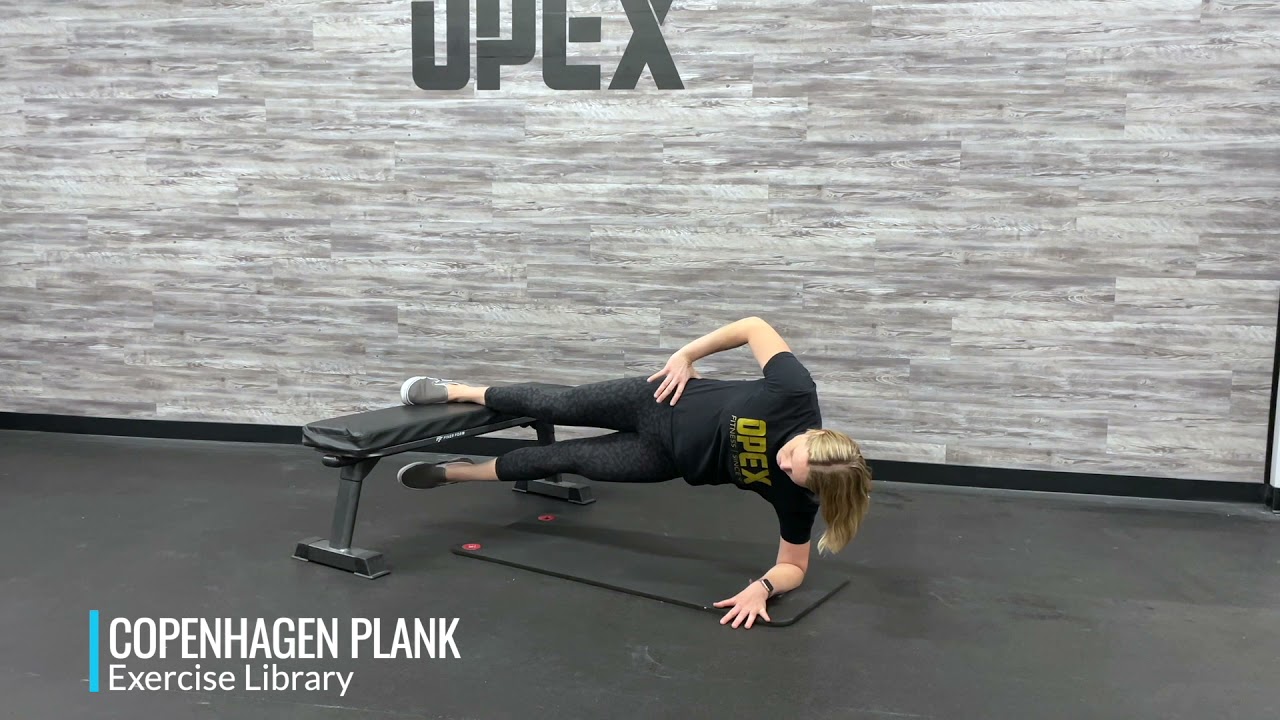
- Bring a weight bench or stool (if doing the exercise at home) near your feet.
- Come down into a plank, resting on your forearm. Make sure your elbow is under your shoulder.
- Place the inside of your top foot onto the bench or stool.
- Engage your abs and squeeze your glutes. Drive your hips up to the ceiling.
- Your body should form a straight line from head to foot.
- Hold the position for at least 15 seconds, then switch sides.

I'd say a thick yoga mat should be part of everyone's essential home gym kit. This one is under £15, seriously supportive at 10mm thickness, and comes in multiple colours. I use my mat under my elbow for cushioning on the ground.

You don't have to have a workout bench to do the Copenhagen plank. In the summer, I've been using my garden sofa. It does have multiple uses, though, making it a great addition to any home gym set up - and will be useful for other full-body workouts.

If you find this exercise too easy, grab a dumbbell. Holding it in your non-supporting hand will challenge your upper-body balance and stability even more.
How to make it easier as a beginner
If the traditional Copenhagen plank feels too difficult right now, simply bend your legs. Prop a knee up on the bench or the stool instead of the inside of your ankle. You'll feel more stable if your body is closer to the bench.
From there, you can work towards straightening your legs on the bench.
What are the benefits of the Copenhagen plank?
1. Boosts full-body stability
The Copenhagen plank is a full-body exercise. When I'm doing it, I can feel my adductors (muscles on the inner thighs), core, glutes (buttocks), and shoulders doing most of the work.
As you rest your arm, your shoulders stabilise to prevent falling. Your top leg has to hold position, and you're pulling it up through the adductor muscles and keeping it level with the glutes. The core engages to keep you still.
These are the primary stabilisers for the move, and I can feel every one of them working hard in the Copenhagen plank. I don't think there's a better exercise for boosting full-body stability.
2. Improves balance
When I first started doing the Copenhagen plank, I'd wobble a bit. Your body is only supported one side at a time and you really have to engage your core muscles, upper- and lower-body stabilisers to resist the sideways pull.
Now, I can hold the position for a full two minutes.
3. Great for runners
Many runners have imbalances - where one side of their body is stronger than the other. I certainly do. I found the Copenhagen plank helps limit this by strengthening the stabilising muscles in the hips.
The most noticeable benefit of this, I've found, is in my running posture. I can keep up a more efficient posture for longer. My runs, whether it's a gentle treadmill workout or a 4x4 workout on the track, feel easier as a result.
How long should you hold the Copenhagen plank for?
I held the Copenhagen plank for 30 seconds at the beginning, graduating to a minute and beyond as I felt stronger. I'd avoid setting yourself big targets with this one as the adductors come under strain you may not be used to, even if you do regular strength training.
I also only did this plank variation twice a week. I felt like it was enough to see the benefits and work towards holding it for longer, without getting bored or feeling too sore.
