A physiotherapist promised me that doing wall sits every day helps prevent knee pain - here are 4 other benefits I've also found
Wall sits are a type of stationary squat that can help strengthen the lower body muscles, from the hips to the ankles


The summer is upon us! Mine involves a lot of family activities with my three energetic children. We’re going to be hiking and paddleboarding in Dorset, plus swimming, cycling and playing football on holiday with friends. I exercise regularly, but I started including the wall sit exercise in my strength training routine as a hiking exercise to make sure my body could keep up.
Knee pain is something I experience from time to time, especially when walking downhill or running. I think it’s an age problem, but it’s not something I want to get any worse, so I asked my physiotherapist for a knee and leg-strengthening exercise I could easily do at home.
Wall sits are an isometric exercise, meaning you do it in one place, completely still. It's a bodyweight exercise and an underrated way to strengthen all the muscles in the lower body, from the tiny hip flexors to the largest muscle in the body - the glutes.
“Strong muscles are a stress shield to your joints," explains Helen O’Leary, physiotherapist at Complete Pilates. "If you already have knee pain, the wall sit exercise can be particularly helpful for relieving the discomfort for some people, especially if you can’t tolerate moving your knee through range.”
How to do the wall sit exercise
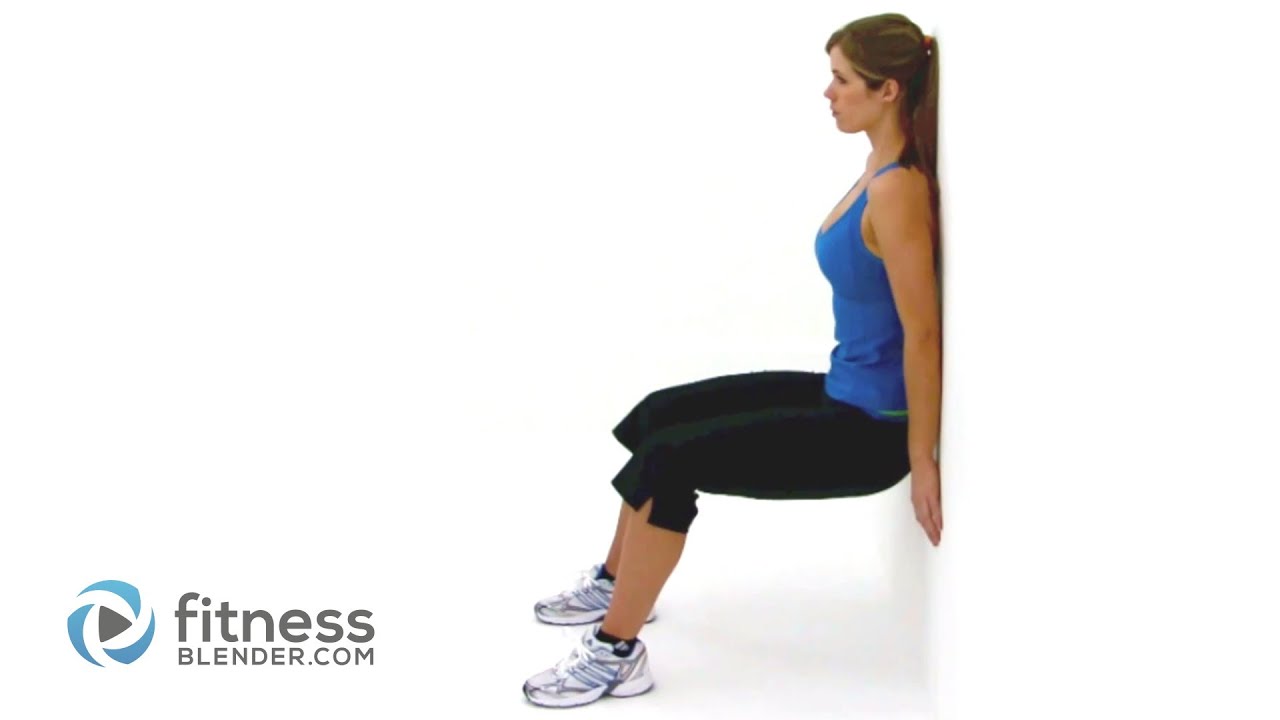
- Stand around a foot away from the wall, with your back to it and your feet hip-width apart.
- Keeping your whole back against the wall, side down until your knees are bent to about 90 degrees.
- Hold this position for about 30 seconds if you can.
- Stand up by driving through your heels.
- Repeat three times.
Benefits of wall sit exercise
1. Reduces knee pain
The wall sit exercise works to reduce knee pain as it strengthens the quadriceps (thighs) without putting pressure on the joint, as you would in a squat, lunge or other quadriceps exercise.
Doing an isometric exercise like this one also helps to build endurance and stability in the area, which works to reduce pain as well. Exercises that put a lot of pressure on the knee, like running and hiking, require this.
I'm looking forward to pulling on my walking shoes this summer and feeling lighter on the downhill as a result of doing this exercise.
2. Builds leg strength
I found that doing three sets of 30-second wall sits every day for two weeks really improved my leg strength. I do a lot of squats during my weekly Pilates and weight training sessions, but I rarely have to hold my legs in position for as long as a wall sit requires.
The first few times I did it, my thighs shook, and I felt incredibly hot and sweaty. It reminded me of how I feel when I have to hold a plank. But as the weeks went on, my quads, hamstrings and calves became used to the static position, and I was able to sit with my hips lower.
Moving my feet impacted the intensity. When I pressed the ground through the balls of my feet, I could feel a greater burn in my quads. When I pressed into my heels, I could feel it more in my glutes. If I pulled my heels back, I could feel it more in my hamstrings.
3. It switched on my core muscles
The core is important when doing a wall sit. You need to maintain an upright posture and keep your back on the wall, and this uses the abdominal muscles, obliques, and lower back.
As the seconds built up, I could feel these muscles switching on to support my stability and help me maintain good posture against the wall.
4. Good for heart health
Research published in the British Journal of Sports Medicine found that isometric exercise can help lower high blood pressure in those with mild elevation, Helen points out.
“In the research protocol, the wall sit is recommended for two minutes," she tells me. "Make sure you are not holding your breath for this time, as it can actually increase blood pressure instead."
5. A mindful moment
Focusing on how you breathe when exercising can improve stamina and lung capacity, but it can also increase the endorphins that flow around the body post-exercise.
I used breathwork to help me get through the pain and shakiness of my legs during my daily wall sits, and found that inhaling through my nose and exhaling through my mouth made the time go faster and helped me stay in position for longer.
It was also a mindful moment in my day, giving me a chance to turn my brain off for a moment. Life is busy but taking time away from my desk to just lean against the wall, breathe and wake up my muscles after sitting down felt so lovely. It became a welcome screen break, even with some mild discomfort.
How to make the wall sit exercise easier
There are adaptations you can make to avoid aggravating or causing any injuries. Helen says you can “reduce the time that you hold the exercise for. You might need to start with 5 or 10 seconds and build up your endurance gradually”.
You can also “reduce the range of motion", she says. "Slide only half the distance if you need to. This will be helpful if you sense that you may struggle to slide back up the wall again."
Anyone can do a wall sit of some kind. You can also experiment with taking your feet wider or moving closer to the wall, holding onto two chairs for support as you lower down or rise to stand.
As you get stronger, you’ll notice you can bend deeper and hold the position for longer. You might even be able to hold a couple of light dumbbells at the same time.
If you really struggle to do a wall sit, squats or sit-to-stand exercises, where you sit down on a chair and strengthen the leg muscles by rising to standing without using your hands, are good alternative quadricep exercises.
Speak to a physio or PT if you have any questions about your form or whether wall sits are suitable for you.
