Move aside, Reformer - this expert instructor's 15-minute standing Pilates workout improves mobility and stability like nothing else
Rachel Lawrence's beloved workout boosts strength, joint mobility, and core stability in just 15 minutes, and you can do it at home


Standing Pilates is a unique approach to the strengthening workout. It utilises the same key principles of classic Pilates, like core control and mindful exercise, but in the upright position.
For those wanting to focus on stability, mobility, or pressure on the back from lying down, it's a great alternative to a full-body Pilates workout on the mat. "Not everyone can access the 34 classical mat exercises, myself included at times, and I've been teaching for years," says Allie Ryle, a qualified mat and reformer Pilates instructor at The Fitness Group. "Standing Pilates allows us to adapt core principles into positions that feel functional, achievable, and scalable. It can also build strength and control in the positions we use in day-to-day life, which often makes the benefits more noticeable more quickly."
Article continues belowStanding Pilates workout
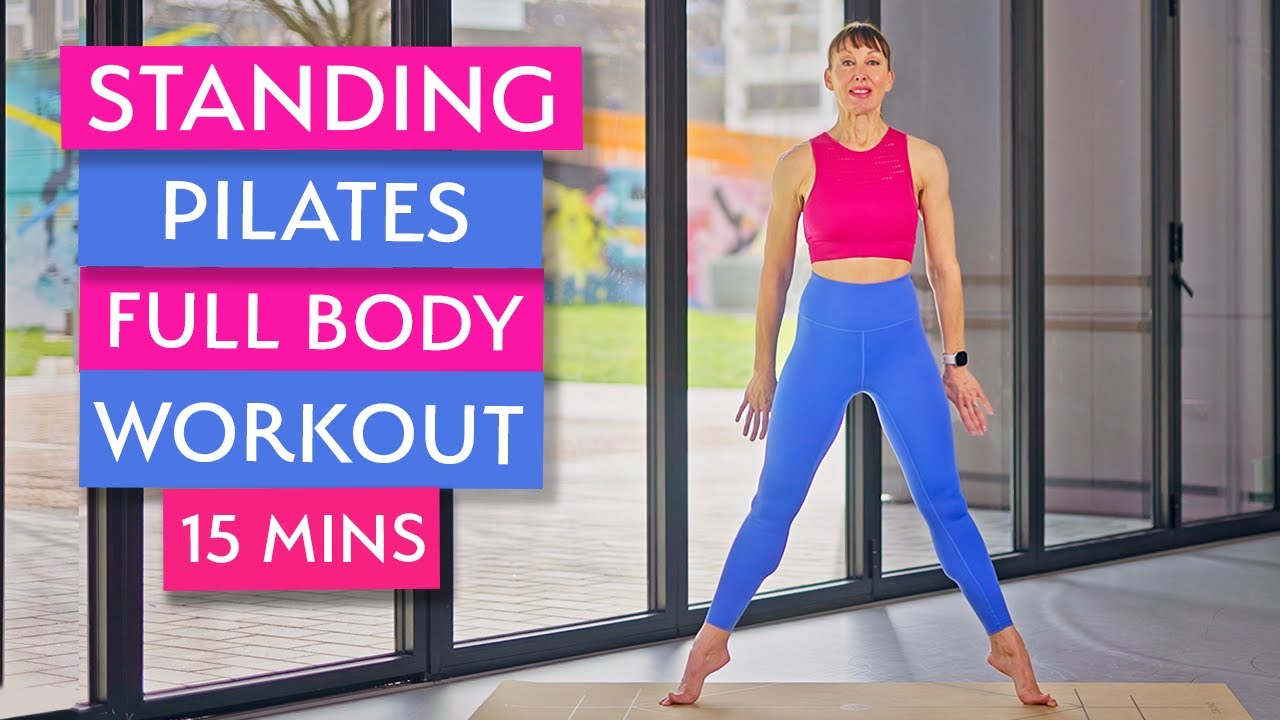
- Warm up: Stand with your feet hip-width apart, pull your stomach muscles in. Bring your shoulders up, back, and around. Tilt your head over to the side, come back up, and tilt to the other side. Rotate your head to one side, then back to centre. Bring one arm up over your head and bend to the side, lower down, and repeat on the other side.
- Rotation: Interlink your hands and put your arms behind your head. Press the back of your head into your hands. Slow and controlled, keeping your hips still, rotate from one side to the other.
- Knee raises: Bring your arms out to the side with your palms up. Bring your right leg forward, pulling your abdominal muscles in. Lift your knee up and bring it back down. Repeat six times, then switch sides.
- Side leg raises: Hands come out with palms forward, opening out your shoulders. Bring a leg out to the side, lift and lower. Repeat six times, then switch sides.
- Back leg raises: Turn sideways, bring a leg behind you. Arms forward, palms up, lean into your front leg. Bring your back leg up, lift and lower. Repeat six times, then switch to the other leg.
Load the next instructions ↴ or follow the YouTube video above
- Plié Squats: Bring your legs out wider than hip-width apart, turning out your feet slightly from your hip. Bend your knees, bringing your arms up in front of you simultaneously. Push back up. Repeat six times, then on the sixth repetition, lift onto your toes, pulling your core in.
- Plié Squats with heel raises: Complete the same movement above with the heel raises at the top of the movement. Repeat another six times.
- Bow and arrow: Turn to the side, square your hips. Bring one leg out behind you and bend both knees. Bring your arms forward, turn your palms to face each other. As if you were pulling back a bow, pull one arm back, pushing your elbow behind you. At the end of that movement, slowly rotate your upper body to the same side. Push your arm back to the starting position. Repeat six times, and on the last movement, straighten out your bent arm, opening up your upper body. Hold here for eight pulses. Switch sides.
- Side lunges: Face forward with your legs more than hip-width apart. Controlled, bring one leg out to the side and squat gently. Repeat six times, then pulse for 10 on the last repetition. Repeat on both legs.
- Reverse lunges: Stand with your feet hip-width apart. With control, bring one leg back and come down into a lunge by bending both legs. Push up and return to standing. Repeat six times. On the final repetition, stay at the bottom of the movement and pulse for 10. Repeat on the other leg.
- Pelvic tilt: Come to standing, bring one leg out behind you and bend both knees comfortably. Tip your hips forward and back, thinking of pulling in at your core. Repeat six times. Switch legs and repeat.
Is standing Pilates effective?
Yes, standing Pilates is an effective way to practice the exercise. Just like regular Pilates on a mat, it improves core strength, posture, flexibility, and full-body awareness through slow and controlled movements.
Speaking on her own workout, Rachel said: "Standing exercises are really good for improving leg strength, joint mobility, particularly ankles, knees, hip, and back strength, not to mention core stability."
She says the routine also raises the heart rate, challenges balance and coordination, and builds "real strength and muscle tone in the legs". It's also suitable for all levels, as both a warm-up and a stand-alone routine.
It's also one of the best exercises for longevity, says Rachel, as many of us don't practice moving from side to side as we age. As our proprioception declines, this can cause problems. Standing Pilates can help counteract this.
Standing vs Mat Pilates
- Standing Pilates challenges balance and proprioception more: "You’re working against gravity in a less stable position," says Allie. In mat-based Pilates, you'll have a lower centre of gravity, which can help you feel more stable.
- Mat Pilates may be better for beginners: If you're new to the exercise, you may be better off starting with mat-based sessions, like a quick 15-minute Pilates workout. These will focus on foundational exercises and core strength, without the additional challenges of being standing.
- Standing Pilates may be more of a full-body exercise: "Standing variations often recruit more muscle groups at once. Movements like standing leg lifts or lunges integrate the core with the hips, legs, and upper body, giving you a more holistic, full-body challenge," she explains.
- Mat Pilates is easier on joints: Doing Pilates and yoga over 60 is often recommended as it's easy on the joints post-menopause. When standing, this benefit isn't there so much as you put weight on your hips, knees, and ankles.
- Standing may help improve posture more: Doing Pilates while standing "counteracts the postural issues we’re seeing more and more in a seated, screen-heavy world," she says. "Standing exercises encourage better spinal alignment and strengthen the postural muscles that often become underused."
Is standing Pilates good for beginners?
Yes, while mat-based Pilates may be easier to grasp for those new to the exercise and it's easier on your joints, anyone doing Pilates for beginners can certainly benefit from this workout, regardless of their level of experience. It follows the same core principles of regular Pilates, and you'll find plenty of videos online to follow along with.
For those looking to try it, Allie has the following advice: "Start small and prioritise stability. Standing Pilates can be surprisingly challenging, so begin with supported options. Use a wall, countertop, or the back of a chair to get used to the balance component," she says.
"Focus on good alignment and slow, controlled movement before adding the more exciting variations you might see online. Consistency is far more important than complexity."

You must confirm your public display name before commenting
Please logout and then login again, you will then be prompted to enter your display name.