Not planks or sit-ups - this practical exercise is an underrated way to build core strength
A PT explains how one of the simplest moves in the book not only strengthens your core, but could help you live a longer, healthier life too


A strong core is about so much more than a toned stomach or visible abs: it’s one of the foundations of good health. It improves your flexibility, posture and balance, while helping protect you from injury, and supporting almost every major muscle group. It’s no wonder that core exercises are a common finisher to a workout routine.
But are you overlooking an even simpler way to build core strength? Something so straightforward, it’s akin to carrying heavy shopping? As a way to remain strong and mobile, not just now but well into later life, the simple ‘farmer’s carry’ needs to be part of your regular gym routine.
“The farmer’s carry, [essentially] walking while holding weights, may look simple, but for women in midlife it’s one of the most effective functional exercises you can do,” says personal trainer Kate Rowe-Ham, founder of Owning Your Menopause and author of a new book, The Longevity Solution.
Want to know all about executing one of the simplest moves in the book? Kate explains all the health benefits and demonstrates how the farmer’s carry works, while PT Sarah Campus suggests three alternative exercises that pack a similar punch.
What is the farmer's carry?
The farmer’s carry is a functional exercise, a move that mimics actions we do in real life. In this case, carrying heavy bags. It involves placing two equal weights on either side of your feet, squatting down to pick them up, then carrying them as you walk.
Functional moves tend to be the best exercises for longevity as they address midlife health issues. “Hormonal changes, particularly declining oestrogen levels, can affect muscle mass, bone density, posture and balance. The farmer’s carry addresses all of these in one movement, making it efficient and highly beneficial,” Kate tells woman&home. “It shows that for women over 40, a simple, well-chosen exercise with weights can deliver some of the biggest health wins.”
Kate says this move can be done with either kettlebells or dumbbells, although if you have kettlebells available, you may find them easier to grasp and hold.
How to do the farmer's carry
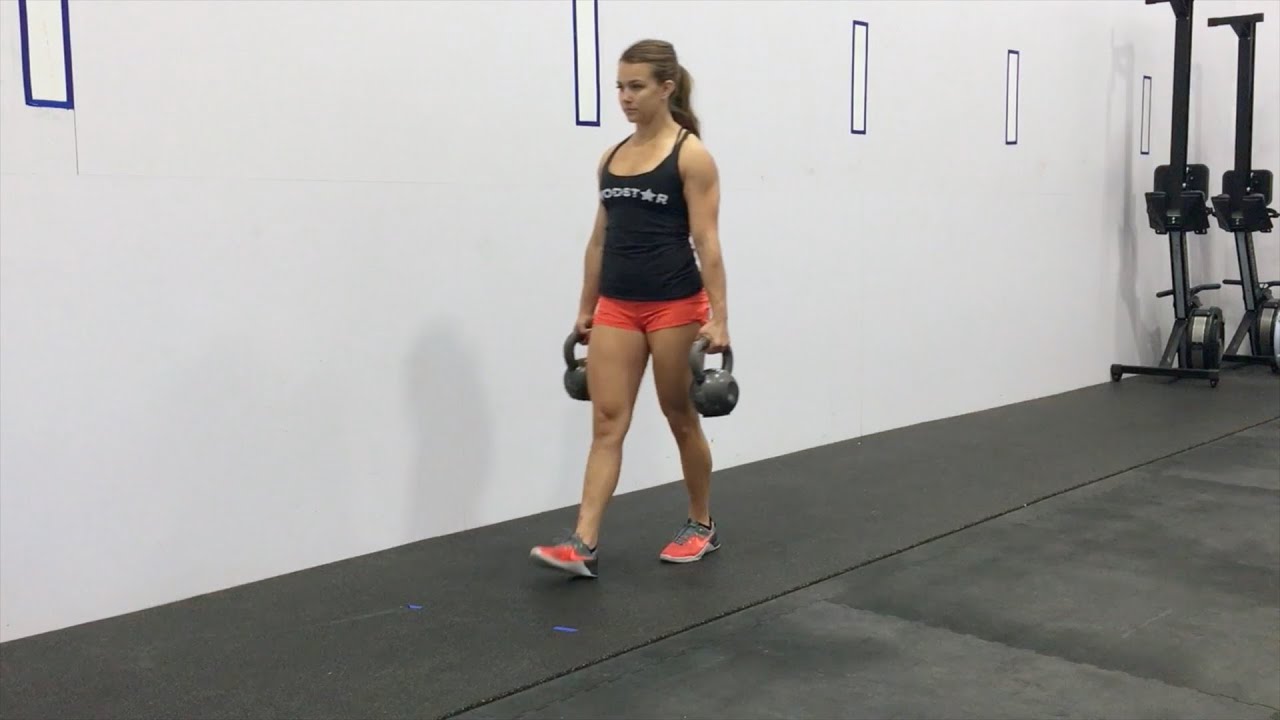
- Place two equal weights on the floor, either side of your feet which should be hip-width apart.
- Engage your core before bending at the knees to pick up a weight in each hand.
- Propel yourself back up through your heels.
- Stand tall with your shoulders relaxed and down, chest open, ribs stacked over hips, and brace your core.
- Walk forward with small, controlled, natural steps (no rushing)
- Keep the weights steady and away from your body, with head up and posture upright throughout.
- Carry for 20 to 30 seconds to start, before bending at the knees to return the weights to the floor.
How heavy should the weights be?
Kate recommends choosing a weight that feels challenging but manageable: “A long-term benchmark is carrying a total load of around 75 per cent of your bodyweight, split between both hands. Beginners should start lighter, around 25 to 40 per cent of body weight, and gradually progress to 50 to 60 per cent.”
She also suggests building the time to 40 to 60 seconds per carry, or aiming for a distance of 20 to 40 metres. She points out that short, controlled carries done consistently are far more effective than pushing to fatigue.

If you're working out at home, you'll need to stock out your studio with some kettlebells to make the most of this exercise. The Phoenix Fitness kettlebells are among the best if you're working with a limited budget and go up to 20kg each.

If you're happy to spend a little more, Digital Health Editor Grace Walsh recommends these kettlebells from Core Balance. "They are made from durable, high-quality cast iron and then coated in neoprene for floor protection (and a fun pop of colour)," she says.

While weight only goes up to 10kg, this Domyos kettlebell has a soft bottom to truly give you peace of mind when it comes to your floors - and for any accidental knocks to you or your home. It has a wide handle for easy grip as well.
What muscles does the farmer's carry work?
In the same way that a plank works so much more than your core, a farmer’s carry works on full-body strength and also improves balance, coordination and grip strength.
Core
Your midsection has to work hard to stabilise you as you walk, so the farmer's carry is one of the most effective ways to build core strength. In fact, a 2024 study found that the farmer’s carry produced greater core activation than other ‘carry and hold’ exercises because it works the core across multiple planes: resisting lateral motion, extension and flexion.
Shoulders, back and hips
Kate explains that carrying weight helps build full-body strength, not just in the core, but also in the shoulders and hips. “Carrying weight also stresses bones, particularly in the spine and hips, helping maintain bone density.”
This makes the farmer's carry one of the best weight training exercises for osteoporosis prevention.
Glutes, hamstrings, quads and calves
Walking while carrying weight will also work the muscles of the lower body. The nature of this movement also helps improve balance, coordination and nervous system resilience, explains Kate.
“This helps reduce fall risk and maintain confidence in everyday tasks,” she adds.
Grip strength
Grip strength is perhaps one of the most overlooked markers of good longevity - and the all-important holding aspect of farmer’s carry is great for improving it, says Kate. A review in the journal Clinical Interventions in Aging found that grip strength is an indispensable biomarker for health in older adults.
The review found that poor grip strength is an indicator of muscle weakness elsewhere in the body, and that improving it can mean much more than opening jars with ease. How well your hands and forearms grip and carry things is linked to your overall strength, bone health, fall risk, sleep quality, mental health and longevity.
A separate UK study even found that poor grip strength in midlife was associated with cognitive decline a decade later. It concluded that interventions designed to increase muscle strength in midlife adults hold promise for maintaining brain health.
Alternatives to the farmer's carry exercise
If you’ve been doing the farmer’s carry for a while or want to round it out with other exercises in a kettlebell workout for beginners, Sarah Campus, women’s PT and holistic wellness expert, suggests the following exercises...
1. Suitcase single arm carry
“This move trains the core to resist side-bending, also known as anti-lateral flexion, which is more demanding than a regular farmer’s carry,” Sarah explains. “[Like the farmer’s carry] it loads the grip and builds shoulder stability and postural strength.”
Here's how to do it:
- Hold one heavy dumbbell or kettlebell at your side (one hand only). Start lighter than you would with a two-handed farmer’s carry as this move hits the core harder.
- Keep shoulders level and don’t lean away from the weight.
- Stand tall, brace your core, and walk slowly with control.
- Switch hands after each set.
2. Trap bar hold
“This has a nearly identical loading pattern to a farmer’s carry, but it allows heavier loads with better balance,” explains Sarah. “It trains your grip, traps, core and legs simultaneously.” You'll need to be in the gym for this one and use a trap bar.
Here's how to do it:
- Load a trap bar and stand up with it as you would at the top of a deadlift.
- Brace your core before lifting, think “ribs down.”
- Keep the bar from drifting or swaying.
- Either walk with it or, if walking space is limited, long static holds also work well.
- Set the bar down with control when finished.
3. Front rack carry
This move creates total body tension, hitting your core and upper back as hard as a farmer’s carry, suggests Sarah. She recommends using lighter weights for this one as it’s more demanding on the torso and elevates heart rate quickly.
Here's how to do it:
- Hold kettlebells or dumbbells against the body at shoulder height, with elbows slightly forward, not dropped.
- Don’t flare the ribs or lean back.
- Brace your core and walk slowly.
- Keep your breathing controlled throughout.

You must confirm your public display name before commenting
Please logout and then login again, you will then be prompted to enter your display name.