Princess Beatrice and Eugenie and the emotional toll of being judged for someone else's mistakes, explained by a psychologist
As we all know, you can’t choose your family - Linda Papadopoulos explains the weight of association


You are now subscribed
Your newsletter sign-up was successful
Want to add more newsletters?

Daily (Mon-Sun)
woman&home Daily
Get all the latest beauty, fashion, home, health and wellbeing advice and trends, plus all the latest celebrity news and more.

Monthly
woman&home Royal Report
Get all the latest news from the Palace, including in-depth analysis, the best in royal fashion, and upcoming events from our royal experts.

Monthly
woman&home Book Club
Foster your love of reading with our all-new online book club, filled with editor picks, author insights and much more.

Monthly
woman&home Cosmic Report
Astrologer Kirsty Gallagher explores key astrological transits and themes, meditations, practices and crystals to help navigate the weeks ahead.
There are few things more unsettling than realising you’re being judged for something you didn’t do and had no say in. Yet for Princess Beatrice and Princess Eugenie, that feeling has become a familiar part of life as they repeatedly find themselves ‘tarred by someone else’s brush’, their own identities blurred by their parents’ actions and scrutinised on a global stage
Most of us will recognise some version of this, that uncomfortable moment when the destructive behaviour of someone close to us quietly becomes part of our own story. But why does it have such a profound impact, and how do we begin to loosen the grip?
Families don’t just raise us; they quietly shape the stories we tell ourselves about who we are, where we belong and how we’re seen. And those stories can be surprisingly hard to shake, even in adulthood, as Psychologist, Author and Broadcaster Professor Linda Papadopoulos explains.
“Family narratives are critical and can be either empowering or limiting. If a family becomes associated with scandal or dysfunction, an individual may grow up carrying a storyline they didn’t write. In adulthood, those early imprints can persist unless consciously reworked. The task of adulthood is not to erase family history, but to develop a personal identity that sits alongside it rather than being consumed by it.”
When we struggle to separate our own identity from our family’s reputation, it’s easy to absorb shame that was never ours to carry in the first place. Psychologists call this associative or inherited shame, and Professor Linda says its effects can quietly ripple through personal and social lives.
“Psychologically, we’re wired to think in terms of groups and belonging, so if someone in your ‘tribe' behaves badly, the social threat feels collective. When you cannot distance yourself because of blood ties or cultural expectations, the stress can make you hypervigilant and even threaten your identity. As a result, people may overcompensate to prove they are ‘not like them,’ or withdraw socially to avoid judgment.”
In such a situation, distancing yourself from a problematic family member can look like a simple choice. Psychologically, it rarely is. Loyalty, obligation and guilt can make separation feel threatening, even when it’s necessary for well-being.
We’ve seen just how emotionally charged these decisions can be in the recent, very public news of the Beckhams’ estrangement. Brooklyn Peltz Beckham has spoken about choosing to distance himself from his parents, saying the decision has reduced his anxiety and allowed him to build a healthier life with his wife.
“Stepping away from family, even when behaviour is harmful, can trigger deep guilt because it feels like a threat to our roots. There is also the cultural script that family is unconditional and permanent. For many people, distancing themselves feels like betraying not just a person, but their own history. That’s why estrangement is rarely clean or simple; it involves grief, identity loss and social consequences.”

But estrangement is not the only answer when facing a situation like the Princesses’. Therapists assert that creating space from difficult family dynamics needn’t necessarily mean cutting ties completely, but can be about learning where responsibility ends, and individuality begins.
Professor Linda advises reflection, external support, and consciously focusing on one’s internal narrative when trying to ensure family history shapes us but doesn’t dictate our futures.
“The key here is differentiation, so learning to emotionally separate without necessarily cutting off. That means being clear about what is yours and what is not. You cannot control another person’s behaviour, but you can control your values, conduct and boundaries.
"Practically, this involves consistent messaging 'I am not responsible for X', surrounding yourself with relationships that know you as an individual, and resisting the urge to over-defend or over-explain. When identity is internally anchored rather than externally defined, association loses some of its power.”
For Beatrice and Eugenie, constantly in the public eye, ignoring such external opinions must be almost impossible. Perhaps that’s why there appears to be a groundswell of support for them in recent media coverage. Commentary increasingly recognises that they did not choose the circumstances into which they were born, nor the huge public scrutiny under which they now live. Moreover, the actions of their parents should not be made their personal responsibility.
Our increased empathy may also be down to the fact that theirs is not an uncommon story. I’m sure many of us navigating the pressures of midlife, from complex relationship breakdowns to tear-away teens, can recognise our own experiences of not wanting to be judged by our nearest and dearest’s misdemeanours in the sisters’ current plight.
While we can’t pick our families, we can choose how much of their story we carry on our own shoulders and to what extent we allow our sense of self to be affected by their actions. Learning to live with family ties without being defined by them isn’t easy but it is possible. And for many, it’s one of the most important emotional journeys of adulthood.
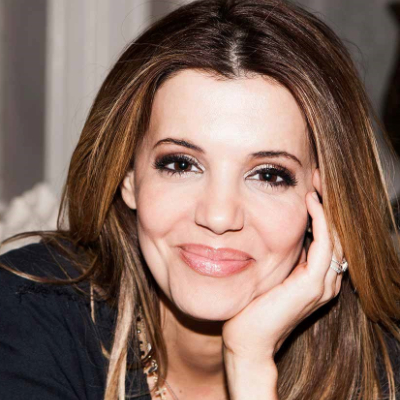
Dr Linda Papadopoulos is a Chartered Counselling and Health Psychologist and Associate Fellow of the British Psychological Society. Founder and Director of the Programme in Counselling Psychology at London Metropolitan University, she has extensive clinical experience counselling individuals, couples, and families, specialising in relationships, identity, and wellbeing. Visit her website, or follow her on Instagram.

You must confirm your public display name before commenting
Please logout and then login again, you will then be prompted to enter your display name.