I skipped strength workouts during marathon training and regretted it immediately - 5 dumbbell exercises to strengthen and mobilise at home
As soon as I started lifting weights alongside my running, I noticed I ran faster and had fewer injuries


Recently, ultra-runner Elsey Davis told us that if she has to skip one workout during her training, it'll be her run, never her dumbbell session or gym time. "I'll never miss that. If I miss my strength training, I also miss my running, because I would just get injured," she said.
Reading that brought me back to mile 18 of the Brighton Marathon a year ago. It had all been going so well up until then, but after a searing pain developed in my hip, I had to switch from a light plod to an even lighter walk. Within a few more miles, I wanted to give up completely.
I had done almost everything right for marathon training. I had enough food and water, and I had followed pretty much every run on my plan for the last 12 weeks. However, I had fallen short in the strength training department. Now I was paying the price.
Like other runners in my position (of which there are many!), my excuses were time, energy, and motivation. Yet, skipping strength training as a runner almost guarantees you'll eventually end up with runner's knee, hip pain, and strains, and you'll be out of your running shoes for a while.
I asked PT Lotti Sorrell, a lead coach at House of Fitness, which specialises in group training and 1-on-1 coaching in London, how to do it as simply as possible. She gave me this five-move dumbbell workout to do at home.
1. Dumbbell B-stance deadlift
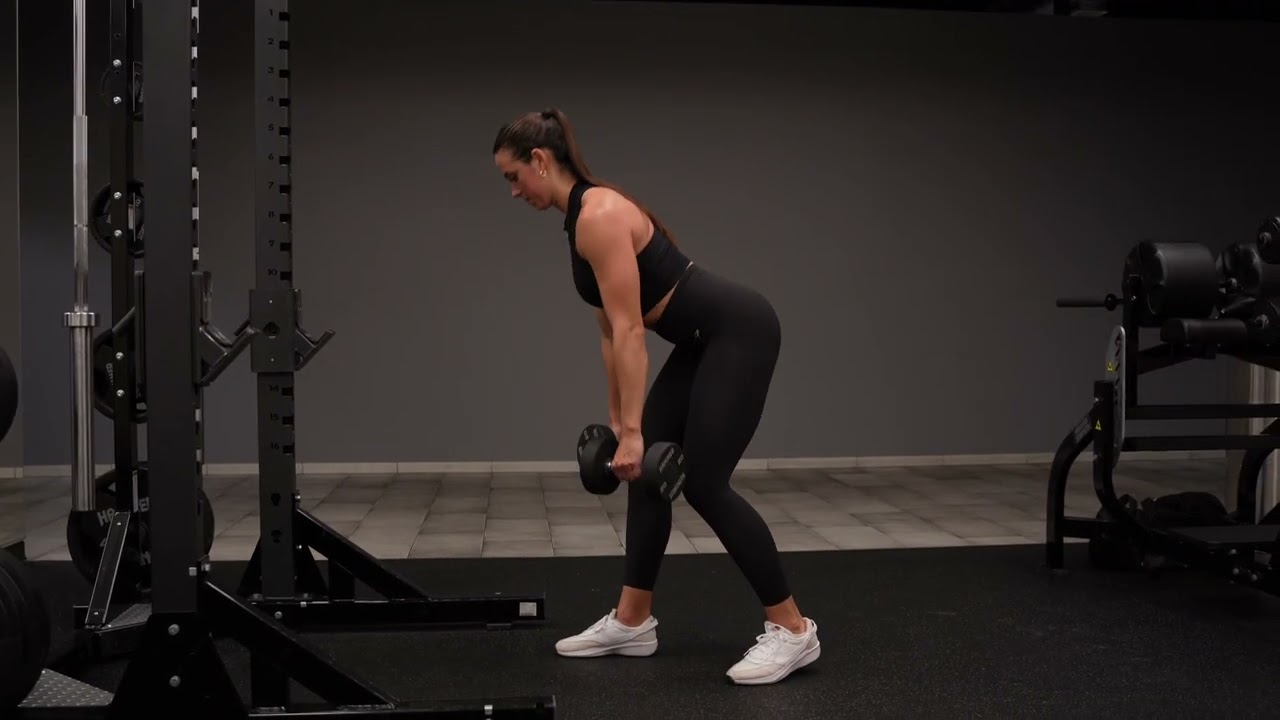
Deadlifts train the hamstrings, glutes, and lower back to work together, and that's vital for runners, says Lotti. "This b-stance variation also gives a nice bonus of being able to load up one leg more than the other, just as happens when you run. You'll also practice creating stability through the toes, ankles and knees."
Here's how to do it:
- Stand hip-width apart, holding your dumbbells.
- Take one step back, positioning the toes of your back foot just behind the heel of your front foot.
- Lift your back heel so you're resting on the balls of that foot. You should have most of your weight on the front foot, keeping your front knee slightly bent.
- Pull your shoulders back and down, and engage your core.
- Hinge at the hips by pushing them back as if your pressing a button on the wall behind you.
- Let the dumbbells come down the front of your front leg, keeping them close and your back straight.
- Keep going until you feel a deep stretch in your hamstring and glute of the front leg.
- Push through your front leg to return to the starting position, and repeat on both legs. Try eight repetitions on each for three sets.

A basic pair of dumbbells is all you need to start strength training from the comfort of your home. I'd recommend getting two sets: one heavier and one lighter to use depending on what exercises you're doing and where you feel stronger.

This set of adjustable dumbbells is my truest home workout recommendation. While it's an upfront investment, you can simply click in and out of the resistances from 2.5kg to 24kg, making it ideal for upper- and lower-body workouts and progressing as you get stronger.

If you're short on storage space or budget, but you want to do more than a bodyweight workout, resistance bands are a good dumbbell alternative. These stretchy bands add resistance up to 56kg.
2. Dumbbell floating front heel split squat
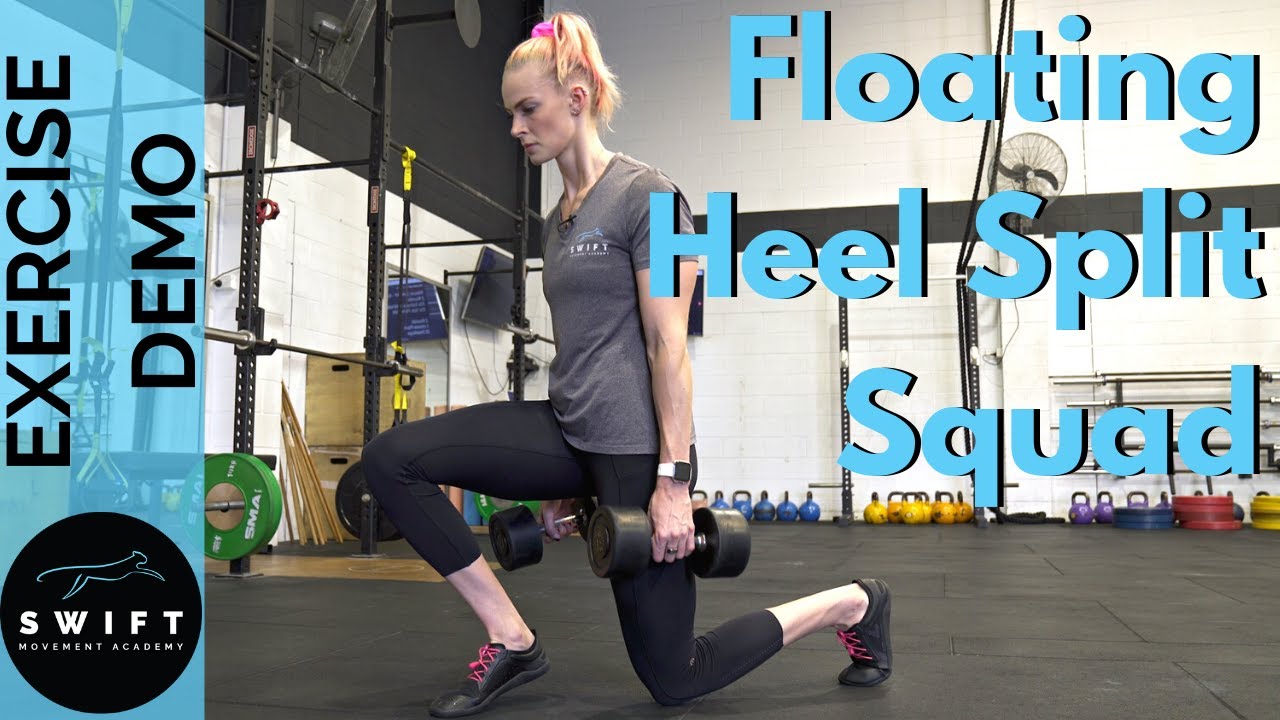
A traditional split squat builds strength, but Lotti's move also helps protect against common running injuries. "Your front heel is unsupported, so it gives some extra work to the Soleus muscle in your calf, which is crucial for force production and absorption as you run, and trains the foot and ankle muscles to stabilise under load," she says.
Holding the dumbbells in the front-rack position shifts your centre of gravity forward, meaning your trunk muscles have to work hard to resist being pulled forwards, she adds.
Here's how to do it:
- Step forward onto the ball of your front foot, leaving your heel floating just above the surface.
- Step back with your other leg, and balance on the ball of your back foot.
- Grab your dumbbells in each hand, holding them by your sides.
- Bend both knees and lower your body, allowing your front knee to track over your toes, keeping your front heel elevated.
- Press through the ball of your front foot and push up to the starting position.
- Repeat on both legs for at least eight repetitions for three sets.
3. Dumbbell single-leg glute bridge
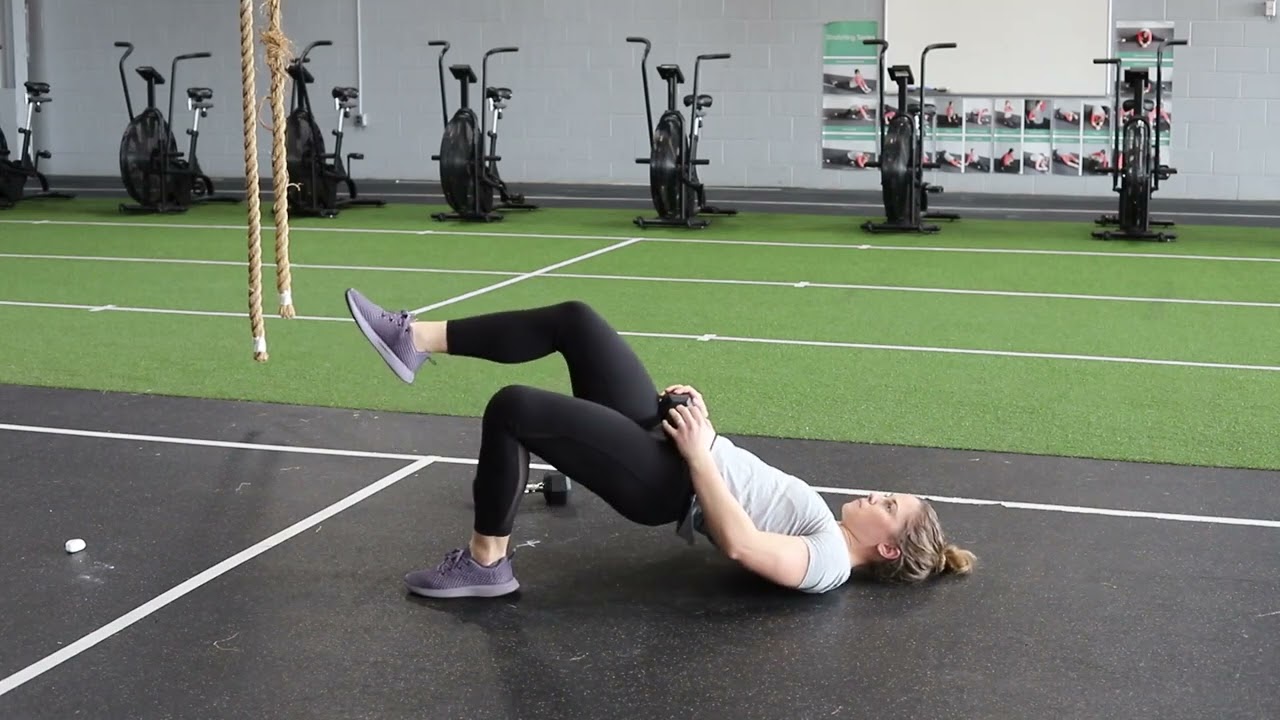
The glute bridge is one of the best glute exercises for runners. "Running demands stability from your core, hips, and pelvis to protect your spine and keep good form. That's what this move develops very efficiently. It also works on your glute and hip flexor strength. Together, these make your running safer, smoother, and more powerful."
How to do it:
- Lie flat on your yoga mat, placing a dumbbell over your hip crease. Hold the ends to make sure it stays secure.
- Bend one knee and keep that foot on the mat while you extend and lift your other foot off the floor. Support yourself on one leg.
- Brace your core and drive through the heel of your grounded foot, lifting your hips towards the ceiling.
- Squeeze your glutes at the top and hold for a moment.
- Slowly, lower your hips and come down to the starting position.
- Repeat on both legs for at least eight repetitions, for three sets.
4. Goblet lateral lunge
While most runners will practice moving forwards (and maybe backwards), very few practice moving sideways. "Whether you’re trail running or simply sidestepping a pedestrian in the park, think of the last time you accidentally rolled your ankle and use that as a reminder to train and strengthen the body in multiple planes of motion," says Lotti. That's what the goblet lateral lunge works.
Here's how to do it:
- Stand with your feet hip-width apart, holding a dumbbell or kettlebell against your chest. Make sure to keep your elbows tucked in and brace your core.
- Take a wide step out to the side with one foot, making sure to keep your toes and hips pointing forwards.
- Hinge at the hips and bend the knee of your outside leg, lowering down until your thigh is parallel to the floor.
- Make sure your posture is upright and the other leg stays straight and that foot stays on the ground.
- To return to the starting position, push forcefully through the heel of your bent leg.
- Repeat the exercise on both sides for eight repetitions on each leg, and three sets.
5. Bear hold pull through
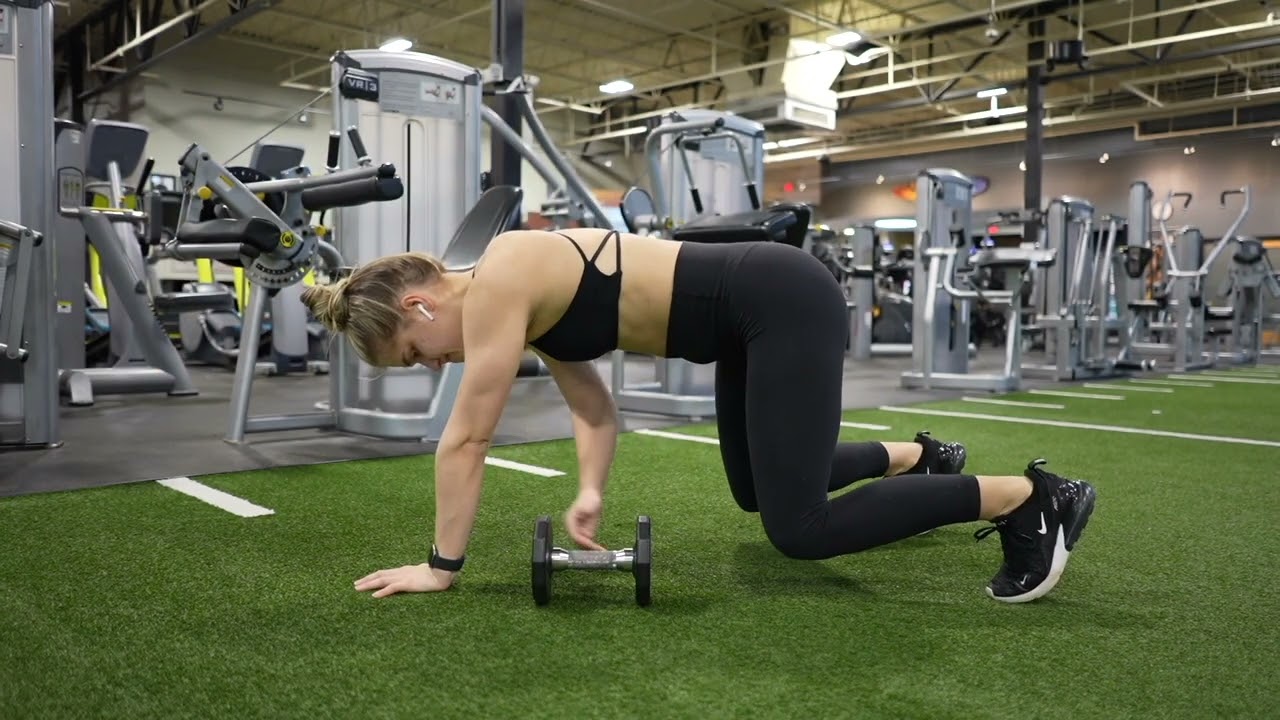
Core exercises are just as essential as glute or quadriceps exercises for runners, and this one helps build full-body stability. "I love this move because it’s efficient. Muscles all over the body have to work together to coordinate and create stability to move the weight from one side to another," says Lotti.
Here's how to do it:
- Come down onto your mat on your hands and knees, putting a dumbbell on the floor next to you. Position your wrists under your shoulders and knees under your hips.
- Tuck your toes and brace your core, then lift your knees just a couple of inches off the ground, keeping your back flat.
- Making sure your hips and shoulders stay facing the floor, reach for the dumbbell with the opposite hand.
- Drag the weight across the mat to the opposite side of your body.
- Stabilise your position, then repeat on the other side.
- Complete at least eight repetitions on each side for three sets.
