I tried the yoga pose experts say is 'better than 100 sit-ups' for 2 weeks - here's what happened
This yoga pose recruits muscles in the core, hips, lower back, and glutes for full-body strengthening


The core is the body's foundation. It keeps us upright and stable, with good posture, and well-balanced. When I work out, I always make sure to do lots of core exercises at home, but all too often I fall into the habit of doing the same ones over and over.
One ab exercise many of us return to is a sit-up and its variations. While sit-ups definitely build abdominal strength, areas like your hip flexors and glutes, which are also important for full-body stability, don't feel the benefit. Yoga instructor at Yoga-Go, Melissa Leach, says one move can “outperform traditional exercises like sit-ups", and that research has shown it can be better than doing 100 sit-ups.
“Boat pose is one of the most efficient core exercises because it doesn’t just isolate the abs. It engages the hip flexors, glutes, pelvic muscles, and back all at once, helping build functional core strength rather than working one single muscle in isolation,” Melissa explains.
How to do boat pose

- Sit on the floor with your knees bent and feet flat on the floor.
- Lean your torso back slightly while keeping your spine long and your chest lifted.
- Engage your core and slowly lift your feet off the floor, bringing your calves parallel to the ground.
- Balance on your sit bones and try to avoid rolling onto your tailbone.
- Once stable, extend your arms in front of you, with your palms facing each other at shoulder height.
- If you feel comfortable, you can slowly extend your legs to create a ‘V’ shape with your body.
- Hold for 20 to 30 seconds, and repeat 2-4 times.
If you’re new to this pose, reduce the strain on your core by keeping your legs bent. Some people also find that lightly holding behind their thighs gives them extra support when trying to balance.
“If you struggle with balance and maintaining a straight spine, you can either sit on a folded blanket or cushion to help tilt the pelvis forward or sit with your back a few inches from the wall for reassurance,” says Melissa. “The most important thing is to get a hold of the technique first, so start slowly, only holding for as long as it's comfortable and slowly increasing the length as your core strength improves.”

You don't need much to do the boat pose, but a thick yoga mat can help ease stress on your hips and lower back when you're down on the floor. The Gaiam 6mm blends support and comfort with a really grounded feeling, being only 2mm thicker than a traditional mat.

At double the thickness of the w&h favourite, this 12mm yoga mat is a total support system. The deep foam padding cushions bones and joins for whatever workout you have in mind.

One easy way to make the boat pose harder is to add ankle weights. These add resistance to your legs, making it more difficult to keep them up, and in turn, boosting strength in your legs, glutes, core, and hips.
I tried the boat pose for 2 weeks
There’s a big difference between doing boat pose once or twice a week in a Pilates home workout or class, and doing it every day. It’s not an easy pose, and it’s one that’s taken me years to feel comfortable doing. I was apprehensive about whether my core could cope, but I knew it would be a challenge I'd enjoy, having mastered the basics.
Boat pose shakes your core and feet, so I decided not to start too hard in the first few days. Yoga teacher Claire Linnell suggested I spend time making sure my posture was correct, with my chest lifted and back straight, then holding the position for three breaths. This was an adjustment from my Pilates class, where we're encouraged to hold a position for as long as we can. But in yoga, it’s not about reps or stamina. It’s about control, breathing and core engagement. This is how I wanted to start for the first week.
On days one to four, I did four sets of boat pose. Three breaths in position for each one. There was a lot of stomach quivering and my hips didn’t really like the position, but I could feel my abdominal muscles working hard. After a day of sitting at my desk, I looked forward to the pose to release tension in my lower back and hips. It also felt very mindful, just focusing on my breath and being still in the V shape. Doing a glute bridge, then a full-body stretch afterwards felt delicious.
From day five to 10, I decided to try doing the pose for 30 seconds in one go. I found that doing it in the evening gave me time to focus on my form, and it was nice to take a moment to move my body before bed. The 30-second hold felt quite brutal, and keeping my legs straight was a challenge, but I could feel my whole core switch on. When I finished, I focused on lowering my legs down slowly, rather than collapsing. This meant I engaged my abdominal muscles right up until the end.
For the final four days, I did low boat pose instead. This move is very similar to the regular boat pose, but it targets your abdominals more. Claire explains that it involves raising your legs just a few inches off the ground and hugging your inner legs towards each other. “Take the hands into prayer, thumbs to the breastbone and curl your upper back and shoulders off the ground,” she says.
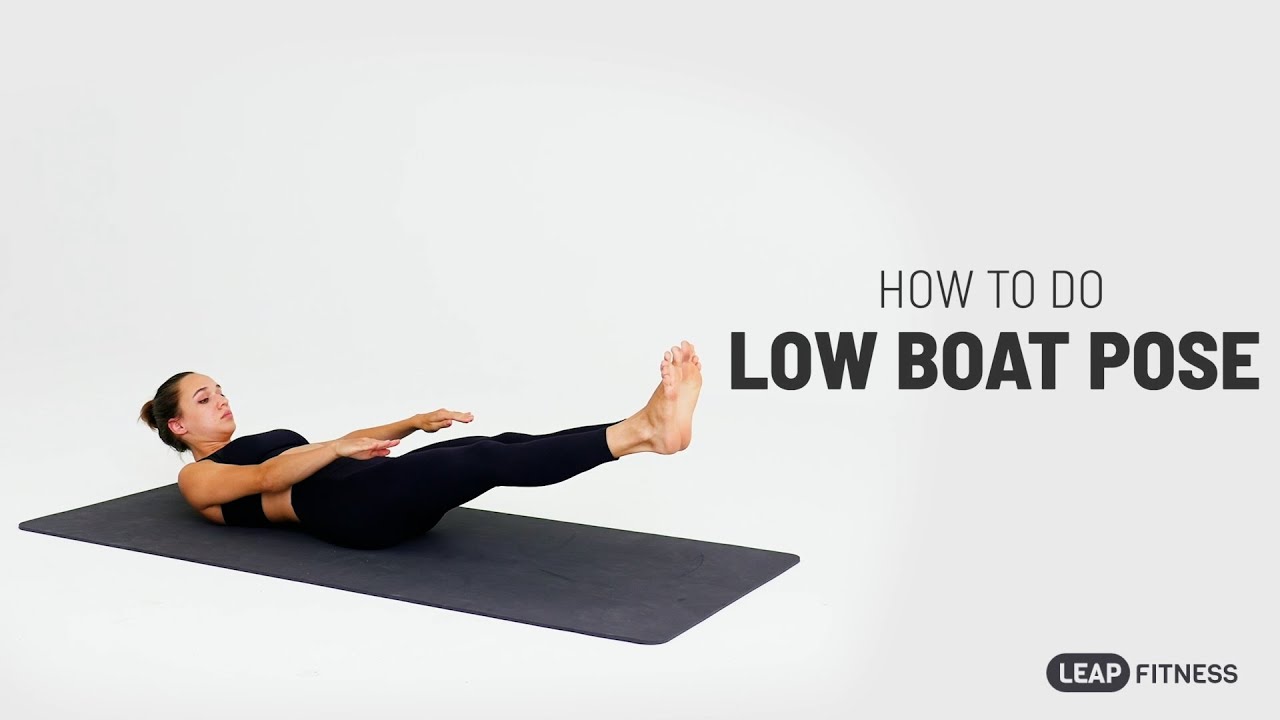
This took the pose to another level and felt a lot more challenging. Again, I held it for 30 seconds, but the sigh of relief at the end was almost a cheer.
I was surprised at how much I needed to engage my upper body. Keeping my arms straight, shoulders down and back straight all took a lot of extra focus. My upper and lower abdominals felt tighter, and my hip flexors felt stronger. I had less hip pain when I spent a lot of time sitting down working, and I felt like my posture improved too.
I upped the intensity over the fortnight. Next, I'll add in some wrist and ankle weights or some light dumbbells to see what difference they make. I don’t think I’ll do it every day, but it’s one I’ll make sure I incorporate into my abs workouts.
Benefits of boat pose
Improves hip strength
The reason the boat pose is so effective is that it works so many different muscle groups around our core and lower body. Claire says that while many people will think of this exercise as being good for the core, “it is actually the hip flexors which bear the brunt of this posture”.
She says our hip flexors are a “key part of our locomotive system” and this hip-strengthening exercise can do wonders.
Boosts core strength
It can take a lot of core strength to stay upright in boat pose, especially if you’re going into the V-sit position too. It will give your upper and lower abdominals a great workout.
Melissa says: “Holding the position forces your deep core muscles, the ones that support your spine and pelvis, to switch on and stay engaged throughout. Over time, this can translate into better posture, a stronger lower back, and a core that supports your everyday movement.”
Boosts leg strength
Squeezing your legs together during the pose will switch on your inner-thigh muscles, says Linnell. “These muscles are often overlooked, but they play an important role in stabilising the hips and pelvis and supporting everyday movements such as walking, running and balancing.”
Improves balance and control
Boat pose takes some practice. There’s a lot to think about while you’re doing it. Balancing on your glutes with a straight back and legs out in front of you requires deep core engagement and breath control.
Mastering this move will help you with other yoga and Pilates exercises such as scissors, the Hundred, and others which require a strong core.
Improving and maintaining your balance will help keep you mobile and independent for longer and lower the risk of falling.
