From breeding tiger cubs to training pigeons for movies, meet the women enjoying fulfilling careers with animals
They say never work with animals – having furry, feathered colleagues can be unpredictable but also amazing, as these 4 women tell us


Working with animals can be thrilling, fulfilling, and most of all, rewarding, and there are so many different potential careers.
We've previously met a woman who trains guide dog puppies, another who set up an alpaca walking business, and even women who have been saved by animals.
"I trained pigeons for 'Paddington In Peru'"
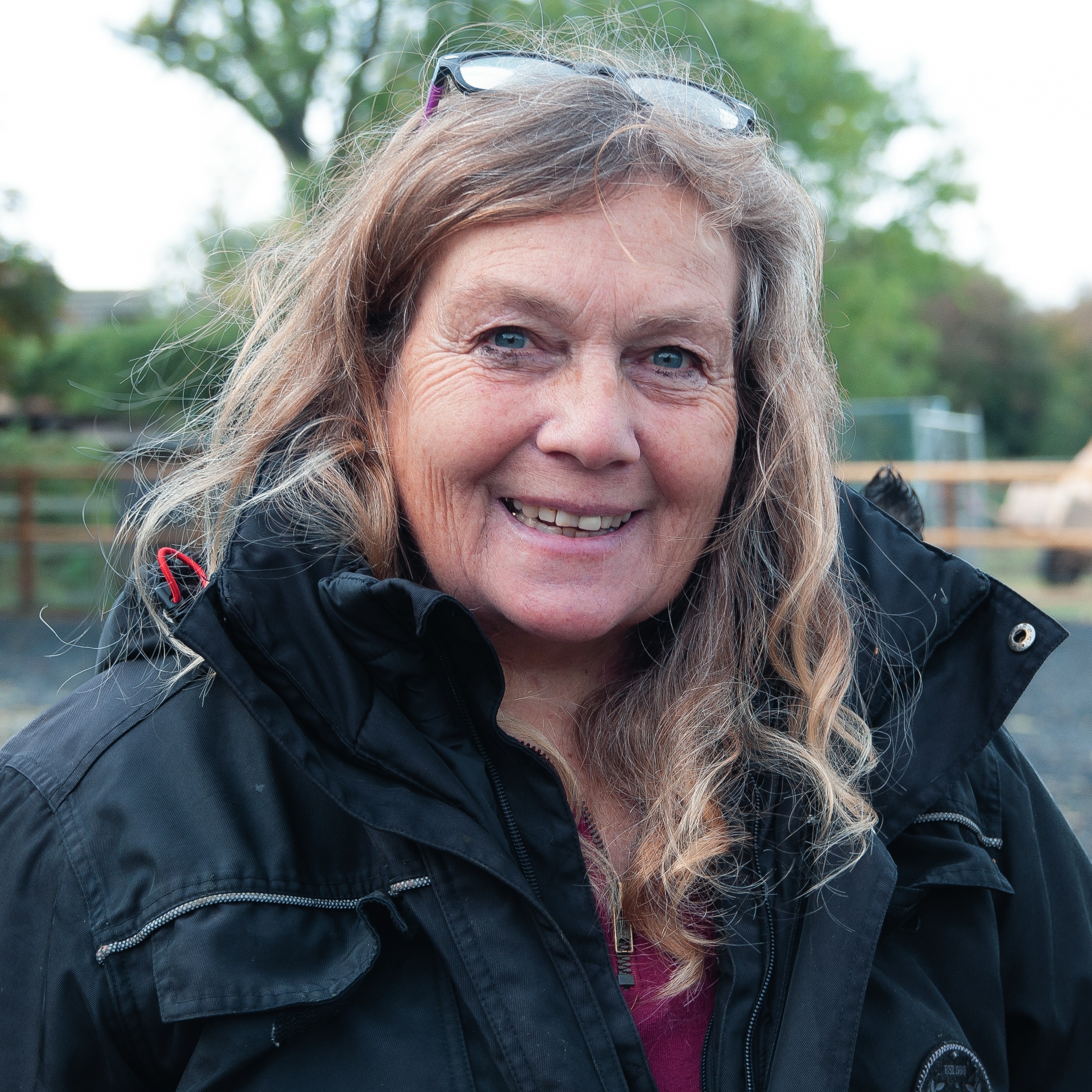
Jill Clark, 66, from Lincolnshire, is the founder of animal talent agency 1st Choice Animals, which she runs with her son Dean, 43.
"I was running a dog-training club when I was asked to audition my Border collie Jacy for a Post Office advert," says Jill. "The agency told me what was needed, so I trained Jacy up to grab hold of the postie’s trousers and spin him around perfectly. The audition went well and, before I knew it, other shows and films were approaching me to train animals. This led me, 37 years ago, to set up my own animal talent agency.
"Animal stars often get their own dressing rooms on set – and many can be seen in hair and make-up every morning! I’ve trained everything from cats and dogs to parrots and budgies on EastEnders, and farm animals for All Creatures Great and Small."

Jill feeds her small flock of geese.
"I even trained pigeons for Paddington in Peru! I had to teach them to tap on a window, which was hard, as the usual method is to feed them, but obviously the glass was in the way.
"We trained them up with a pane of glass and a platform to land on, so I could feed them around the side. I then had a second trainer on set to treat them once they had flown to the window with me and tapped it."
"The best part of being an animal trainer is helping the animals grow into talented actors"
"Training for shows is very different to classic obedience training, as we need it to look like the animals belong to other people, not us. It can also be tough getting actors to fully engage with them if they’re not really an animal person, but treats always help.
"Of course, sometimes it goes wrong. I once trained a cat to come out of a top-floor building and run down some metal stairs. All was going fine until my very tall assistant fell down the stairs just after he let the cat go. He came clattering down and scared the living daylights out of her. My assistant was bruised, but the cat was fine and did the action perfectly the next day – however, I was a nervous wreck!
"The best part of being an animal trainer is helping the animals grow into talented actors. They really do love learning, which makes them a joy to teach. It beats a nine-to-five job any day."
"Horses can ease people's grief"
Dr Loes Koorenhof, 40, runs equine therapy charity Equilore in West Northamptonshire, where she lives with her husband.
"Growing up I loved horses, and adopted my own at 27. After studying psychology, I did a year’s training in equine-facilitated psychotherapy, which led to setting up Equilore in 2018," says Loes.
"We now have six horses, and offer group and individual therapy for people who might have experienced trauma or are struggling with anxiety, emotional regulation and depression. We get referrals from schools, social services, charities and government.
"Our clients don’t ride the horses – therapists observe them while they interact with the animals and debrief with them about their experiences afterwards.
"It’s so moving when someone struggling with grief enters the field and the whole herd quietly draws around to stand with them. The horses seem to sense people’s emotions and move to support them."

Loes with one of her horses.
"It’s incredible to watch chronic school refusers finding connections. One young client saw horse Zekie having a bad day, neighing loudly and getting bitey with other horses. Observing this, she started talking about how she too lashed out and ran away when under stress. After a few sessions, we identified her triggers and worked on strategies to keep her in school.
"Some horses, like Elsie, are brilliant at exuding calm; whereas others – like gentle giant and ex-eventer Gerry – are like cuddly teddy bears and love being around children. I feel so lucky I get to work with these wonderful animals."
"Being a zookeeper was my dream job"
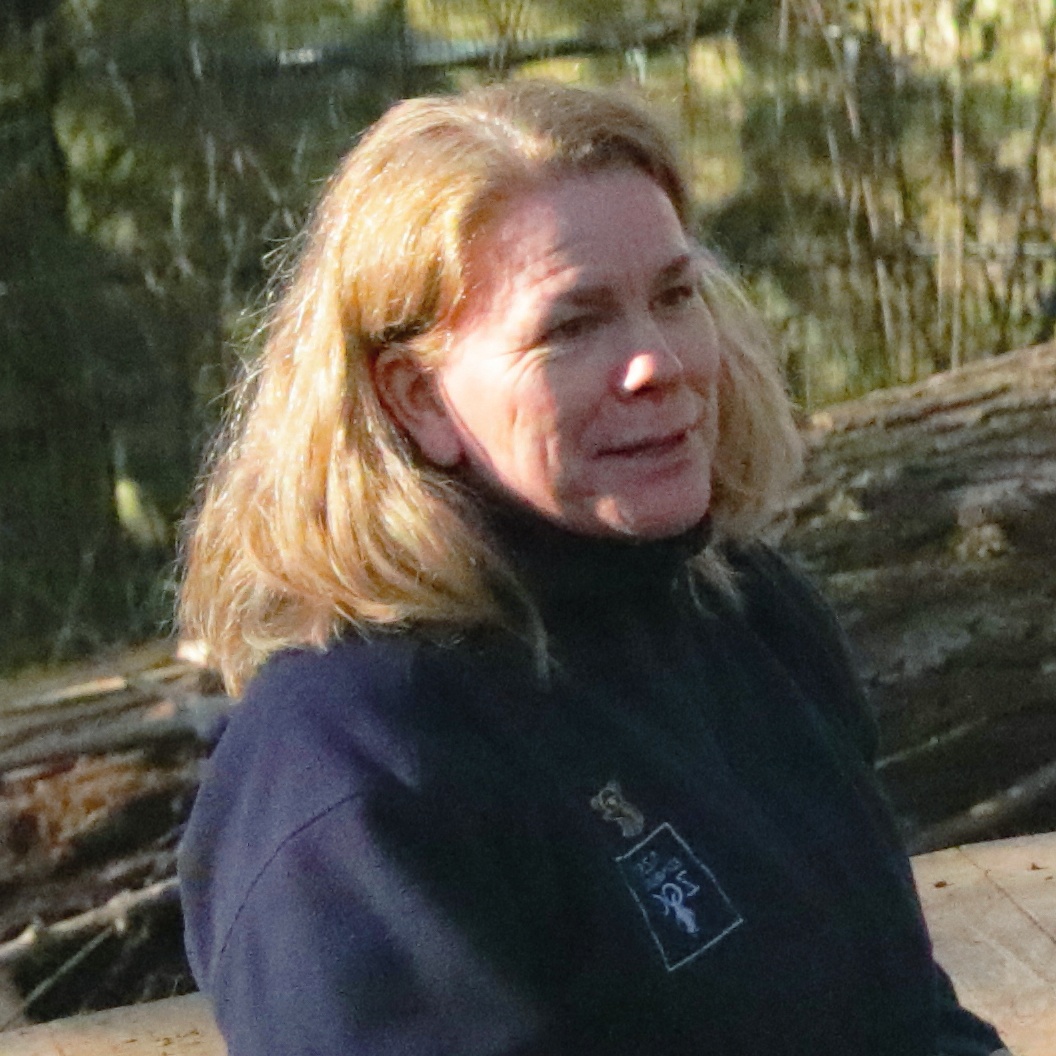
Roslin Talbot, 52, is a zookeeper at Edinburgh Zoo. She currently looks after 82 chimpanzees and monkeys.
"Being a zookeeper is my dream job. I love working with everything from penguins to chimpanzees, wallabies to capybaras," says Roslin.
"A memorable moment was when a pair of tigers I was looking after, Sasha and Yuri, successfully mated, having a litter of three cubs. Often, male tigers need to be kept separately from the mother and cubs after birth, but Yuri was so gentle that he stayed with Sasha and their young. It was special watching them.
"Every animal has a unique personality; some can be quite cheeky!"
"Conception and contraception are key parts of a keeper’s job. We can’t have unlimited young in the pens, but there are relatively few reputable zoos who can home new arrivals, so reproduction is carefully planned. Many of our chimpanzees have hormone implants to help.
"Even the planned pregnancies still present challenges – timing my dash into a chimpanzee pen to suck up enough fresh urine with a syringe from the floor to test with a pregnancy kit is a fine art!
"Every animal has a unique personality, and some can be quite cheeky. Kevin, one of the penguins, was such a rebel that he was banned from our penguin parade, as he couldn’t be trusted not to sidle up to visitors for a quick nip!"

Roslin cares for 82 chimpanzees and monkeys.
"We check on all the animals every morning. One chimp, Lianne, knocks on the window to say ‘hello’ as I’m doing my rounds, while Kato, a brown capuchin, squeaks loudly in excitement if he’s not seen me for a while. Others, like David, a chimp, would see morning checks as a hide-and-seek game, and completely disappear. Having spent ages looking for him, he would then appear in front of us as if out of nowhere.
"Chimps sleep just like humans, settling down at the same time every evening and sleeping until morning. They are often on their sides, curled up in a comfy spot with their head resting on their hands.
"I’m often asked how you get to be a zookeeper. After studying biological sciences at Napier University, I was lucky that my speculative letter to Edinburgh Zoo 30 years ago coincided with a temporary zookeeper vacancy.
"My advice for people wanting to get into it is to volunteer at a local zoo or vets, or to help a dog walker or at stables. Practical experience is invaluable and helps build a network of contacts with a shared passion for animals."
"We love teaching people about birds of prey"
Luce Green, 56, co-founded Falconry Experience Wales with her partner Barry MacDonald. They live in Powys, North Wales.
"I’ve always loved wildlife, from chasing grasshoppers as a child to working in the Welsh Mountain Zoo in my 20s. Now I’m focused on bird of prey conservation and rehabilitation at our falconry centre, which I founded with my partner in 2000," says Luce. "I met Barry when he ran bird displays at the zoo where I was a keeper.
"With 30 birds – from vultures and eagles to hawks, falcons and owls – we offer flying experiences, and work in conservation, breeding critically endangered vultures for release into the wild in Africa."

Luce teaches visitors about wildlife conservation.
"Training is quite straightforward – I often say the birds train us! Once we’ve built up a relationship, we replicate the skills they would require in the wild, using food to reward them and recalling them to the gauntlet or glove. With the falcons, we use a ‘swing lure’ – swinging a small pouch around, which replicates the flying shapes of birds the falcons would hunt in the wild.
"Our birds still possess wild behaviours, so we do occasionally have hair-raising moments. I’ll never forget the time our African vulture George took a wrong turn and found himself in the dog parade!
"I’m passionate about wildlife conservation. By teaching our visitors what they can do to protect these magnificent creatures, I hope Barry and I have made a positive difference to their future survival."

This article first appeared in the April 2025 issue of woman&home magazine. Subscribe to the magazine for £6 for 6 issues.
Continue reading


You must confirm your public display name before commenting
Please logout and then login again, you will then be prompted to enter your display name.