I cremated my cast iron Le Creuset this weekend - here's how to go from burnt back to sparkling without a scratch
Say goodbye to burnt cast iron and hello to something that sparkles like its brand-new


Are you frantically Googling “how to clean a burnt Le Creuset?” or whispering “can I use a scourer on cast iron?” into your phone like it’s a confession booth? We’ve all been there. Some of us (not naming names) have been there more than once and, yes, have furiously attacked a pale enamel interior in a moment of panic. The heartbreak of burning (and scratching) one of your favourite cast iron casserole dishes is one that I have been all too familiar with.
As a seasoned burner of food (occupational hazard when you test cookware for a living), I’ve refined a simple process on how to get burnt food off the bottom of your very best cast iron casserole dishes without leaving a single scratch. I don't use any harsh chemicals or expensive cleaners. So now, when I take my eye off things and burn a cast iron, there aren't any tears. Just me, making use of my simple method that respects the enamel and actually works.
My preferred approach uses nothing more than water and a wooden spoon. For extra stubborn burns, I’ve also used our genius tips on things that you can clean with a gentle baking soda paste. Between the two, I haven’t met a scorch mark I couldn’t shift and it works on cleaning cast iron skillets too. So let’s walk through it properly, calmly, methodically, and without reaching for the metal scourer.
Simple solutions for how to clean a burnt cast iron pot

The first method that we need to talk about is the one that never fails: water and a wooden spoon.
The first time I burnt food in a Le Creuset casserole, I was making dumplings. All was fine on the hob, but when it went into the oven to brown, I baked my dumplings to the base of my partner's treasured Le Creuset and things escalated quickly. What began as cosy comfort cooking turned into a stuck-on, caramelised disaster that had me worried I would be buying a new, pricy Le Creuset to replace the pot I had cremated. In my panic, I grabbed the wrong tool and paid the price with faint scratches across that beautiful enamel interior.
That was the last time I approached burnt cast iron emotionally instead of technically. Enamelled cast iron, like that used in pieces from Le Creuset, is durable but not indestructible. The enamel coating is essentially glass fused onto cast iron at extremely high temperatures. It’s non-porous, hygienic, and resistant to staining, but it does not respond well to aggressive abrasion. If you know how to clean and care for it properly, Le Creuset casserole dishes can be worth it, but you need to know what works when it comes to cleaning cast iron.

The moment you notice a burn, allow the pan to cool slightly, not stone cold, but not screaming hot either. Take a smooth wooden spoon and gently dislodge any loose debris. The key word here is gently. You’re not chiselling stone; you’re lifting softened residue.
Next, fill the casserole with enough hot water to completely submerge the burnt area, adding a couple of extra centimetres for good measure. If you can use freshly boiled water from the kettle, even better. Place the pot back on the hob and bring it to a steady boil.
This is where the magic happens. As the water heats, it begins to rehydrate and loosen the carbonised food particles. After about a minute of simmering, use your wooden spoon to nudge the burnt patches. You should feel them starting to release. Keep the boil gentle but consistent, and never allow the water to boil dry.

If needed, empty the water, refill with fresh hot water, and repeat. I normally run through about three to five cycles of this to get my cast iron clean, using a sponge at the sink to clean any residue that might stick to the side. Each cycle softens and lifts more residue.
For particularly stubborn areas, pop the lid on and let the trapped steam intensify the process for a few extra minutes. Steam is your ally; it penetrates the burnt layer and loosens it from beneath. It isn’t dramatic. It isn’t instant. But it works and, crucially, it protects the enamel surface.
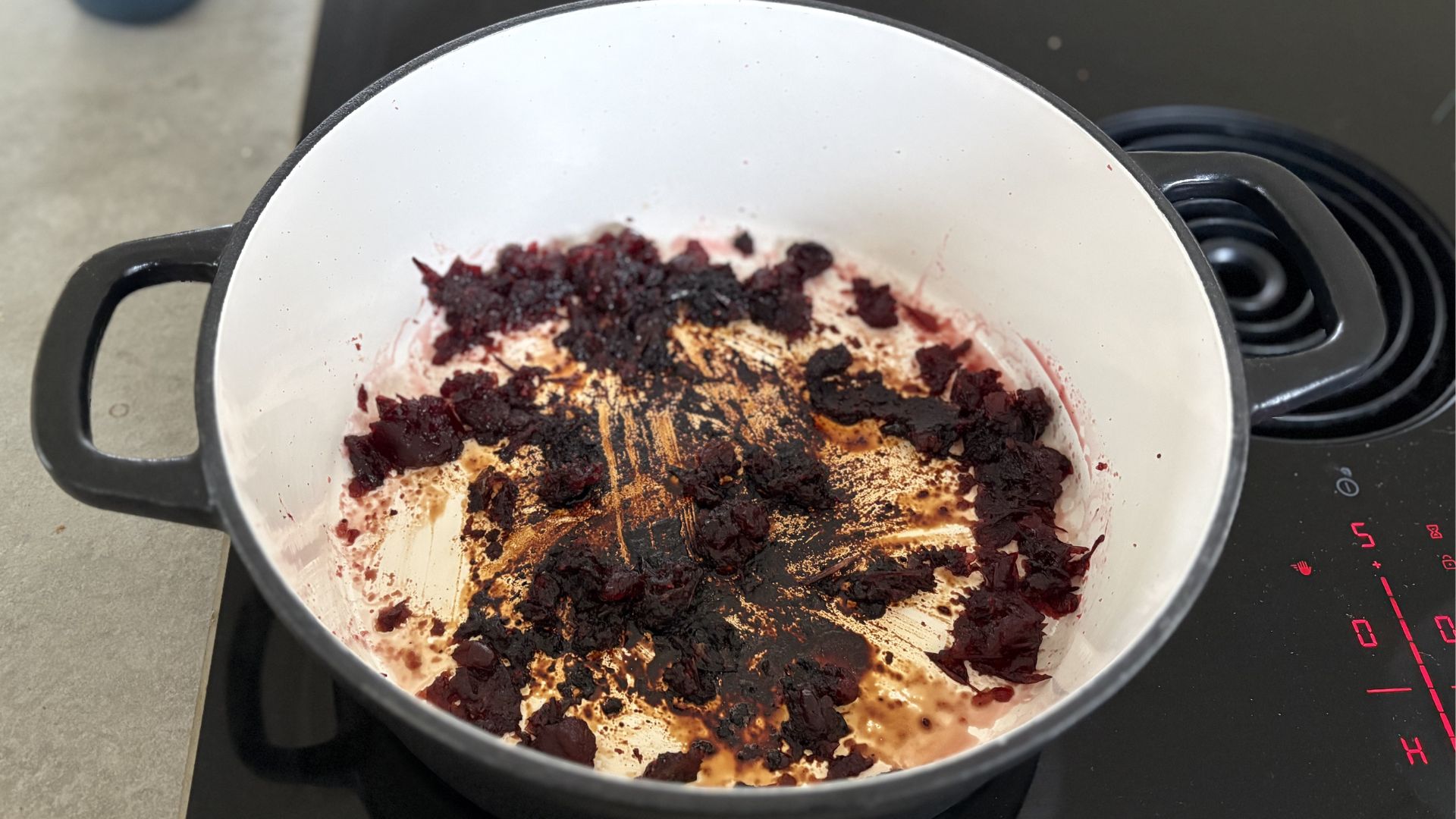
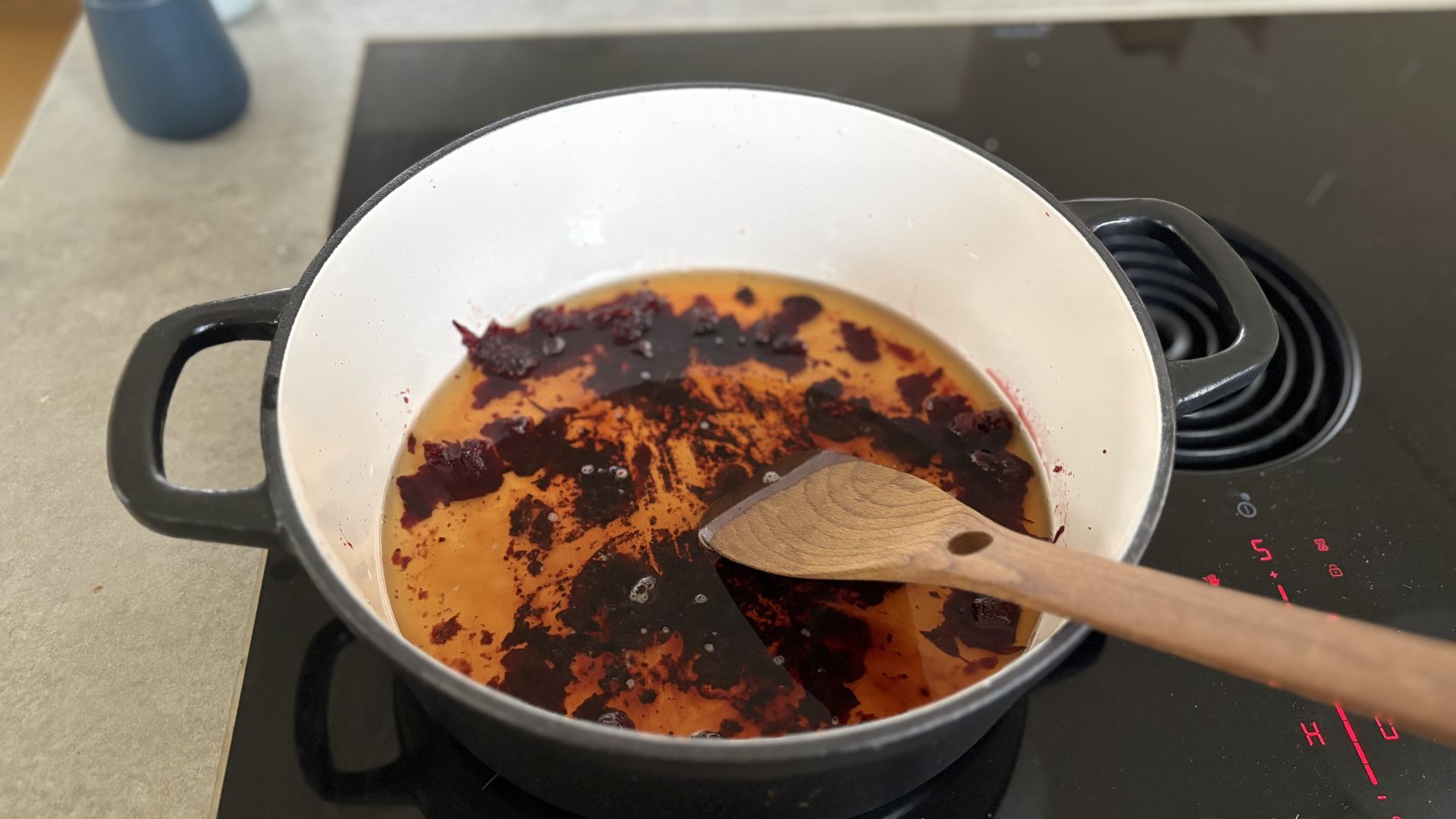
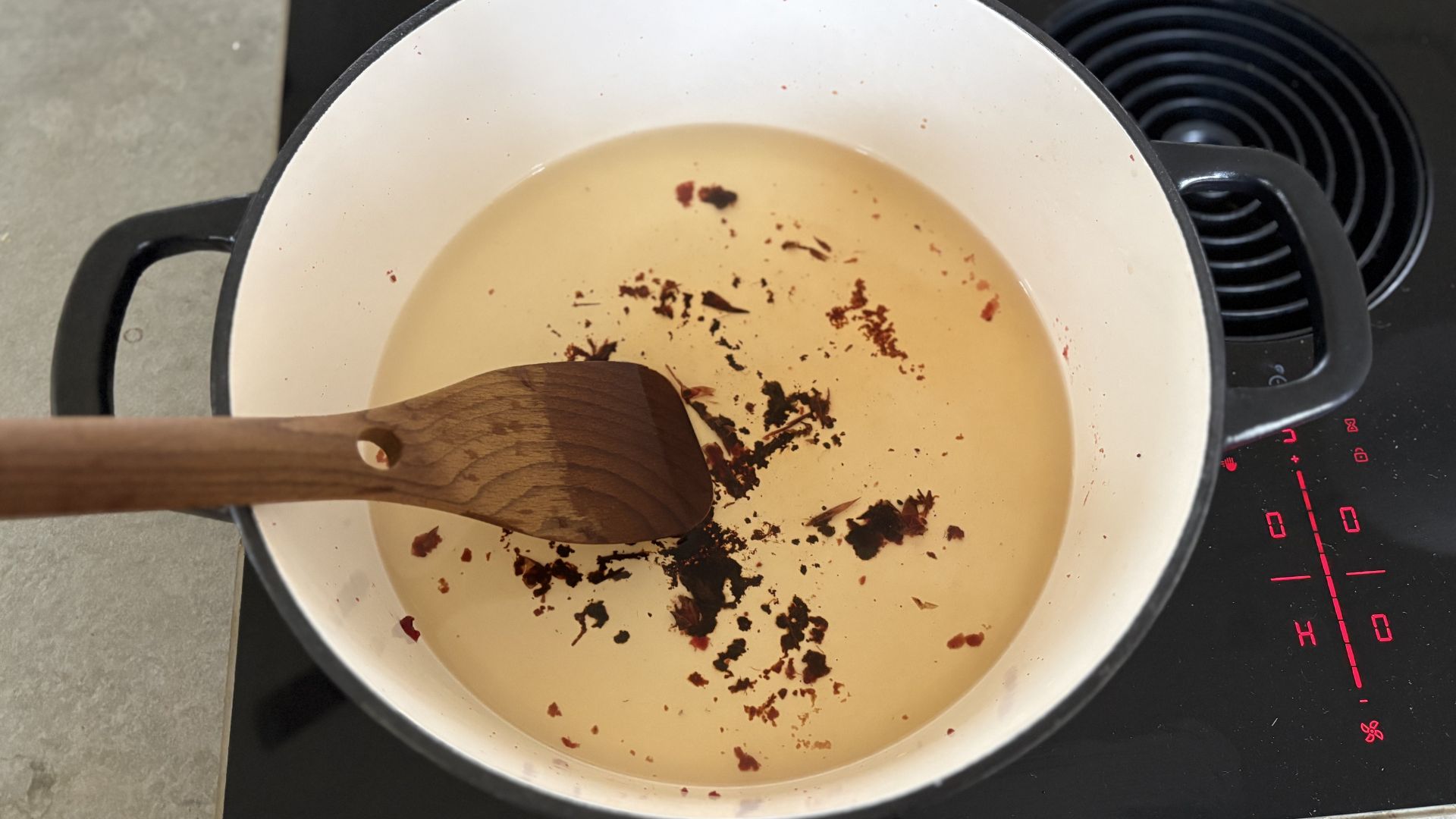
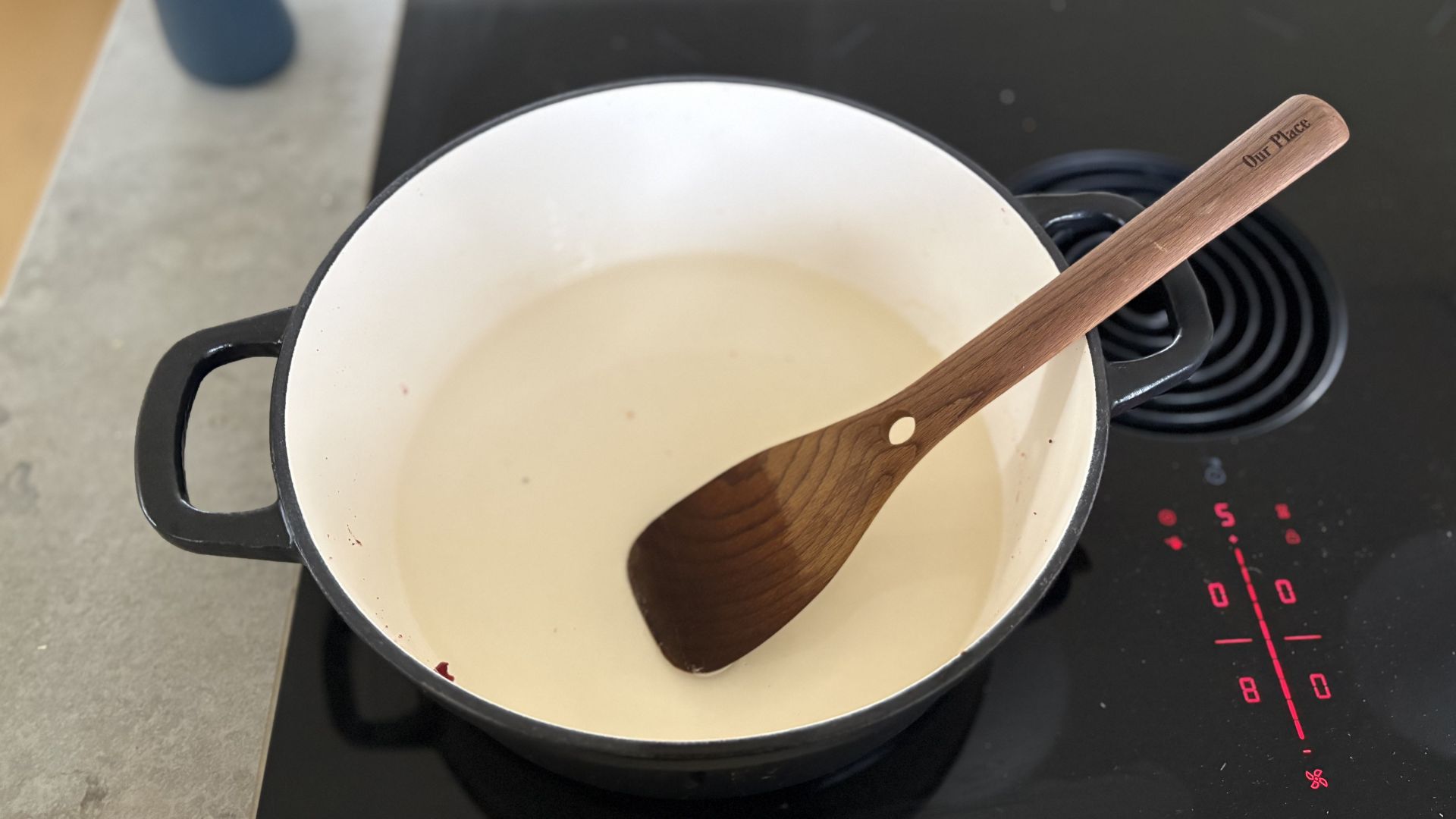
I am that confident in this method that I re-burnt my cast iron casserole dish this weekend to show you just how well it works. You can see the cranberries black and carbonated on the base of my precious casserole dish and, yet, if you scroll through the images, you'll see the different stages of me lifting all the burnt cranberry up from the base of the lovely Le Creuset.
FAQs
Can I use baking soda to clean burnt cast iron?
When you need something stronger or you feel you need some better abrasion, you can bring in the baking soda. This is one of the best natural ways to deep clean your home: our team use it in all the places that you might need some gentle abrasion, whether that's cleaning your bathroom or giving your oven a deep clean too.
Occasionally, a burn is so deeply caramelised onto your cast iron casserole dish that water alone needs a little help. That’s when I turn to a baking soda paste. I'd recommend mixing baking soda with a small amount of water until you have a thick, spreadable consistency. Apply it directly to the affected area and leave it to sit for at least 20–30 minutes. Baking soda is mildly alkaline, which helps break down burnt-on food without scratching.
Using an old toothbrush or soft cloth, work the paste in small circular motions. The pressure should be light, think polishing, not scrubbing. You’re encouraging lift, not grinding the surface.
Rinse thoroughly and assess. If needed, repeat the process. I still swear by the boiling water method as my first line of defence, but the baking soda paste has rescued more than one “dumpling gate” situation in my kitchen.
What mistakes should I avoid when cleaning cast iron casserole dishes?
Avoid metal scourers, steel wool, and abrasive cream cleaners. Even if they don’t immediately leave visible scratches, they can dull the enamel over time. Likewise, avoid plunging a very hot cast iron pot straight into cold water. Thermal shock can cause the enamel to crack or craze. Patience is always kinder and far more effective.
Can I use a metal scourer on enamelled cast iron?
No. While enamelled cast iron is tough, metal scourers can scratch or dull the glass-like enamel surface. Even if scratches aren’t obvious immediately, repeated abrasion can damage the finish over time. Stick to wooden, silicone, or soft nylon tools.
Is it safe to boil water in my cast iron to loosen burnt food?
Yes, absolutely and it’s one of the safest methods. Gentle boiling helps rehydrate and release burnt-on residue without mechanical damage. Just make sure you don’t let the pot boil dry.
Why does food burn so badly in cast iron?
Cast iron retains heat exceptionally well. If your hob is too high or you haven’t used enough fat or liquid, the steady heat can quickly over-caramelise sugars and proteins. Lower, slower cooking often prevents heavy scorching.
Can I use baking soda on a Le Creuset casserole?
Yes. Baking soda is mildly abrasive but safe for enamel when used gently. Avoid harsh scrubbing and rinse thoroughly afterwards.
How do I prevent burns in the future?
Preheat gradually, avoid very high heat unless necessary, and deglaze the pan promptly if food begins sticking. Adding liquid early can prevent sugars and proteins from carbonising onto the enamel surface.
Burnt cast iron isn’t a disaster, even if it feels like one in the moment. With the right technique, even the most dramatic scorch marks can be lifted without harming that beautiful enamel interior.
The trick is restraint. Use heat and steam to do the heavy lifting. Let chemistry and patience work in your favour and keep the metal scourer firmly in the cupboard. Your cast iron will thank you. And so will anyone whose precious casserole you’ve borrowed.

You must confirm your public display name before commenting
Please logout and then login again, you will then be prompted to enter your display name.