Could AI save your life? Tech expert Lara Lewington explores how it can help us all age better
Artificial intelligence is already helping women to sleep better, spot warning signs of conditions early on, and has the potential to help us all to stay healthier for longer. Here's what you need to know

Ella Dove

In your smart house of the future, a glance in the bathroom mirror in the morning could flash back not just a tousled bedhead but relay information about your blood pressure and your current risk of developing type 2 diabetes. Coming downstairs, your voice assistant could announce your cardiovascular age has dropped a year since yesterday.
Whether that sounds a desirable way to live or like a movie you never want to be the star of, our approach to healthcare is set to change hugely. We are at the beginning of a revolution in health – and, as with so many things right now, Artifical Intelligence (AI) is at the heart of it.
I have spent the best part of two decades covering the greatest innovations on earth, largely presenting the BBC technology show Click. I’ve been to space agencies, tasted future food and encountered countless robots – some more useful than others – but no story has inspired me more than that of the future of our health.
On a mission to separate science from snake oil, I have dug through hundreds of medical papers and tested the best fitness trackers for women and latest devices.
I have felt my habits nudged into shape as I tried numerous wearables. I’ve been scanned by an array of preventative health machines. And sometimes my job simply wanted my blood – literally my blood, to analyse my DNA, disease risk or inflammatory age.
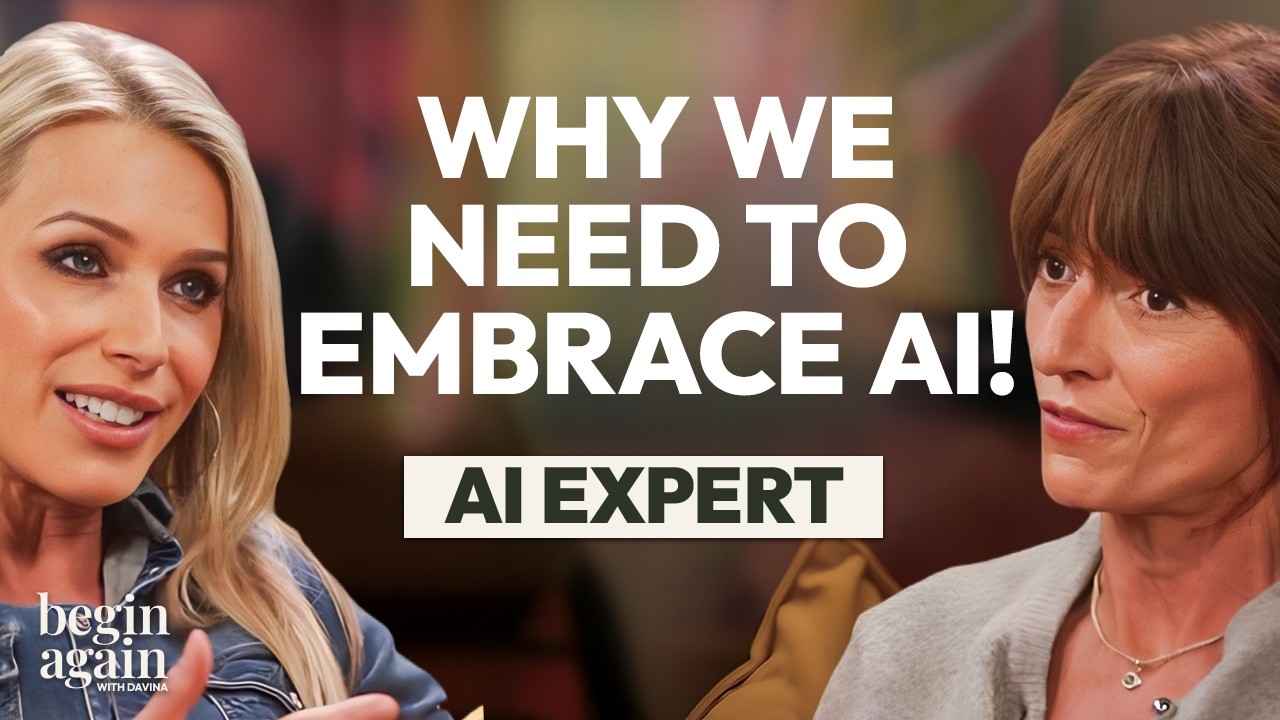
Can AI help women level up their health?
We all want to live a long healthy life, yet women in England, on average, spend a quarter of their lives in poor health. For men, it’s a fifth. Despite living in a high-income country, with a national health service, this is considered normal. So how might we close that gap between healthspan and lifespan, so we feel 40 at 60, suffer less and enjoy our lives for longer?
After years meeting leading scientists, doctors and innovators across the globe, I believe technology, especially AI, has the answer. Not on its own, of course, but alongside scientific breakthroughs, incredible amounts of good-quality data, and humans.
The good news is that doctors will not be replaced, but they will be supercharged by the enormous power that is evolving.
Groundbreaking innovations
Amazing technology is already reaching real people. From focused ultrasound easing Parkinson’s symptoms to 3D-printed skin for burns survivors, the progress is phenomenal.
Among many exciting future developments, breath analysis technology is being refined by Cambridge-based Owlstone Medical to help diagnose and monitor digestive problems.
AI data-crunching is invaluable and is already a power for good, time and time again.
Take Benevolent AI. In early 2020, the London-based drug discovery and development company’s computational modelling and subsequent lab work found that baricitinib, a drug licensed for rheumatoid arthritis, might reduce hospitalisations and deaths from Covid-19. It was trialled, approved and went on to make a massive difference to survival rates.
A number of trials have demonstrated the benefits of AI acting as an extra pair of eyes on scans – spotting tumours missed by humans.
AI scribes are taking notes while doctors do the more ‘human’ bits, and it’s helping speed up hospital discharges.
Stopping disease

At the core of the health revolution is this ability to prevent disease, be it cancer, heart disease, type 2 diabetes or others. Through AI, we will increasingly be able to draw on genetics, disease and lifestyle data, which will make it easier for medics to predict when illness might strike.
This means we can all be on the alert for signs of change earlier, and potentially avert disease or symptoms ever emerging.
Of course, it won’t be an end to sickness, but it will certainly put us in a better place than we are now, giving us a better shot at turning ‘sick care’ into ‘health care’.
Through a greater understanding of our microbiome and genetics, AI will also power medics to better personalise treatment and reduce side effects with more targeted drugs. This will lead to kinder treatments.
The role of fitness trackers

The Garmin Venu 4 is the latest of the Venu range, ticking all the boxes. It's perfect for those who work out regularly and have the budget to spend, with multi-band GPS, over 80 workout modes, advanced sleep and stress tracking, and a premium design that doesn't look out of place in the gym or at brunch. What's not to love?

The Fitbit Inspire 3 is the only tracker I'd recommend under £100. It covers the basics with over 20 workout modes, sleep and stress sensors, and minimal smartwatch features like text notifications. It's small but mighty, and the perfect starting watch for anyone looking to do more steps or hold themselves accountable in a routine.

The Oura Ring 4 is a game-changer when it comes to monitoring your sleep, stress, and activity habits. Working away under your finger, the multiple sensors track sleep stages, heart rate variability, body temperature, and so much more. It's now also available with even better health insights in the app and a new ceramic case material.
The potential isn’t just at a healthcare level, but also in what we as individuals can do to better know ourselves.
Wearables like the best Fitbit, Apple Watch, Oura Ring or Whoop are already about a lot more than how many steps you did yesterday. Sure, they can track activity, sleep, heart rate, temperature, blood oxygen and more, but the real power here is in the long-term patterns in our data.
Not every wobble in a pattern means something is wrong, but it can indicate an issue, and give you the chance to investigate further.
While these are not medical diagnostic devices – albeit some have some medical-grade components, like those for spotting signs of atrial fibrillation on the Apple Watch (Series 7 and newer models) – they do have the power to collect constant data.
This can prove a lot more powerful than sporadic visits to a doctor to check your heart rate or blood pressure, though these are still important for expert assessments.
How wearables alert users to conditions
Users of the Oura Ring have reported diagnoses following signs that something had nudged their ‘normal’ data readings out of kilter. Examples include a new mum who reported that spikes in her resting and sleeping heart rate led to an early hyperthyroidism diagnosis.
Another woman was diagnosed with lymphoma after noticing her basal body temp spiked as high as 2.7 degrees above her baseline, alongside an elevated heart rate.
In 2016, aged 44, TV producer and mother Nicolette Amette had worrying symptoms that readings on her smartwatch corroborated. She says, "I’d been feeling dizzy and funny at work quite often, and sometimes in the middle of the night, I’d wake up with the sensation that my heart was in my mouth because it felt so racy.
"We had some Fitbit Alta trackers [a model since replaced by the Fitbit Inspire] in the office for a health strand I was working on, and everyone put them on. I realised something wasn’t right as my resting heart rate was about 120bpm, rising to 140+, whereas friends’ were all about 65-89bpm.
"A couple of weeks later I blacked out walking my son Kit to school. At the local A&E, I told the triage nurse what had happened and how the Fitbit suggested my heart rate was very high. It was circling from 200 to 220+ and then stuck at 220.
"Medics did an ECG and showed me a little gap where my heart had stopped. They said I had arrhythmia, atrial fibrillation and tachycardia.
"I was scheduled for a heart operation and decided to get a Fitbit Alta because although it wasn’t medical grade, it stayed steady and validated my concerns when I felt unwell. I had another op in 2017 and then again in 2019.
"I stopped wearing the Fitbit during lockdown because I was monitoring it obsessively. Now, I’m good at knowing what my standing, walking and resting heart rate is, and I use a device and app called Kardia [often recommended by doctors] that allows me to take my own ECG, record it on my phone and email my cardiologist if I feel it racing and I’m uncomfortable."
Tech in the hands of humans is powerful
I am not advocating that anyone take their own health or management of conditions into their own hands. I am simply reporting what real-world use of technology can lead to, alongside crucial medical care.
Technological advance is not without risk, but incredible transformation is to come, and each and every one of us needs to know what it means – and how not to be left behind.
In a world where we are constantly faced with wellness trends, diet fads and contradictory ideas, we first need to know what is plausible. Then comes what we can do to help ourselves.
By tracking our habits, lifestyles and state of health, as well as the impact of any changes we make, we will understand more from changes in the patterns our wearables indicate.
All this at the same time as the possibilities for disease prediction, prevention and treatment evolve within our healthcare system. Change won’t come overnight but we now have the tools to track, the science to support and the AI to make sense of data in ways no humans ever could.
The power is huge, and multiplying fast. AI might just save your life.
Hacking Humanity by Lara Lewington is out now.

This article first appeared in the November 2025 issue of woman&home magazine. Subscribe to the magazine for £6 for 6 issues.
You must confirm your public display name before commenting
Please logout and then login again, you will then be prompted to enter your display name.