I'm a yoga instructor for over 60s - 4 movements I include in all my classes for better balance and flexibility
If you do yoga over 60, you're one big step closer to boosting your longevity and living happier, possibly for longer


Anyone can do yoga, of course, but doing yoga over 60 comes with its own benefits. Even just a few exercises every week can help improve strength, flexibility, and balance, which in turn help reduce the risk of falls and osteoporosis later in life. It also boosts energy and mental wellbeing.
Whether you do a full yoga workout or do a few minutes of yoga every day, it all makes a difference if you do it often enough, says Melissa Leach, a yoga expert and a strength and conditioning coach who works with Yoga Go, one of our best yoga apps. "Regular practice helps maintain mobility, reduce stiffness in the joints, and strengthen muscles that support posture and stability," she explains.
Yoga over 60
1. Mountain pose
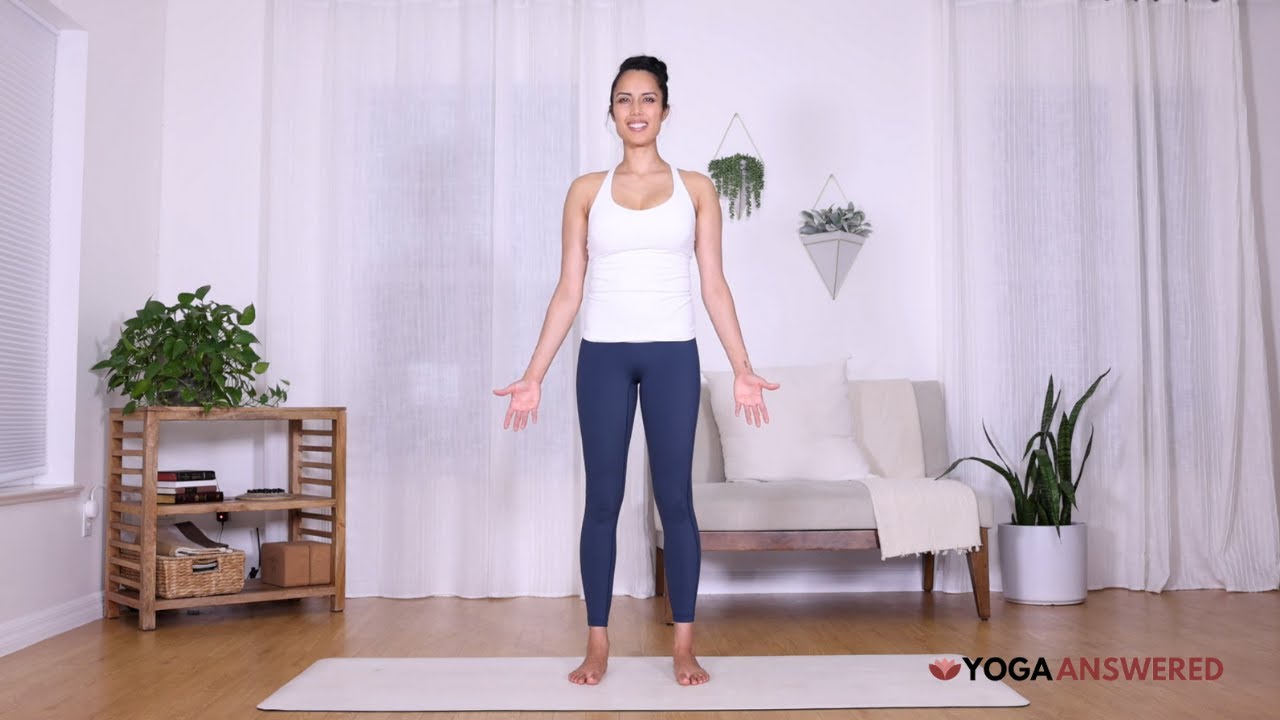
Mountain poses focus on standing strong, creating good posture for the other movements, and getting control of our breath.
Here's how to do it:
- Stand with your feet apart, arms relaxed at your sides so that your weight is evenly distributed on both feet, says Melissa.
- Engage your thighs slightly, lift your chest, and lengthen your spine.
- Roll your shoulders back and down, and reach your arms toward the sky if comfortable," she says.
- Hold the position, breathing deeply and steadily, grounding yourself through your feet.
If you're doing yoga as a beginner, try holding this position for 20 to 30 seconds. For those with more experience, she recommends 40 to 60 seconds, and if you're au fait with the mountain pose, one to two minutes.
2. Tree pose

The first in the sequence is tree pose. This one focuses on balance, since you're standing on one leg. If you need to, hold onto a wall for support while you improve with other balance exercises.
Here's how to do tree pose:
- Begin standing in the mountain pose, says Melissa.
- Shift your weight onto your left foot and place your right foot on your inner left thigh or calf (it is best to avoid the knee).
- Bring your hands to a prayer position at your chest, or overhead if comfortable, and focus your gaze on a fixed point in front of you.
- Hold the pose, then switch sides.
Beginners should try to hold the tree pose for 15 seconds, intermediate for 30 seconds, and advanced for 60 seconds on each side. Complete the movement 3 times over before moving on, taking a moment to pause between sets.
3. Seated spinal twist
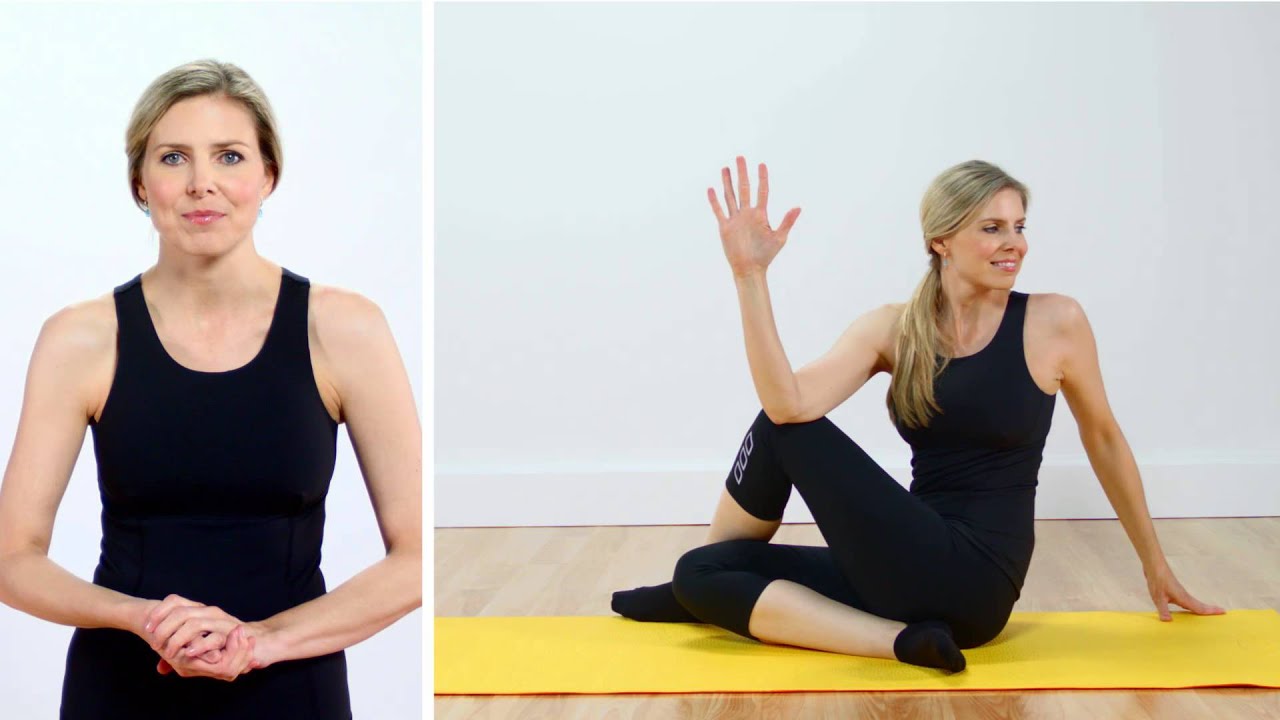
A seated spinal twist opens up the hips and is one of the best chest, shoulder, and back exercises you can do in yoga. It may also help reduce any discomfort you have in your upper back, but you'd need to check with a licensed physiotherapist first.
Here's how to do the seated spinal twist:
- Sit on a chair or yoga mat with your feet flat on the floor.
- Place your right hand on the outside of your left thigh and gently twist your torso to the left, keeping your spine tall.
- Hold the position for several breaths, then repeat on the other side.
Those doing the spinal twist as a beginner should aim of 15 seconds per side, intermediates for 30 seconds, and advanced for 60 seconds. Complete the movement 3 times over, pausing between sets to take a rest.
4. Cat-cow
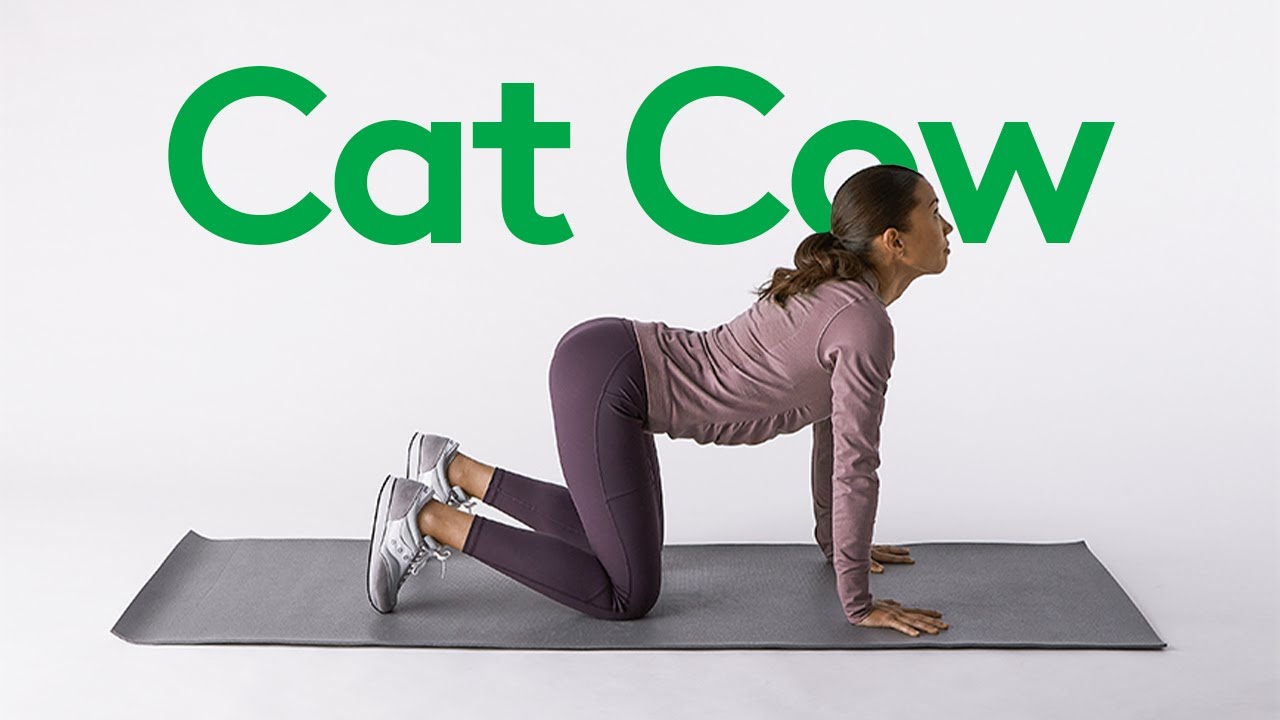
The cat-cow is another fantastic yoga pose for improving spinal flexibility, posture, and relieving tension from your back and neck.
Here's how to do the cat-cow:
- Start on all fours, with your hands under your shoulders and knees under your hips. Inhale, arch your back and lift your tailbone and head.
- Exhale, round your spine, tucking your chin and tailbone.
- Flow gently between the two, coordinating with your breath.
Those new to yoga should aim to complete the cat-cow for six rounds, intermediates for 10 rounds, and advanced for 15 rounds. Try to do each round 2 to 3 times, pausing between the sets to take a breath and relax for a moment.
Benefits of yoga over 60
1. Improves muscle mass
As we age, our muscle mass naturally decreases, leading to weakness in the legs and core muscles, Melissa explains. "Both of these are essential for maintaining our balance, and this is where yoga can help," she says.
"Many yoga poses require you to support your body weight and engage your core, legs, and back to stay steady. Over time, this helps rebuild key muscle strength without the high-impact of other exercise," she says.
2. Improves balance and flexibility
This improvement in strength directly contributes to improvements in balance and flexibility as the stabilising muscles in the core, ankles, and feet are stronger.
Poses lengthen the muscles while strengthening them, increasing the range of motion at the joints, and reducing muscle stiffness.
3. May ease digestive discomfort
Yes, really! While gut-healthy foods do the hard work, yoga can also help ease digestive discomfort.
"Many yoga poses involve gentle twists, bends, and abdominal compressions that help stimulate the digestive organs. These movements encourage better motility, the natural movement of food through the digestive tract, and support more efficient digestion," says Melissa, who is also a clinical nutritionist.
“Supporting the digestive system becomes especially important as we age, because it naturally becomes less efficient. Our metabolism slows, physical activity often decreases, and certain medications can affect gut function. Yoga offers a gentle, accessible way to counter these changes by stimulating the digestive organs, promoting regularity, and easing discomfort.”
4. Helps improve proprioception
Proprioception is our sense of where our body is in space. This also tends to decline with age, making trips and falls more likely. "But practising certain yoga poses, like tree poses, helps train spatial awareness and teaches your body to correct itself when you stumble in daily life," says the instructor.
5. Boots bone density
You might think you only need to do weight-bearing exercises for osteoporosis later in life, but the work needs to be done in your 50s and 60s to reap the benefits in your 80s.
"Yoga can help improve bone density in the same way it supports muscle strength, through weight-bearing poses that gently stress the bones. When you hold or move through poses like the warrior or triangle, your body weight creates pressure on the bones. This stress signals bone-forming cells to become more active, encouraging the growth of new bone tissue," says Melissa.
Do you need to do more exercise than yoga over 60?
Plenty of studies have highlighted the benefits of other types of exercise, along with yoga. For example, recent research in the British Medical Journal found that mixing short bursts of high-intensity exercise with low-impact exercises or rest was most effective for maintaining quality of life over 70.
How much exercise you should do is largely personal (aside from the NHS recommendation of 150 minutes of moderate intensity exercise or 75 minutes of vigorous intensity exercise), so this will be up to you and your abilities, fitness level, lifestyle, and whether you can do more exercise than yoga.
Always speak to your doctor before starting a new exercise regimen and consult a personal trainer if you're unsure where to begin.

You must confirm your public display name before commenting
Please logout and then login again, you will then be prompted to enter your display name.