This one exercise can 'protect your body as you age' and ease tightness from sitting down, says osteopath
Doing a deep squat a couple of times a day can make all the difference to your mobility, flexibility, and balance, says the expert


You are now subscribed
Your newsletter sign-up was successful
Want to add more newsletters?

Daily (Mon-Sun)
woman&home Daily
Get all the latest beauty, fashion, home, health and wellbeing advice and trends, plus all the latest celebrity news and more.

Monthly
woman&home Royal Report
Get all the latest news from the Palace, including in-depth analysis, the best in royal fashion, and upcoming events from our royal experts.

Monthly
woman&home Book Club
Foster your love of reading with our all-new online book club, filled with editor picks, author insights and much more.

Monthly
woman&home Cosmic Report
Astrologer Kirsty Gallagher explores key astrological transits and themes, meditations, practices and crystals to help navigate the weeks ahead.
Working at a desk or sitting down for hours on end can cause tightness in your hips, glutes, and lower back as the muscles stay in a shorter position. You'll also have less circulation and may sit in a posture that puts your neck, shoulders, and back in an awkward position.
The good news is you don't have to spend hours in the gym or do loads of glute exercises or tight hip stretches to start feeling flexible again.
How to do a deep squat
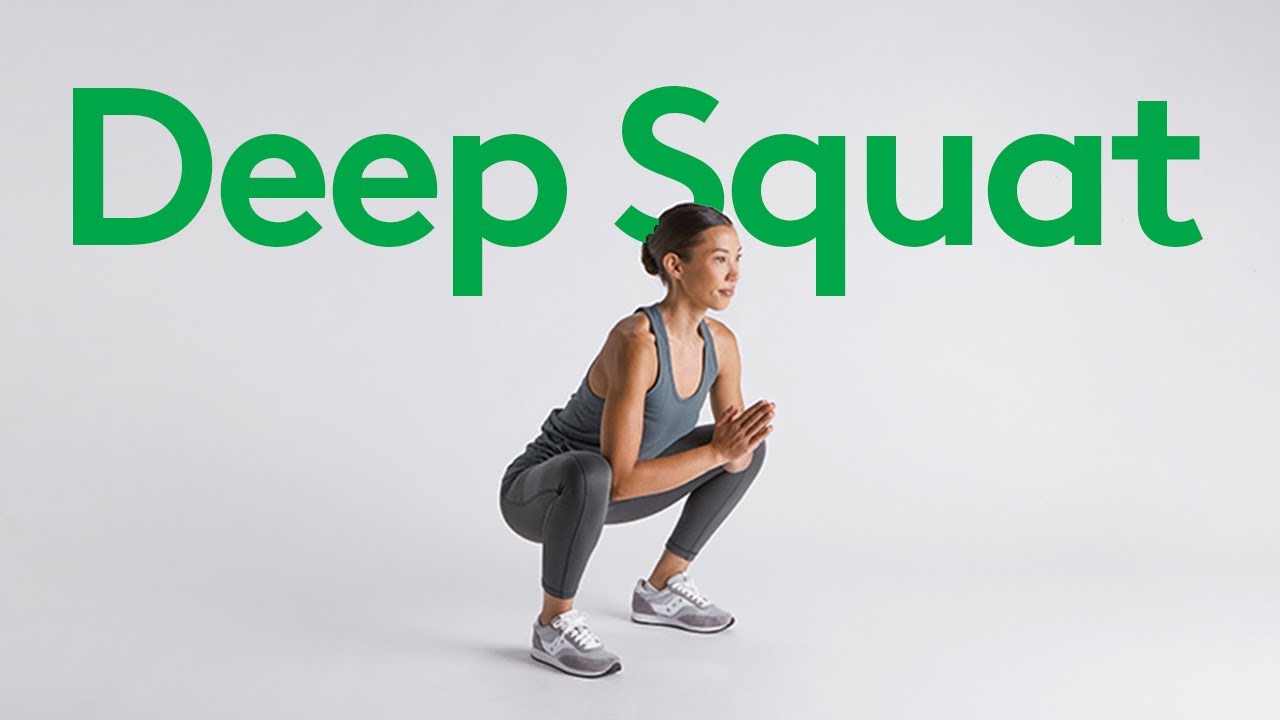
- Place your feet flat on the floor and slightly wider than hip-width apart.
- Keep your heels down and your chest tall as you lower your weight until you are in a seated position.
- Hold onto something, such as a chair for support, if needed.
- Push back up through your feet and return to the standing position.
- Repeat this movement three to five times every day.
While the deep squat is beginner-friendly for those who have a good range of motion already, if you're new to stretching or have particularly tight hips, build up to a deep squat.
"When you get more comfortable in the movement, aim to get slightly deeper in the squat each time, holding the position at first for a few seconds and then gradually building this up," says the osteopath.
“It’s important not to force anything. If you experience pain, then see an osteopath or physiotherapist. But for most people, doing deep squats every day is a game-changer.”
Benefits of the deep squat
It's a functional exercise
For those with limited time, functional exercise is key. That's exercise that mirrors everyday movements - like sitting down on a chair, climbing the stairs, and bending down to pick something up off the floor. The deep squat is an example of this.
“It’s really important, especially as we get older, that we incorporate simple movements into our daily routines to keep us mobile and flexible and improve our strength. And the deep squat is one of the best for full-body benefits," says Fatema.
Improves mobility and flexibility
By aiming for a deep squat, you're moving your hips, knees, and ankles through a greater range of motion. This helps to stretch out the muscles and ligaments, improving flexibility and helping the body to produce lubricating fluid around the joints, which helps our mobility.
“Going into a deeper squat just means greater mobility and flexibility, which is really important, and numerous studies have shown that improving flexibility can add years to your life," she says.
A 13-year study published in the Scandinavian Journal of Medicine & Science in Sports found that greater flexibility in older age was associated with improved mobility, reduced pain, and a lower risk of premature death.
It's why activities that promote flexibility are considered one of the best exercises for longevity.
Boosts balance
The osteopath says that the movement is key as we age, as it "ensures we remain strong and balanced while going from sitting to standing".
If you're looking for one of the best exercises to improve your balance, this is a great starting point. You'll naturally improve your core strength, proprioception, and balance by putting yourself in an unfamiliar position.
Improves strength
The squat is one of the best glute, hamstring, and quadricep exercises, Fatema explains. Even doing one just using your bodyweight will help improve your lower-body strength, in turn boosting muscle mass and bone density.
All three are hugely important for women as we begin to lose muscle mass from the age of 35, and a new 50-year study has shown that exercise is the key to preventing this.

You must confirm your public display name before commenting
Please logout and then login again, you will then be prompted to enter your display name.