Resistance bands are 'just as good' as dumbbells, PT says - here's a 10-minute workout to build strength and mobility
Grab your resistance bands and in just 10 minutes, you can do a full-body workout


These simple rubber bands may be half the cost and a fraction of the size of a pair of dumbbells, but they can be just as effective for strength training. You don't need to spend hours with resistance bands to get stronger either - even a 10-minute workout can help.
"Barbells, dumbbells and machines are great for building strength, but resistance bands are also an effective tool as they put muscles under tension, which elicits growth," explains Samantha Cubbins, a certified strength and conditioning coach with 20 years' experience, who works with Gymshark. "Some studies have even found that resistance bands lead to similar strength gains to dumbbells or weight machines when used efficiently."
Wondering where to start? Samantha has created this 10-minute resistance band workout from scratch. It works the upper and lower body in equal measure, and also helps improve grip strength. You'll need two resistance bands for this: a short one and a long one.
10-minute resistance band workout
1. Squats
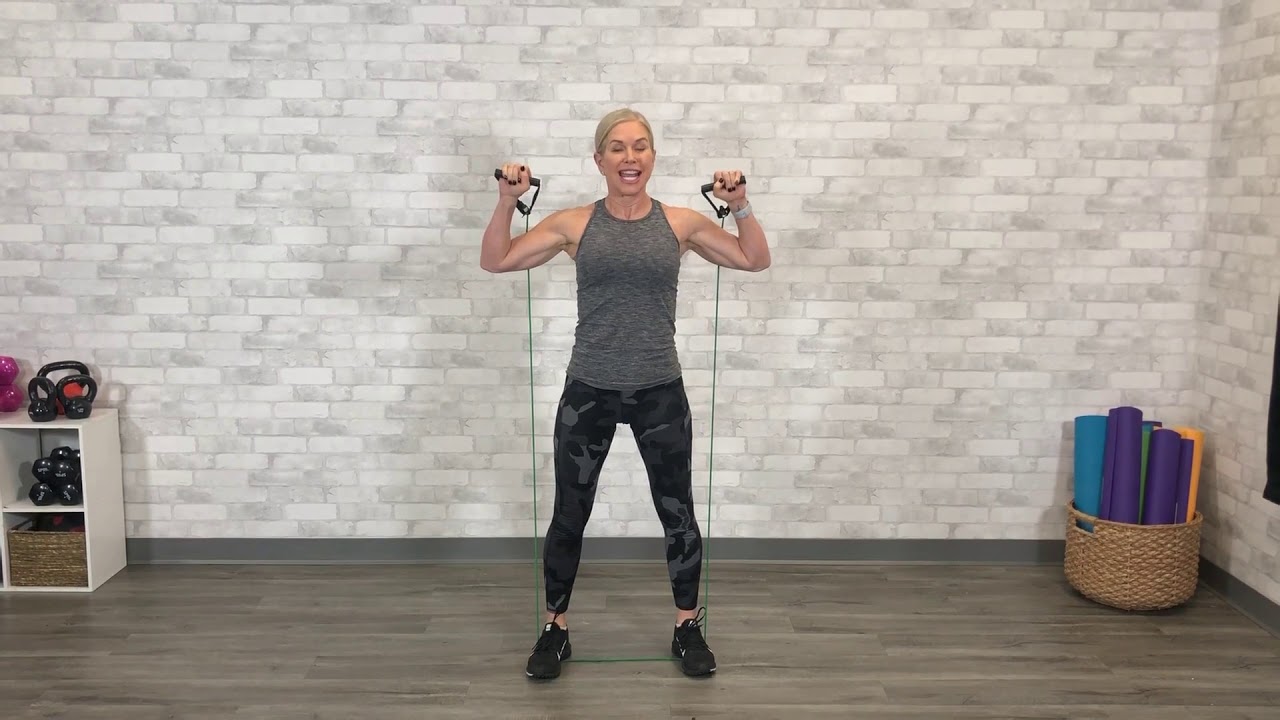
Squats are known as a compound movement, which means they work multiple muscles at once. You'll find it's a real glute and quadriceps exercise, focusing on the lower-body muscles in the buttocks and legs.
Here's a reminder of how to do a squat with a resistance band:
- Stand shoulder-width apart with the band under your feet on one end, the other end in your hands.
- Bring the band to shoulder height, holding it comfortably and securely.
- Sit back into your squat, making sure that your knees track in line with your toes as you come down. Try to come parallel to the floor.
- Push through your feet to return to standing.

You'll need a long resistance band for exercises like squats and rows. This set comes with multiple resistances and handles, which can also be very useful for the exercises in this workout - especially the rows. They attach to the end of each band.

For glute bridges and clamshells, you'll need to wrap a short resistance band just above your knees. This set also comes with multiple options so you can scale up your resistance as you get stronger.
2. Glute bridges
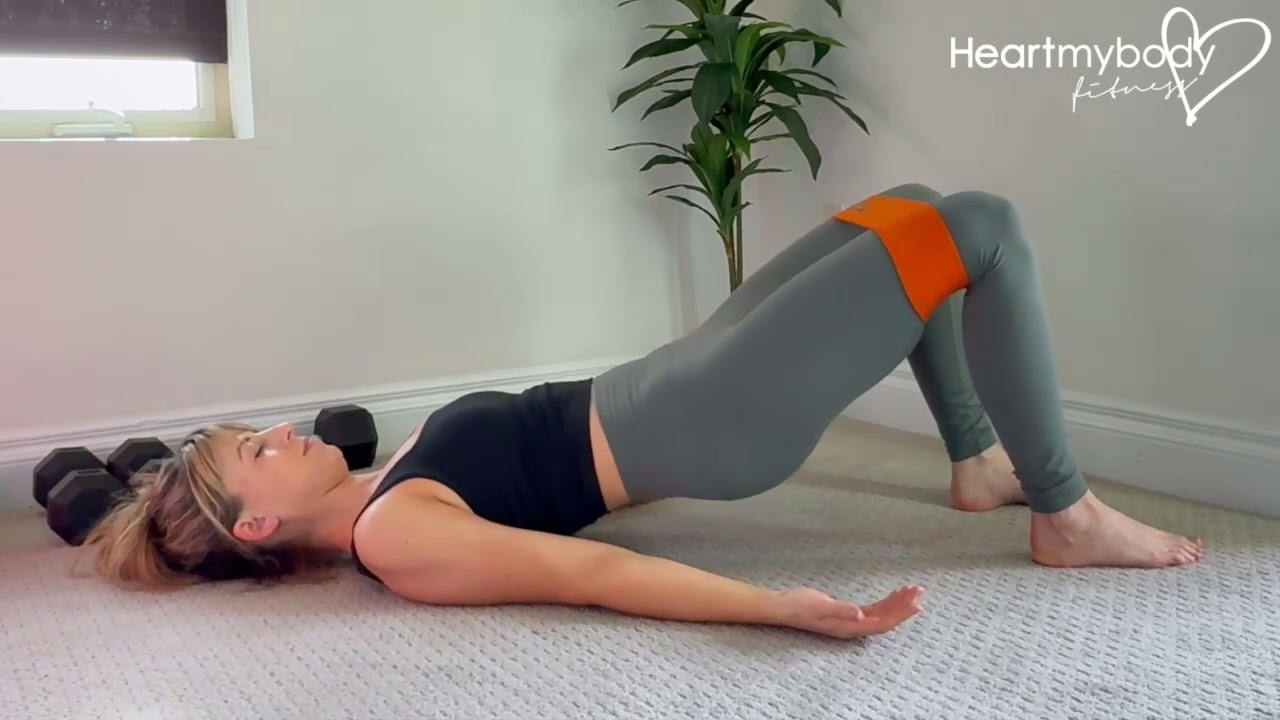
As a glute exercise, these bridges work all three major muscles in the buttocks. Strong glutes help with everyday movement, like standing up from a chair or climbing the stairs. You might recognise this exercise if you've done a lower-body Pilates workout before.
Here's how to do a glute bridge with a resistance band:
- Lie on your back with knees bent, resistance band wrapped around your legs, just above the knee. Your feet should be directly underneath your knees, arms at your sides with your palms down.
- Exhale and press through your whole foot, lift your hips. Think about driving the hips toward the ceiling by squeezing the glutes.
- Pause for a moment at the top, squeeze your glute.
- Come back down.
3. Clam shells

Clam shells are also one of the best glute exercises. As you might guess, the name comes from how your legs open and close, so you'll need a short resistance band for this one.
Here's how to do the clam shell exercise with a resistance band:
- Lie on your side with the resistance band wrapped around your legs, just above the knee. Bring your knees towards your chest.
- Stack your knees and hips on top of each other.
- Lift the top knee towards the ceiling as high as you can, making sure your hips don't roll back. Keep your feet together.
- Repeat the movement on one side then swap over.
4. Bicep curls
Moving on to the upper-body workout exercises. "You can do this during a wall sit for added heat," says Samantha.
Here's how to do a bicep curl:
- Stand on the resistance band so it sits under the middle of your feet. Hold the other side with both hands. Keep a soft bend in your knees and engage your core.
- Pin your elbows tight to your body, bend your elbows, and curl the dumbbell towards your shoulders, keeping your upper arms still.
- Hold at the top for a moment and then slower lower back down.
5. Seated row

For the seated row, a back exercise, you'll need to get down onto the floor and hook your long resistance band securely around your feet. Some packs come with a door anchor that you can thread through a closed door for more reach.
Here's how to do a seated row with a resistance band:
- Sit on the floor with your legs slightly bent at the knees, holding one end of the resistance band. Keep your chest lifted, shoulders back, and arms straight.
- Keeping your elbows close to the sides of your body, pull the band towards your waist.
- Pause for a moment as the band reaches your waist, squeezing your shoulder blades together.
- Return slowly to the starting position and repeat the movement.
Does a 10-minute resistance band workout really improve strength?
Yes, Samantha says that even if you can only do a 10-15 minute workout routine each day, using resistance bands on top of regular bodyweight exercises can help boost your overall strength and mobility.
To get stronger, you need to be progressively overloading. That means making an exercise harder - either by increasing the weight, how long it takes you to do it, or the number of times you do it. As you push through, tiny tears form in the muscle fibre. As these heal, you get stronger.
“For notable muscle growth, your muscles need to be placed under tension - using resistance bands or free weights - continually," adds the PT. "Frequency is important too. I would recommend aiming to use resistance bands daily to notice a real difference over time, if this is your main method to improve strength."
