Think Pilates is only a core workout? I'm an instructor and these 4 lower-body exercises will challenge you as much as any squat
Work your glutes, quadriceps, hamstrings, calves, and the tiny muscles surrounding them all in one go with a good lower-body Pilates workout at home


Strength training is the gold standard lower-body workout. Whether with your body weight or a set of weights, resistance exercise is key to boosting strength, stability, and bone density as we age.
It's not about all or nothing, though. Different workouts complement your strength training, cardio, or flexibility-focused exercise to create a rounded approach to fitness. A good Pilates workout at home can be one of them.
"While it’s well known for developing core strength, one of the things I love about Pilates is that it works the body as a whole. The core provides a stable foundation, which allows us to work the lower body with greater control and precision," says Pilates instructor and founder of LIM Studio, Isobel Palmer.
A lower-body Pilates workout also works the legs in a really "well-rounded way", she says. "Rather than focusing only on the larger, more obvious muscles, exercises can recruit the smaller stabilising muscles around the hips, knees, ankles, and feet, too."
Lower-body Pilates workout
1. Side-lying leg raises

A side-leg exercise targets muscles around the side of the hip, including the smaller muscles in the glutes (buttocks). "These play an important role in stabilising the pelvis and supporting good lower-body alignment," says Isobel.
Here's how to do it:
- Come down onto your yoga mat and lie with your legs straight, stacked on on top of the other.
- Put your top hand on the floor for balance and rest your head on your lower arm.
- Lift your top leg towards the ceiling. When it reaches hip height, lower it back down.
- Keep all movement slow and controlled.
- Repeat the exercise 8 times on each side.
2. Lunges

Lunges help build strength in the quads and glutes while also challenging balance and stability. "Because you're working in a split stance, they ask the body to control movement through the hips, knees, and ankles while maintaining stability through the pelvis and core," says the instructor.
Here's how to do a lunge:
- Stand with your feet hip-width apart, holding your weights or with your hands on your hips.
- Take a step forward. If you struggle with balance, take the foot out wider.
- Lower your hips until your front and back knee are bent at 90 degrees. Make sure your hips are straight on and your knee sits over your ankle.
- Come down until your back knee hovers slightly above the floor.
- Push through your front foot to return to standing.
- Repeat the movement 8 times on both sides, then switch.

I like hexagonal dumbbells like these by HOMCOM as they feel stable in the hand and don't roll away when you put them down on the floor. They also come as a set and are among the more affordable dumbbells around.
3. Glute bridges

The glute bridge is a classic glute exercise, but it also builds pelvic stability. "Once a regular bridge feels strong and controlled, progressing to a single-leg variation increases the challenge considerably and asks each side of the body to work independently," says Isobel.
Here's how to do a glute bridge:
- Lie flat on your back, placing your feet flat on the floor in front of your buttocks.
- Engage your core and press your lower back into the floor.
- Push through your heels, lift your hips off the floor.
- Make sure your head, back, and glutes form a straight line.
- Clench at the top and hold for a couple of seconds.
- Slowly lower your hips back to the ground.
- Repeat the movement 8 times.
4. Calf raises with a Pilates ball
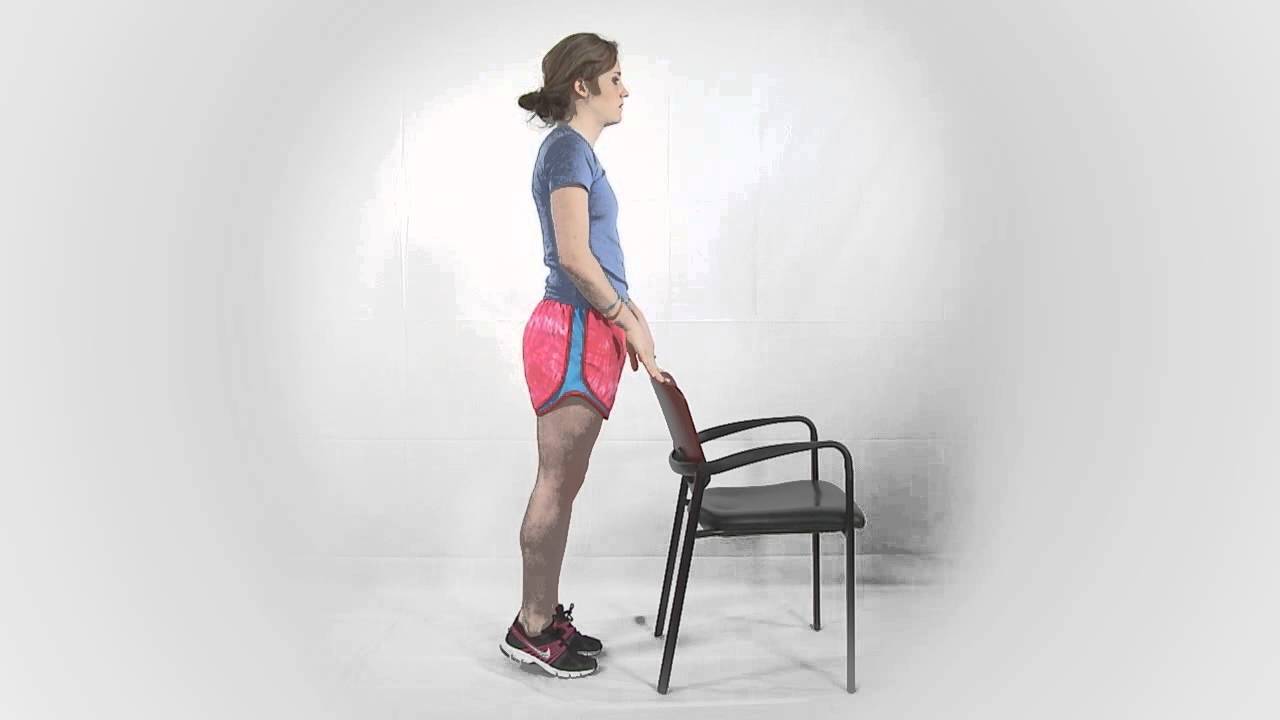
The calves might be among the smaller muscles in the legs, but they are two of the most powerful as the muscle helps pump blood back up towards the heart. Weak calves are also responsible for many runners and cyclists' injuries.
For the calf raise exercise, Isobel says she likes "placing a small Pilates ball between the ankles as it can help prevent you from simply rolling out through the ankles and allows you to target the calf muscles more effectively".
Here's how to do it:
- Stand tall on your yoga mat with your feet hip-width apart. Place a Pilates ball between your ankles to help with this.
- Slowly rise onto the balls of your feet.
- Pause at the top to squeeze your calf muscle.
- Slowly, lower your heels back down.
- Repeat 8 times.

A Pilates ball is among the cheaper accessories you can buy, but it's one of the most useful. The ball can help you focus on your target muscles, like the calves, rather than recruiting your ankles to help. It's also useful for hundreds of other movements.
What are the benefits of a lower-body Pilates workout?
- Builds strength and stability together: "What’s particularly valuable is the variety of muscle recruitment," says Isobel. "Squats and lunges, for example, can develop strength in the quads and gluteus maximus, while the Pilates side-leg series can target the gluteus medius and other muscles that stabilise the pelvis and hip."
- Focuses on alignment and control: "By creating stability through the core and paying attention to how the feet, ankles, knees and hips are working together, we can perform lower-body exercises more effectively," she says.
- Great for beginners: "I think of it as building strength from the ground up: the feet create the foundation, the core provides stability, and from there we can really challenge the legs," she says.
