I ran my first marathon at 70 and an ultra at 75 - here's why it's never too late to find joy in running
It was only when Maria Emmerson, now 76, retired that she decided to pull on her running shoes for the first time


Growing up, Maria Emmerson had always enjoyed walking around Spain's beautiful, rugged Basque Country. "I used to go to the mountains - that was my physical activity," she told me. But as an adult, after settling in England, teaching at Brighton University, and raising children, she had never pulled on a pair of running shoes.
That was until she retired and decided to take the trip of a lifetime: walking the Camino de Santiago, a 500-mile pilgrimage route that crosses Spain, on her own. "I had a five-kilo rucksack and, basically, I walked and ran because I was very keen to get to the next stop. It was a spiritual journey. It’s where people go to take a moment to reassess and find themselves," she says.
Two years later, Maria ran a near-half-marathon race that started in France and ended in Spain. Four years later, at 70, she ran her first full marathon. "It was joyful for me. I loved it," she says. "I could stop whenever I wanted, but I didn’t. I was completely my own ruler, and it gave me such a fantastic feeling of freedom and power."
The day I speak to Maria, she's recovering from a windy and rainy Brighton Half Marathon, her 19th half marathon. She tells me she's now completed seven full marathons and an ultra-marathon.
"My fastest marathon time was 4 hours 54 mins, at the 2024 London Marathon," she says.
That’s a lot of long-distance runs in a decade. More impressively, Maria started in her sixth decade and is running well into her seventh. There’s hope yet for those of us who feel we’re too old to start.

Maria Emmerson has run 19 half-marathons, seven marathons, and on ultra-marathon (50km).
Maria's tips for running
Love what you choose
Like any sport, activity or craft that we put our time and energy into, we need to enjoy it. Being passionate eases the pain that comes with pushing ourselves. Runners wax lyrical about the ‘runner’s high', a euphoric state first attributed to endorphin release. It's now thought to be caused by mood-boosting endocannabinoids in the bloodstream.
This high isn't as common as previously thought. In truth, long-distance running can be extremely arduous and gruelling. Is it as awful as childbirth, I venture?
"I've given birth to three sons, and each time I thought 'never again', but then you forget!" says Maria. "And marathons are the same. When I do them, I think, 'Oh, my God, this is so horrible', but two days later I’m thinking about the next one and how I'm going to improve. I’m basically obsessed with three things: running, my grandchildren, and Duolingo."
Know your limits
Any of us in reasonable health can start exercising at any time. But when you're older, there are a few caveats. "I’m against the current because the older you are, it’s much harder on your muscles," explains Maria.
She rests as much as she can to offset the constraints of a mature, post-menopausal body. It’s about knowing your limitations, she says. It's a realisation that tends to come with age.
"When I did the [recent] Brighton Half Marathon, I was thinking this is really hard. The wind, the hills, the rain, the cold," says Maria. "But I'm not going to shatter myself. I'm not going to get injured, so I bear that in mind."
To improve at any physical activity, we need to push ourselves. That's how muscle and endurance grow. However, it shouldn't be to the point where we become incapacitated. Taking time to heal means we get out of practice. Injuries foil our attempts at consistency, and consistency turns our goals into habits.
Maria gets few injuries because she’s wiser, she says. "Before, there have been times when I got a pain somewhere, and I said, 'Oh, it will be alright.' Then I’ll run again, and it's still there. And I’d say, 'That's fine, it will go away.' But it gets worse. I know this red light now, so I’m careful. It's much better not to run unless it's a tiny thing. You can run gently, but if it's still hurting, it's time to stop."
Warm-up and cool-down stretches can be very helpful, though not necessarily essential, according to some studies. Maria stretches, and she practises yoga to improve her balance and strengthen her core. A strong core is important for runners as it helps keep the torso and pelvis stable and protects the lower back, knees and ankles, so yoga or Pilates is an excellent option.
Consider a trainer - and other aids
Long-distance running requires endurance training over several months. You can do this alone, but a trainer – if you’re able to invest in one – will create a running schedule for you, as well as provide practical and emotional support.
Although Maria trains five days a week, and even runs when she’s on holiday, she knows her limits. Planning is key. Sarah Sawyer is her "wonderful trainer and a phenomenal runner", who adds three more kilometres to Maria's running schedule every week to build strength and stamina while minimising injury risk.
Maria also uses a Garmin watch and Strava to track her runs and finds both tools helpful to track her times and progress.
What about supplements? I ask. Only recently, she answers. Maria takes magnesium to reduce soreness and support muscle recovery, and collagen powder, which may support joint health and ease stiffness.
During a long run, Maria consumes carbohydrates in gel form. For her, these are essential and non-negotiable. "They're expensive, but they're amazing," she says, listing Maurten 100 as her go-to.
"In a marathon or long run, I have one every half hour or so because of the minerals and, most importantly, the carbohydrates and energy," she says.
Remember that life is for living
Maria may have retired, but that certainly hasn’t slowed her down. Just hours after the Brighton Half Marathon, she was at her young grandson’s birthday party. It seems that as demanding as long distances are, they provide Maria with purpose and vigour. Exercise may take energy and commitment, but what it offers in return can be both life-changing and life-extending.
"Not every day is jolly, but running is amazing. You are with nature, you are part of the earth, you're important," says Maria. "It's tremendous, because when you're running, you're untouched by sorrow and no one’s making demands of you."
Isn’t it tempting to compare yourself to others? I say. "It’s not about comparing yourself to other people. It's about doing the best you can do. I can't possibly compare my running with another person, because most people are much younger!" says Maria. She’s right, of course. Comparison is the thief of joy.
I ask Maria what advice she’d offer women in midlife who would like to start running. "Please don't have too high expectations of yourself. There's nothing worse than setting yourself unrealistic targets and making it so hard that you don't want to run again," she says.
"Run 100 metres, then walk, then run and walk. Next time, run maybe 120 metres and keep increasing. As long as you’re enjoying it," she suggests.
You don’t have to live like a nun, either. "I'm not going to give up running, and I'm not going to give up wine because I run," says Maria. "It’s all about balance."
Top running buys

Most experts recommend 30g of carbohydrates per hour while doing intense exercise like running. Energy gels, which can also contain essential minerals and caffeine for extra energy, is one way to make sure you consume that.

The Garmin Forerunner 70 is a top buy for anyone looking to invest in their first running watch - or as an upgrade to a regular fitness tracker. You'll get all your essentials (such as live distance and speed stats) along with recovery scores for sleep and stress.
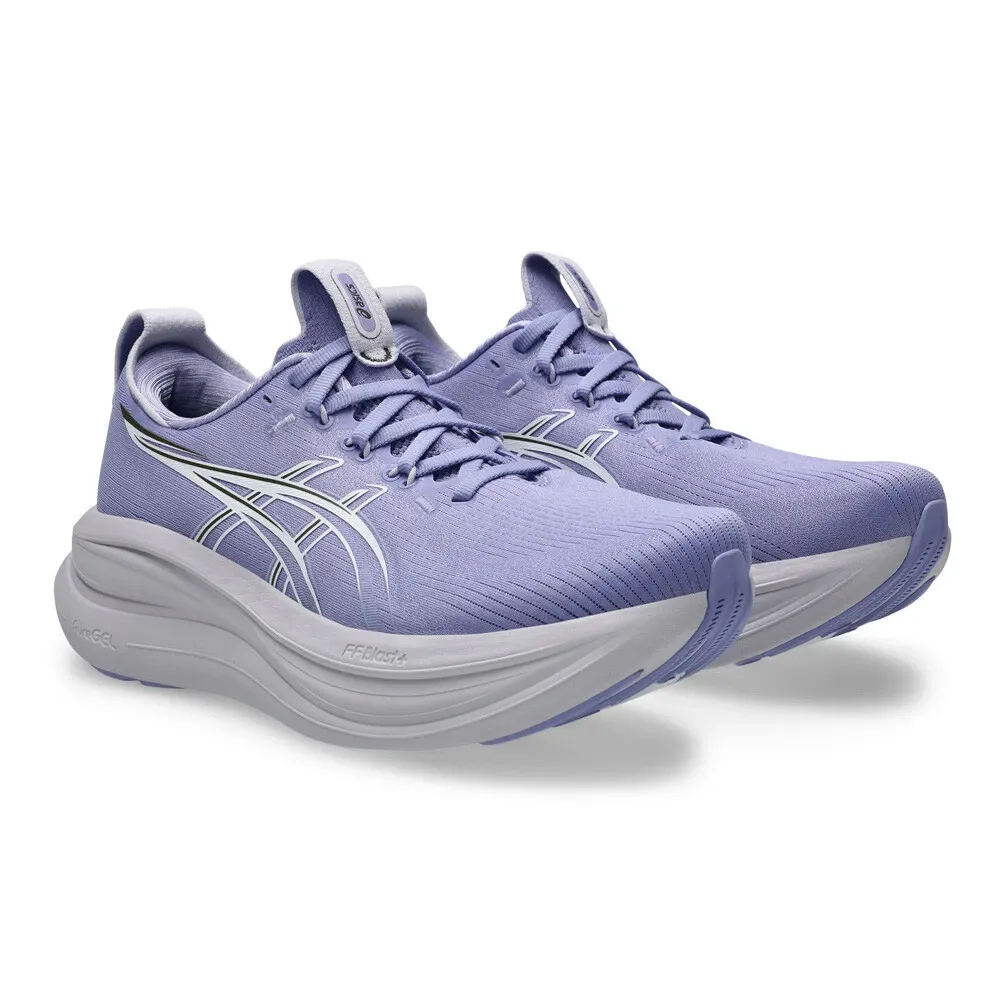
The Asics Gel Nimbus 28 are the favourite running shoe of Digital Health Editor, Grace Walsh. "I love how these shoes combine stability with support, offering a comfortable ride in every step, whether you're doing your first 5km or training for a marathon."
