After Hamnet - Maggie O'Farrell talks Land, Irish myths and seeing her novel become a film
The bestselling author discusses the family history behind Land, the enduring power of Irish myth, and why some stories are written into the landscape itself.


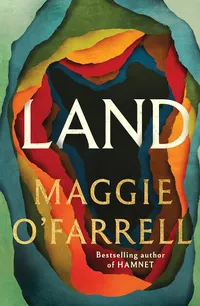
There are few authors writing today who combine history, folklore and human storytelling quite like Maggie O'Farrell. From the award-winning Hamnet to the unforgettable The Marriage Portrait, her novels have captivated readers with their emotional depth and richly imagined worlds. Now, O'Farrell returns with Land, her highly anticipated tenth novel, which transports readers to post-Famine Ireland in a moving story of family, memory and belonging.
It's little wonder Land has earned a place on our list of the books to read in July. Set on a windswept Irish peninsula in 1865, the novel follows a father and son working on the Ordnance Survey of Ireland, where an unexpected encounter changes the course of their lives. It blends meticulous historical research with the myths and legends woven into the Irish landscape..
Our Books Editor, Zoe West, sat down with Maggie O'Farrell to discuss the real family history that inspired Land, her lifelong fascination with Irish mythology, and why the landscape itself became one of the novel's most compelling characters. She also reflects on the extraordinary journey of Hamnet from page to screen and what it was like watching one of her most beloved stories take on a new life.
In conversation with Maggie O'Farrell...

Set on a windswept stretch of Ireland’s Atlantic coast in 1865, Land follows Tomás and his young son Liam as they take part in the ambitious Ordnance Survey project to map the country. In the aftermath of the Great Hunger, Tomás sees the maps as more than a record of place, they are a way of preserving the memory of a landscape and the people changed by its suffering.
But when an unsettling encounter in the woods disrupts their work, Tomás is transformed, leaving ten-year-old Liam to navigate his father’s mysterious behaviour while trying to complete the journey home. Blending history, folklore and family drama, Land is a haunting exploration of memory, belonging and the ways in which the past continues to shape the present.

For Maggie O’Farrell, stories have always been rooted in the places and people that came before us. The inspiration for her latest novel, Land, began with a family story: that one of her ancestors worked on the early mapping of Ireland.
“That ancestor was my great-great-grandfather, who Tomás is based on,” she explains. Researching him, however, proved challenging. As an Irish labourer, his contribution was rarely recorded in full. “Irish labourers couldn’t sign their work, so his name appears only briefly.”
Slowly, O’Farrell began piecing together fragments of his life. She discovered books, notebooks and field notes that she believes belonged to him, before an unexpected discovery brought the research even closer to home. “I spent years searching in Ireland, only to realise that much of his signed work from Scotland was just a mile from my house. It was extraordinary.” Combining these historical details with imagination, she began building the story around them. “In the end, it turns out, the myth was true.”

Fascination with the space between fact and folklore has long been central to O’Farrell’s writing. Although she was born in Ireland and left when she was just two years old, Irish mythology remains a powerful part of her identity. “At the time, it was frustrating, but now I’m grateful — it shaped my storytelling DNA.”
In Land, the storytelling influence can be felt through the voice of the landscape itself. Irish mythology is filled with a deep connection to the natural world: trees that speak, stones with their own consciousness, and legends of people becoming part of the land. O’Farrell wanted to capture that feeling in the novel. “I wanted that sense of the land’s voice in my book.”

The historical backdrop of Land also came from her research into her ancestor’s work with the Ordnance Survey. Discovering that Tomás began mapping Ireland in the late 1840s and revising maps throughout the 1850s gave O’Farrell a striking starting point: a man attempting to document a country still devastated by the effects of the Great Hunger.
“I tried to imagine altering maps while whole villages had disappeared, a million people had died and another million had emigrated,” she says. The changing landscape, particularly in the west of Ireland, and the responsibility of recording those changes became the foundation of the novel.
Ireland’s rich tradition of storytelling also runs through Land, from its myths and legends to its relationship with nature. Bran, the loyal dog in the novel, takes inspiration from the legend of Fionn MacCumhaill, while symbols from Irish folklore — including fish, sacred wells and ancient landscapes — helped shape the world of the book. “I’m fascinated by this mix of sacred, pagan and religious layers shaping Ireland’s mythology and identity,” O’Farrell says.

Of course, the last few years have also seen O’Farrell experience a very different kind of storytelling journey, with the adaptation of her acclaimed novel Hamnet into film. With the movie earning Oscar and BAFTA nominations for its screenplay, she describes the experience as “surreal and fun”.
Despite the scale of the project, O’Farrell admits she approached it cautiously. “I’ve seen many writer friends have their books optioned and almost happen, but then not,” she says. She never expected it to become reality, until the first day of filming.
Standing in the middle of the transformed village of Weobley in Herefordshire, surrounded by Tudor houses dressed for the production, she finally allowed herself to believe it was happening. “My husband asked, ‘Do you admit now that it’s happening?’ I looked around and realised, yes, it really is happening.”
The film, starring Jessie Buckley and Paul Mescal and directed by Chloé Zhao, feels to O’Farrell less like a recreation of the book and more like a companion piece. “It sits alongside it rather than replicating it,” she says, adding that she was lucky to work with such a talented team.
Would she return to screenwriting? Possibly, but only with the right story and collaborators. “Any future project would have to be with the right people, those whose vision you share and whom you trust creatively.”
For now, O’Farrell’s focus returns to the page, where history, memory and imagination continue to intertwine. With Land, she has once again transformed a personal connection into something universal: a story about family, belonging and the echoes that remain long after the past has been written.
If you like Land, try these....
Maggie O'Farrell's new novel Land is already a fast favourite of the woman&home team's. If you've read it and loved it, or want to add to your TBR list, these three are similar books that we think you'll love.

Winner of the Women’s Prize for Fiction 2026, this is another richly written book of literary fiction that focuses on a woman who's often overlooked. Sybil Van Antwerp, in her old age, reflects on her life through letters. With ruminations on what could have been, we explore life through the lens of an older woman.

This is the book that catapulted O'Farrell into the public sphere. The breathtaking novel of Anne Hathaway (Shakespeare's wife) and her children travels deep into the depths of loss, love, and loneliness. It's also a stunning motion picture too.

This debut novel is one of the best books of the year. Knapp explores the different lives that enfold in a sliding-doors narrative, triggered by naming a baby three different names. It's heart-wrenching, gripping, and utterly unique.
This certainly isn’t the last we’ve heard from O’Farrell and her creative genius. Each of her novels offers something distinct, yet every one is equally profound, showcasing her remarkable ability to explore the complexities of human experience with honesty, imagination and compassion. Land is a true literary treat for 2026, a beautifully crafted, thought-provoking read that cements O’Farrell’s place as one of the most compelling storytellers of our time. It is, without doubt, one of the best books of the year.
