I did the pigeon stretch for a week - here's what happened to my hips and lower back
The pigeon stretch can help alleviate hip tightness, lower back discomfort, and improve lower-body mobility


After months of tight hips, shallow squats, and pain after sitting at my desk all day, I decided to try the pigeon stretch. This is a flexibility, mobility, and discomfort-reducing pose popular in many yoga workouts, but I tried it every day for a week in the morning and as part of my cool-down routine in the gym.
I've done a few stretches for tight hips regularly over the years, but a lack of progress stopped me from including them in my regular stretching routine. After trying the pigeon stretch for a week, however, that's going to change. In just one week, I found my glutes and hips felt freer, my lower back pain reduced, and surprisingly, I found another quiet moment in my day.
You don't have to take its benefits just from me, though. I also spoke to Sam Russell, an expert trainer and yoga specialist with Les Mills, who told me it was one of her "all-time favourite" stretches. "It gets into places other stretches can’t reach, such as the deep piriformis muscle in the buttocks, as well as the hip flexors and glutes," she says. Here's how to do it.
What is the pigeon stretch?
The pigeon stretch targets the glutes, hip flexors, and muscles in the lower back, lengthening them to improve mobility and potentially ease discomfort.
It's done on a mat (I'd recommend a thick yoga mat from experience, as it reduces pressure on the knees). It does require some flexibility already, as you'll need to have one knee forward, sitting underneath your body, with the other out behind you. However, those with even basic flexibility can ease into it with a variation.
How to do the pigeon stretch
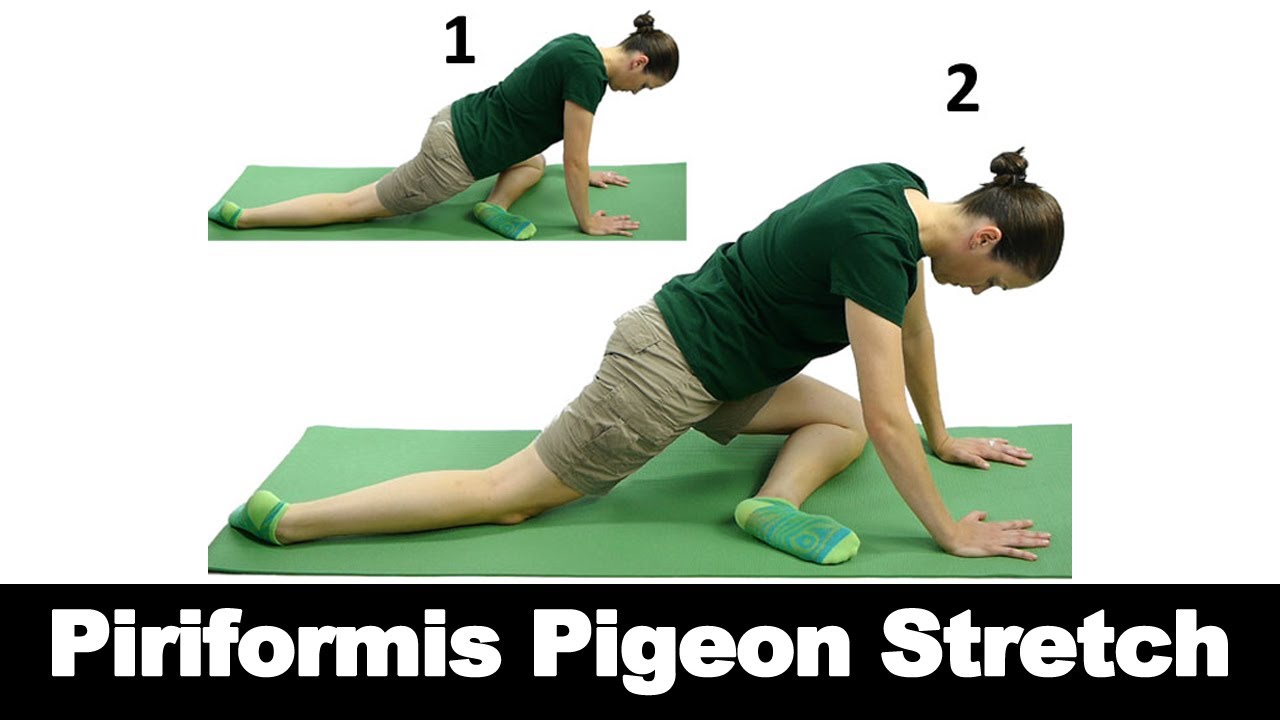
- Come down to your mat, starting on all fours with your hands directly under your shoulders and knees under your hips.
- Bring one knee forward under your body. Position it just behind your wrist on the same side.
- Push your other leg out behind you, keeping your hips facing straight on.
- Bring your foot around so it points to your hip on the opposite side. If you can, bring it round so it sits at a right angle, in line with your hands.
- Gently and with control, lower your hips towards the floor.
- Make sure not to roll to one side and stay up, keeping your back straight.
- If your flexibility allows for it, fold your upper body over your leg at the front. Face the floor and rest on your forearms.
Benefits of the pigeon stretch
1. Loosens the hips and glutes
While I spent my first few days slowly easing into the position, the first benefit of the pigeon stretch I noticed was noticeably looser glute and hip muscles.
After day three, I found that I could settle into the stretch fairly easily and really felt it working on these muscles, with a deep pull through my hip on the back leg and my buttock on the front leg. Getting up, I felt noticeably lighter and like I could move more freely. I'm going to keep doing the pigeon pose for this reason alone.
2. May help ease lower back pain
The pigeon stretch could be a good back exercise for those with lower back pain. It "puts length back into all the muscles that get short and tight from the vast amount of sitting we do", says Sam.
I hear that. Often, after a long day at my desk, I have to take a moment to get up carefully so as not to twinge my lower back. I wouldn't say this has completely stopped after doing the pigeon pose, but I can certainly feel it's better than it was a week ago.
This makes sense, says Sam, as the movement "reduces the amount of pulling on the surrounding tissues" in the lower back.
If you're in pain, see a certified physiotherapist before attempting any new movements in your routine, as it may make the condition worse if it's not done correctly.
3. Improves mobility
While tight hips are uncomfortable, the real problem with them is that they limit our mobility. The pigeon stretch can help undo this, stretching out the muscles around our hips to help them move more easily.
I noticed this getting on and off my office chair during the day, but also in the gym. I'm prone to doing a few random stretches to try and open up my hips before squatting, but I didn't feel the need after doing the pigeon stretch for a few days. I got more comfortable in my lower position as the days went on, too. I could get deeper into the squat and work more of the muscles in my lower body. Win.
Sam says there are other benefits of doing this mobility exercise, too. "It can support better posture by restoring pelvic alignment, aiding functional movement like walking as it frees up struck tissues and allows for healthier movement patterns," she says.
4. It's a quiet moment to yourself
It might sound funny, but I find this stretch adds a mindful element to my cool-down routine in the gym and my morning stretch sequence. It might be because it focuses on the hips, which, as Sam says, "hold or store emotions", or it could be because of the positioning of the pigeon.
As I've worked to the point where I can fold my upper body over my front leg, it's the only stretch in my routine that has my eyes looking towards the floor. Away from distractions, I feel more centred and present in myself.
How to make the pigeon stretch easier
- Use a yoga block or bolster: Accessories can help make the pigeon stretch easier if you're new to it. "Elevating the hip using a prop takes some of the pressure off the front knee. It may feel more comfortable as less flexibility is required to sit in this position. This higher position can also help better pelvic alignment, avoiding it tipping to one side, which in turn puts less stress through the lower back," says Sam.
- Do the Supine Figure 4 stretch instead: "It offers the same sensation of stretch without the knee torque," says Sam. "Because this one is performed lying on the back, there is no risk of the lumbar spine collapsing or forces going down into the knee or hip joint. The floor supports the body's weight instead. It’s also easier to control the amount of sensation felt as we use the hands to gently invite and guide the stretch." Follow a video for that here.
- Bend your back knee: Alternatively, you can simply bend your back knee so both joints sit at around 90 degrees. This will be easier on your hips and knees, but "gently leaning forward in this position will deepen the sensation felt in the glutes", says the trainer.

If the pigeon stretch is feeling more like a knee exercise than anything else, taking the weight off your hip can help reduce pressure on the knee. You can use a thick pillow for this, or a foam yoga block like this one.

My thick yoga mat of choice comes from Stakt. It's foldable across the sections so you can turn it into a yoga block. This also means it's easy to store. With 12mm of thickness, it's almost triple the comfort of most yoga mats.

If the Stakt is out of budget, my top recommendation is the Gaiam Premium Yoga Mat with its 6mm of support. This one is more versatile for other yoga mat workouts too, and it comes in a few fun colours.
Is there anyone who shouldn't do the pigeon stretch?
The pigeon stretch certainly isn't one of the yoga stretches for beginners to try if you're new to stretching, and it won't be suitable for everyone. "People with very poor flexibility should leave this for now," says Sam. "As should anyone with labrum tears, impingement, bursitis and/or arthritis due to the deep external rotation and compression through the hip."
Some people will also find the pigeon stretch harder than others, just because of how their bodies are. "Some anatomies do not favour the position (everyone’s hip sockets and femur angles are different), and certain injuries or medical conditions should avoid it or use heavy modifications," she says.
For example, anyone with meniscus tears, ligament issues or pain in the knee could find that the conditions are aggravated.

You must confirm your public display name before commenting
Please logout and then login again, you will then be prompted to enter your display name.