Forget counting steps - tai chi walking is a workout to improve your posture and balance
This alternative walking practice can work wonders for stress, mood, balance, posture, and more, without worrying about the impact of exercise on your joints


Tai chi walking is a slow and mindful practice that delivers as many mental benefits as physical ones. Far from a new trend, this walking exercise has been practised for thousands of years.
As you might expect, tai chi walking comes from the practice of tai chi, a slow and mindful martial art for self-defence from ancient China. Tai chi walking combines ancient Qigong energy practices with martial arts techniques to build balance and core strength. "It involves taking deliberate, flowing steps while engaging your core, relaxing your shoulders, and moving your arms gently in sync with your legs," says Shamar Thomas, a personal trainer, cardio specialist, and injury rehabilitation expert working with WalkFit.
How to do tai chi walking
- Stand tall: Begin with feet hip-width apart, knees soft, shoulders relaxed, and spine straight.
- Set your breath: Take a few slow, deep breaths to centre yourself and prepare for mindful movement.
- Step slowly: Lift one foot slightly and step forward gently, placing your heel first, then rolling through to your toes.
- Shift your weight: As you step, slowly shift your weight onto your front foot, keeping movements smooth and controlled.
- Move your arms: Let your arms flow naturally in sync with your steps, like gentle tai chi movements.
- Engage your core: Keep your abdominal muscles lightly engaged to support balance and posture.
- Stay mindful: Focus on your breath, the sensation of your feet on the ground, and the rhythm of your steps.
- Repeat and reverse: Continue stepping slowly for several minutes, then switch feet and reverse direction.”
For a demonstration, see the video below by Dr Paul Lam and Tai Chi Productions.
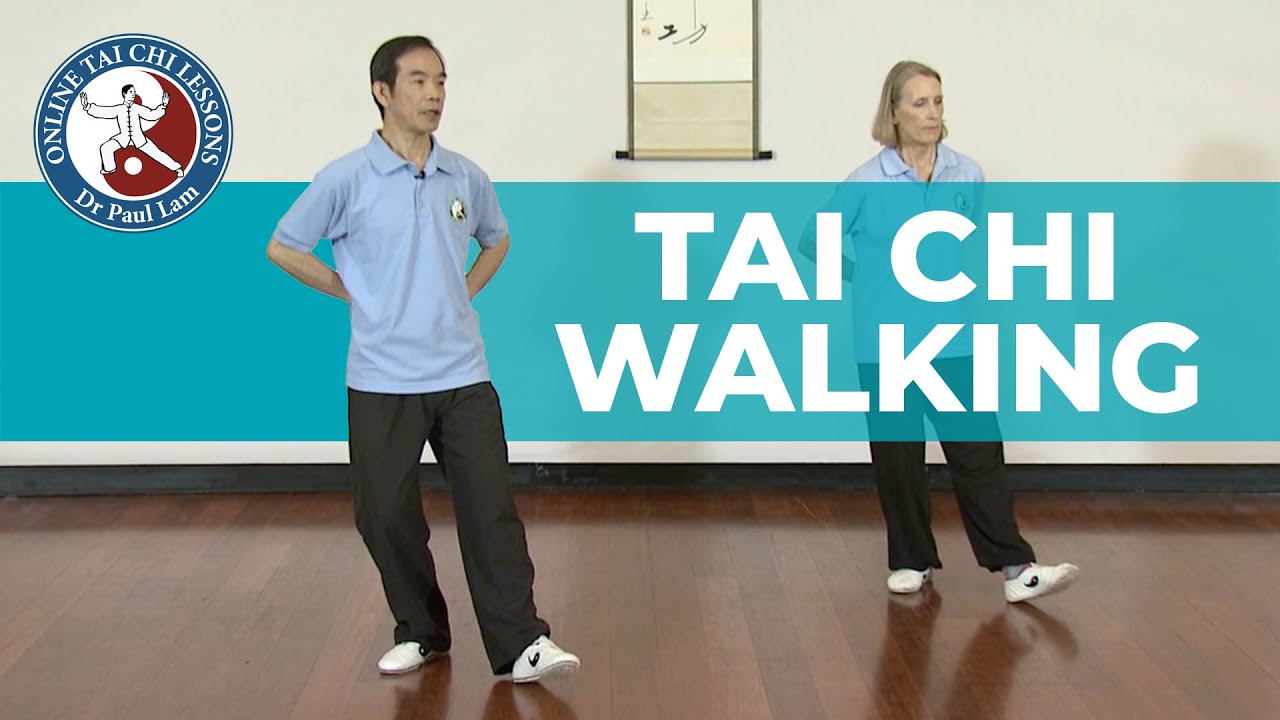
What are the benefits of tai chi walking?
1. Reduces stress
Slow, intentional breathing is one of the simplest ways to calm the nervous system, and this is exactly what tai chi walking prioritises. "Inhale deeply through your nose and exhale fully through your mouth as you walk," says Shamar. "Synchronising breath with movement helps reduce stress, enhances focus, and turns each step into a meditative experience.”
Dr Cassidy Jenkins, a psychologist also working with WalkFit, agrees. "Beyond its physical benefits, tai chi walking supports mental well-being by encouraging focus, reducing stress, and promoting calm."
Several studies have shown that traditional tai chi can improve sleep, with one showing a 50-minute increase in total sleep time.
2. Boosts mood
If you do your tai chi walking outside in the sunshine this spring, you'll reap double benefits for your mood: exercise and sunlight.
“The slow, mindful movements boost circulation, release endorphins, and anchor the mind in the present," says Dr Jenkins. "Brief exposure to natural light outdoors can help regulate your body’s internal clock. Whether practiced indoors or outside, tai chi walking is a simple, accessible way to lift mood and improve mental wellness."
3. It can be done anywhere
Now that spring is finally here, outdoor exercise is back on the table. Grabbing your walking shoes and heading out for some tai chi walking has the double benefit of exercise and fresh air.
However, if it's raining outside or you'd rather not leave the house, you can do it inside - and you don't even need a treadmill or walking pad.
"The practice benefits from a calm environment where you can focus on mindful movements and controlled breathing, whether in your living room or at a park," says Shamar.
4. Suitable for beginners
“Unlike Japanese walking, which emphasises posture and formality, tai chi walking is meditative, rhythmic, and fluid, making it perfect for beginners," says Shamar. "It’s low-impact, easy to learn, and requires no prior experience."
The practice is more mindful than other walking workouts as well, which helps with this. "Notice subtle sensations, such as how your feet touch the ground, the rhythm of your steps, and the environment around you," adds Shamar.
"Pay attention to these details to help anchor your mind in the present, fostering mindfulness and improving mood, while also helping to ease anxiety and tension."
5. Boosts confidence
Improving your fitness is one way to boost your confidence, but so is improving your mental resilience. Tai chi walking can help with this, Shamar says.
“I’d recommend always starting your walk with a clear intention. For example, think ‘I am calm’ or ‘I am present’ and repeat this with each step to reinforce this positive thinking. This can lift your mood and strengthen mental resilience."

You must confirm your public display name before commenting
Please logout and then login again, you will then be prompted to enter your display name.