Scientists say this simple leg exercise boosts strength, circulation and focus - I tried doing it every day to find out how
We're all missing a trick by not doing calf raises more often in our 40s, 50s, and 60s, these experts say


As we age, balance and stability become increasingly important. You might not want to think about it now, but preventing falls is key to moving freely and independently later in life.
Strong legs are crucial for this. It's why so many people talk about strength training nowadays, but strength isn't just about building muscle. It's as much about mobility and flexibility as it is sheer power.
The simple calf raise is the most overlooked and undervalued exercise to improve all three, as I discovered when I tried it for a few weeks. "It primarily works the gastrocnemius and soleus muscles in the calf, which are important for walking, climbing stairs, pushing off the ground and maintaining ankle strength," says personal trainer and women's strength specialist Kate Rowe-Ham, founder of Owning Your Menopause.
However, calf raises also benefit other areas of the body, including the circulatory system (which pushes blood around the body) and the brain.
How to do calf raises
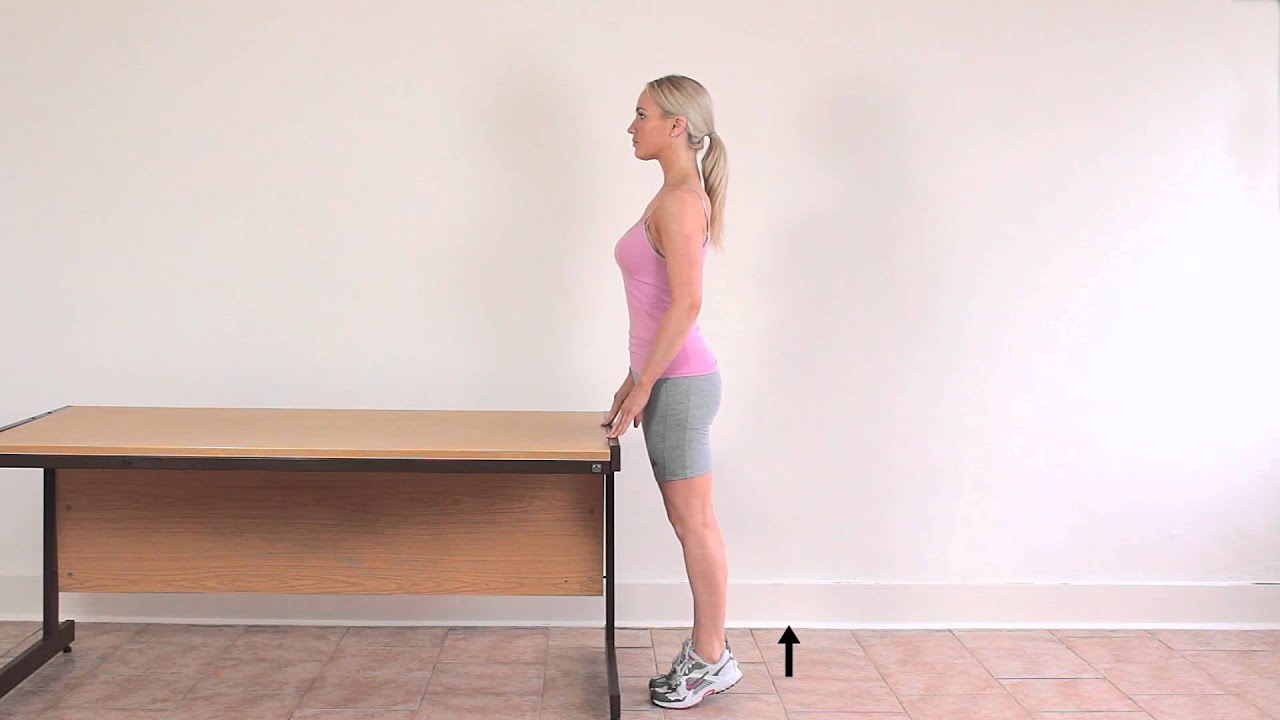
As with any exercise, good technique is critical. Personal trainer Edwina Jenner recommends the following steps:
- Stand with your feet roughly hip-width apart, beside a stable worktop or chair and use your hands lightly for support.
- Keep your body tall and your knees straight without forcing them backwards.
- Slowly lift both heels, keeping pressure through the balls of your feet rather than rolling onto their outer edges.
- Rise as high as you comfortably can, pause briefly, then lower your heels slowly to the floor.
“Think ‘lift and lower’, rather than bouncing up and down,” she advises. “Your body should travel upwards rather than rocking forwards. You are much better off doing 8 to 10 slow, controlled movements than 30 rushed ones, and you should feel your calves working."
How to make calf raises harder
Sounds too easy for you? The experts advise progressing gradually so you don't compromise technique, even though it's a simple exercise. “Once two-legged calf raises feel comfortable, you can progress to single-leg raises, which increase the demand on each calf," says Kate.
"You can also hold dumbbells for extra resistance, slow the lowering phase, or pause at the top," she adds.

Simple weights - such as these wrap-around ankle weights - can make all the difference to lower-body exercises like calf raises. They add a little extra weight for you to work against, improving strength and mobility.
Benefits of calf raises
1. They boost muscle strength
Strong, stable lower limbs equal balance and stability as we age, helping us stay independent and keep doing the things we love, from running around after our families to working out, walking, and more.
“We often focus on our glutes, abs, and arms, but our calves play an important role in how we move, our ankle stability, and our ability to stay active as we age,” agrees Kate.
2. Anyone can do calf raises
“Calf raises are incredibly accessible,” says personal trainer Emma McCaffrey. “You don't need access to a gym, any equipment or too much time to build them into your routine, making them perfect for busy midlife women.”
Do them while the kettle boils in the morning, while you brush your teeth at night, under your desk at work, or while you talk on the phone. It's a great exercise snack.
3. They boost circulation
Fun fact: our calves are sometimes called our ‘second heart’. They are made up of two muscles: the gastrocnemius, which you can feel close to the skin, and the soleus, which sits underneath it and helps pump blood around the body.
Studies show that calf size and strength are associated with better heart performance and more efficient circulation, proving that while the soleus muscle may not be the largest in the body, it is one of the most powerful.
4. They reduce injury risk
Better balance and stability mean we’re less likely to fall and more able to catch ourselves if we do trip, meaning we’re less susceptible to injury as we age.
Calf raises also help us mobilise the ankle joint, which studies show is closely linked to a reduced risk of injury. It's certainly one of the best exercises for longevity.
5. They improve brain health
Another surprising benefit of strong calves? Along with enhancing heart health, calf raises can give your brain a boost and improve focus.
Good circulation improves blood flow to the brain, and research shows that calf size may correlate with improved cognition, something we know can decline around perimenopause.
I did calf raises for a week
I was cavalier about this challenge. As a Pilates obsessive, I assumed my calves and ankles were pretty strong already. After all, Reformer footwork is not for the faint-hearted. I was soon humbled. The experts were right: this one burns. I started with two sets of 10 reps, a couple of times a day. Put it this way, by the morning of day two, I could definitely feel my calves.
Turns out, I might have been a little optimistic doing so many. “For someone starting, I’d suggest one set of eight to 12 controlled repetitions twice a week,” Edwina says. “If that feels too much, start with five repetitions and build from there. As you get stronger, you can progress towards two to three sets, resting a minute between them.”
She reassured me that the final few repetitions should feel challenging (yes!) but that I should still be able to lift and lower with control, with no ankle rolling.
So, for the next couple of days, I dialled things down a little and popped a few raises in during the day as an exercise snack. This felt much more manageable - especially when I held onto my kitchen worktop to improve my form.
I also tried doing the move on the stairs, which doubled as an excellent stretch for my calves.
By midweek, I was keen to up the ante. I tried wearing ankle weights while doing them, and I was instantly surprised by how much I could feel my ankle joint working, especially around the outer calf. It was proof that the move is excellent for ankles as well as calves.
Perhaps it was in my head, but I definitely felt stronger in my Pilates class this week: my footwork was smoother, and my ankles didn’t tire as fast as usual, which I’m taking as a win.
Overall, I was pleasantly surprised by how tough I found doing calf raises every day. They were super easy to fit in and make the perfect move while waiting for the kettle to boil. I certainly noticed the slow burn. While I can’t say a week suddenly improved my balance, stability or mobility, I’ll include it in a well-balanced routine going forward.
