Dame Sarah Mullally confirmed Archbishop of Canterbury - but why does a woman in charge still feel historic in 2026?
Her appointment is a milestone worth celebrating, but also exposes how rare female leadership still is, and why women at the top are judged differently
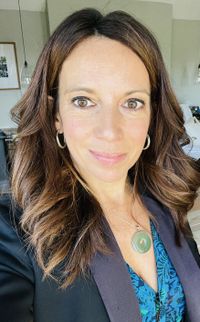

This week, Dame Sarah Mullally became the first woman to take on one of the most high-profile roles in British public life as she was officially confirmed as the 106th Archbishop of Canterbury. It is undeniably momentous. But the fact that this feels historic in 2026 raises an uncomfortable question. Why is a woman reaching the top still considered such a breakthrough?
It isn’t because progress hasn’t been made. Women now lead countries, companies, and institutions that once felt permanently closed to us. But when you look at the numbers, the imbalance is stark.
Fewer than 17 per cent of the world’s nations are led by women. In the UK, there are just 19 female CEOs across the FTSE 350. And whilst the Church of England has made progress in opening leadership roles to women, there are still only 7 female Diocesan Bishops (out of 42)
So, whilst Mullally’s appointment marks a change, it also highlights how relatively rare it still is to see a woman at the very top and how such a promotion is both celebrated and analysed in a way that a man’s rarely is. Progress, yes. Normalised? Not quite.
‘As a woman in the church, it often seemed necessary to justify my presence in the leadership roles I was given beyond simply being able to do the job. I trained five male curates in my parishes, one of whom went on to become a bishop, yet this raised question marks for some. It was as though I had to prove I could be responsible for their development despite being a woman.’
Dame Sarah’s appointment matters because it challenges deeply held prejudices around who looks like a leader
Having seen first-hand how much harder than her male peers Mum had to work to be accepted and taken seriously, I’m acutely aware of how deeply ingrained instincts around leadership affect the behaviour of many. Decades of research have shown that, when people picture authority, they still picture a man - a phenomenon originally termed ‘think manager, think male’ by psychologist Professor Virginia Schein. In institutions such as the church, shaped by tradition, hierarchy, ritual, and biblical belief, that bias is even harder to shift. Women may be accepted in principle but still questioned in practice.
Sociologist Alice Eagly’s work on ‘role incongruity’ highlights another challenge experienced by many female leaders - that women are often judged not just on competence, but on whether they behave in ways that feel acceptably feminine. Too soft, and they’re not taken seriously. Too decisive, and they’re seen as unlikable. It’s a balancing act which men are rarely asked to perform - and one that can make women’s authority feel disproportionately scrutinised, however qualified they are.

Perhaps this is why Mullally taking up this role feels particularly charged as we are aware of how much tougher her journey to the top must have been in comparison to male contemporaries. Women who reach leadership positions in resistant organisations often do so having already navigated scepticism, compromise and heightened questioning. That experience isn’t unique to the Church. It’s shared by women in boardrooms, politics and public life where authority often still comes with unspoken gender bias.
Dame Sarah’s appointment matters, because it challenges deeply held prejudice around who looks like a leader, who sounds authoritative, what life skills matter and who feels ‘right’ in charge. It also raises the question of whether a deeply tradition-bound institution, still greatly divided when it comes to the question of female leadership, can truly adapt to having a female figurehead.
Revd Rachel Webbley, 50, a Team Rector in Whistable, certainly hopes so. She welcomes the new archbishop’s appointment on many levels.
‘I’m delighted to see a woman take the reins as it serves as a reminder of how far we've come. When I was a child, there weren't women priests let alone bishops so it’s good to see our institution evolving. But, above all I feel relief that such a good appointment has been made. The fact that she’s female is just a bonus. What matters more is that she's such a strong, experienced, wise and kind individual who I think will lead us brilliantly.’
If the Church of England - one of the country’s most tradition-bound institutions – can unite behind Archbishop Sarah, it will say much about the future of women in leadership as well as the future of the faith. And perhaps bring us a little closer to the day when we stop counting ‘first women’ and simply accept that the best person got the job.

You must confirm your public display name before commenting
Please logout and then login again, you will then be prompted to enter your display name.