Everything you need to know about The Testaments, even if you haven’t seen The Handmaid’s Tale
You can still watch The Testaments even if you haven't see The Handmaid's Tale - here is a handy overview of what you need to know


The Testaments has arrived at Disney+, and one of the main questions people want to know is whether they can still tune in and enjoy it, without seeing The Handmaid's Tale first.
As a sequel series to The Handmaid's Tale, The Testaments premieres on Wednesday, April 8, 2026, dropping three episodes on this date. After this, the remaining seven episodes will air weekly.
Article continues below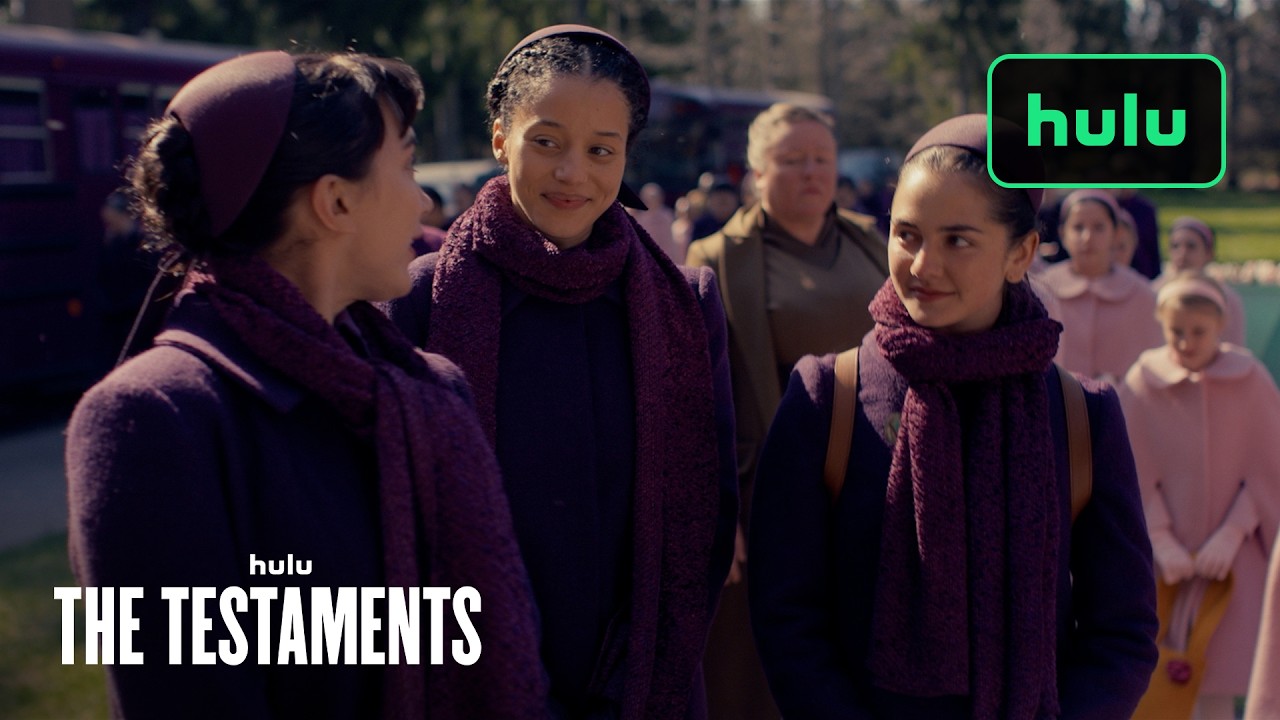
The dystopian world of Gilead
The action in both The Handmaid's Tale and The Testaments takes place in The Republic of Gilead.
The Handmaid's Tale explains that Gilead formed in response to plummeting birth rates caused by global warming and pollution - a religious movement called The Sons of Jacob staged a violent coup to attack the United States government and take over the country in a bid to restore fertility and a clean environment.
With a new name, Gilead is located in the former United States, with its capital in Washington, D.C. The Sons of Jacob have a stronghold over most of states, and have put a strict, totalitarian regime in place to control citizens.
Under their laws, all women have no rights - they're forbidden to learn to read or write, and their only job is to have children or serve the men if pregnancy isn't possible.
So-called 'fallen women' from the US before it became Gilead, were rounded up and forced into childbearing servitude and given the title 'Handmaid' if they were one of the few remaining fertile ones.
Any existing children the fertile women had would be stolen from them and 'given' to a high-ranking Gilead family and their name changed. Handmaids are watched over and 'trained' by Aunts - in pre-Gilead times these would've women who worked in education or with families, who were found to hold strong religious views in line with Gilead's.
Under the Gilead hierarchy there is a strict ranking system with Sons of Jacob Commanders and their Wives at the top. Handmaids who had previously done anything thought to be immoral, were 'assigned' to a Commander, and raped in the hope they would become pregnant.

Immorality was defined as any woman who was gay, had undergone an abortion, or had an affair or child out of wedlock - there were more reasons, but you get the gist.
If they did become pregnant as a Handmaid, the baby would be given to the Commander and his wife and the Handmaid would be sent to another family to begin the childbearing process again.
Any Handmaid who doesn't fall pregnant is sent to The Colonies - an area full of radioactive waste from the bombs dropped during the coup, and they'd be forced to clear up the waste with no protective clothing.
This is a death sentence, and they'd die from radiation exposure shortly after arriving at The Colonies.
Non-fertile women not considered immoral became Marthas. These are servants to The Commanding families. In the show, previously well educated women including doctors and surgeons would be made Marthas, as no women are allowed to work.
Wives have slightly better lives than Handmaids and Marthas, and although they remain forbidden from reading, writing, or working, they are allowed to indulge in some things that might interest them - gardening, knitting and hosting tea parties are just some of the permitted activities.
Handmaids can accompany their assigned Wife to a tea party, but would stand on the side lines and not participate in any way. Marthas would be preparing food and serving at any event like this.
Gilead ranking is defined by uniform
Uniform doesn't apply to men too much in Gilead, although Commanders usually dress smartly in suits and Wives wear varying shades of teal. Marthas wear a very dull, pale green that can sometimes look like a washed out grey it's so drab.
Handmaids wear blood red dresses and white bonnets. Red is a symbol of their fertility, representing the blood of childbirth. It also makes them easy to identify and therefore quick to spot if they try to escape.
The bonnets hides their faces, limiting their vision and harking back to Puritan clothing of centuries gone by. These also prevent them having any contact with the world, keeping an air of division between them and preventing friendships and alliances forming.
Little girls wear pink, and when they reach puberty and are nearing readiness to become a Wife, they wear lilac. This is important for when you watch The Testaments - any girls like Agnes wearing lilac are about to be married to a commander - girls are married off young in the hope they'll maximise the chances of pregnancy.

June is important
The Handmaid's Tale focussed on a Handmaid named June. Before she was made a Handmaid, she had a daughter called Hannah who was taken from her and renamed Agnes.
Although June spent six seasons trying to get Hannah/Agnes back, that never happened and the show concluded with June having escaped Gilead but vying to one day get her daughter back.
The Testaments is set 15 years after The Handmaid's Tale came to an end, and Chase Infiniti plays an older Hannah/Agnes who is starting to question the world she's grown up in, with only vague recollections of her real mother.
While June was imprisoned in Gilead, she was assigned to the Waterford family, Commander Waterford and his wife, Serena.
She had what began as an illicit relationship with the Waterford's driver, Nick. When she didn't become pregnant by Commander Waterford, Serena was so desperate for a baby and would do anything for June to get pregnant at any cost.

Instead of reporting June's relationship with Nick, which could've resulted in them both being sentenced to death, Serena encouraged it in her determination for June to have a baby.
June does end up having a baby with Nick, and baby Nichole is immediately taken from her and given to Serena.
However, while having a wobble about whether or not she wants Nichole to grow up in such a misogynist environment, Serena ends up agreeing to let her be smuggled out of Gilead to a place of safety in Canada - a decision she later regrets wholeheartedly.
Nichole is later renamed Daisy - who is the character we meet in The Testaments. So, Agnes and Daisy are half sisters, and June, the infamous escaped Handmaid, is their mum.
Aunt Lydia is also important
Ann Dowd's Aunt Lydia is probably the most important part of the story. Those watching The Testaments will see her overseeing Agnes as she ponders whether becoming an Aunt herself is right for her.
Aunt Lydia was also responsible for June when she arrived in Gilead, and did absolutely despicable things to her and all the Handmaids she was in charge of 'training.'
Having believed wholeheartedly that Gilead was doing the right thing by using religion and control to restore fertility, by the end of The Handmaid's Tale season 6 she could really see the regime for what it was.
With an overwhelming sense of guilt, Lydia wants to burn Gilead and everything it stands for to the ground. Knowing Agnes and Daisy's relationship to June, and having built an unbreakable reputation in Gilead, Lydia is well and truly placed to use both girls achieve her mission.
The Testaments airs from April 8 on Disney+.

You must confirm your public display name before commenting
Please logout and then login again, you will then be prompted to enter your display name.