
The phone rang at 2.34am, waking me with a jolt, and before I answered it, I already knew it would be my sister and, instinctively, I knew why she was calling. ‘Mum's gone,' she said, quietly.
Listening to her speak, I murmured all the appropriate noises as she explained that Mum had collapsed and died instantly from a sudden brain bleed. She was 87. I stayed on the line for a few minutes and then hung up. I then pulled the duvet up to my chin and went back to sleep.
Article continues belowWhen events like Mother’s Day come around, I’m aware of other people celebrating and being grateful. But growing up with a mother like I had, it’s a reminder of a relationship that caused endless anguish and heartache.
In adulthood, I always found Mother’s Day nauseating in its tweeness and painful in its reminder that my mother lacked the nurturing qualities that are celebrated on this day.
‘Before you judge, you need to know my story'

Katrina Collier with her Mum - Katrina's 1st birthday party
I grew up in Sydney with my parents and three siblings in a house governed by fear, all of it emanating from our mother. The four of us lived in terrified silence, dealing with her relentless emotional and physical abuse.
One day, when I was three, I had a tantrum because I didn't want to leave nursery at pick-up time. It was a normal messy burst of childhood emotion, but when we got home, my mum was so angry that I'd embarrassed her in front of the other parents that she beat me furiously with her bare hands.
I buried the trauma of the incident so deep that I forgot it happened until years later when Mum casually mentioned it. ‘That's when I learned how a parent can kill a child,' she said with no shred of remorse or shame.
When I was eight, the neighbour's dog fell into our pool and nearly drowned. Somehow, I got the blame, and the beating I got from Mum afterwards was savage. She made me bend over the bed and wait for the cane handle of the feather duster, the anticipation almost worse than the pain itself. She always made sure never to leave visible bruises.
My dad was easier to love because he didn't scream or hit. Working long hours as a university lecturer, he'd often get home at 9pm and sleep through the weekends, which meant he rarely saw the abuse. But as I got older, I came to realise he did know it was happening.
He'd suffered childhood trauma himself and was too weak to protect me and my siblings. When I tried to tell him how Mum treated me, he would shrug and say, ‘You can't change your mother.' It took me decades to realise his refusal to protect us was its own form of harm.
The abuse from Mum didn't stop when I got older. As a teenager, I was still beaten if my report cards weren't perfect or for perceived slights I didn't even understand.

Katrina Collier with her Mum - Katrina aged 2yrs, 8months
I hit Mum back once and she went berserk hitting me over and over, so I never did it again. By then, my self-esteem was in tatters. Thankfully, the friends I made at school gave me the love I wasn't getting at home, but the inner critic Mum had installed in me was relentless.
After leaving school, I went to university but failed and got kicked out in my second year. I started working in a bank and, at 21, I finally left home and moved in with a friend.
Mum told me that I'd never survive in the real world because I was useless. Riddled with insecurities and seeking validation, I slept around and found myself in relationships with violent and narcissistic men, replaying familiar patterns without understanding why.
At 27, I met a kind man and we got engaged. Mum was mostly well behaved in front of him, but in a private conversation, she told me the engagement ring made her sick and that she disapproved of us living together – an extraordinary judgement from a non-religious woman.
Her words made me curl into a ball and sob. Unconsciously, I sabotaged that relationship by being unfaithful and just six weeks before the wedding, I called it off.

Katrina and her Mum at Katrina's 21st birthday
‘Friends gave me the love I wasn't getting at home'
I met another man at 29 and after I introduced him to my parents, Mum told me I wasn't good enough for him, her words feeling like a physical punch. Hoping to avoid drama with Mum, my fiancé and I eloped and moved to the UK, where he was from.
Neither my husband nor I wanted children, with my own reason being that I was terrified of passing my trauma on to my child. I'd also felt so trapped growing up that freedom felt precious and not something I was willing to surrender. Of course, Mum called me selfish.
Distance from her helped, but didn't save me. Occasionally, emails arrived listing my failings as a daughter and when I finally confronted her, sending back her own words, she accused me of being vindictive for keeping her emails as ‘evidence'.
When I was 40, I visited a life coach to help with some work issues, but she guided me to something much deeper. With her help, I learned about narcissistic abuse and discovered I had complex PTSD and deep co-dependency rooted in childhood trauma. Through various different therapies, I slowly learnt to love myself and eventually love who I was.

Katrina Collier - aged 54yrs. Please creit Amanda Clarke Photography
My marriage ended amicably in 2012. The last time I saw my parents was three years later when I met them for lunch in Sydney where I was speaking at a conference. It was awful with my dad staring straight past me while Mum ranted about politics and the past. At the end of the meal, they handed me my childhood photos and said they didn't want them any more. Saying nothing, I left, but by that stage, I'd checked out emotionally.
Occasionally, Dad and I would email and he'd send birthday and Christmas cards signing off with ‘‘love Mum and Dad', which annoyed me. When he died in April 2022, I actually felt relief. There was no funeral, just a private cremation, and soon afterwards, Mum emailed me about some of his possessions, insisting I collect them. ‘Not that I want to see you,' she wrote. ‘You mean nothing to me.'
I collected them later that year, accompanied by my sister. Mum and I exchanged 10 minutes of small talk and I don't think I even said goodbye. I never saw or spoke to her again.
So, when my sister called me late that night in November 2025 to tell me our mother had died, I felt nothing. Walking my dog the next morning, it felt like shackles falling away, like her claws finally releasing me. After 12 years of healing and writing a memoir about it, I realised that I would never hear her voice again and there would never be another repercussion.
Wannabe mums, mothers who lost a child, those whose mum was amazing but has passed and so on: so many people struggle now that other people feel they must celebrate their mum on social media. What I’d like other children to know is that it’s ok to feel negatively about the day. There is no shame or guilt to feel.
She had requested a private cremation but even if there had been a ceremony, I would not have gone. When Mum was alive, people told me I'd regret cutting her out. Now she's dead, they tell me I should feel guilty for having done so.
If she had been an abusive partner instead of a mother, the advice would have been simple – leave. When I say I'm elated that she's dead, it isn't out of malice. It's acknowledging my freedom and the end of cruelty. And I refuse to grieve that.
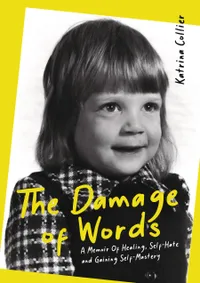
* The Damage of Words: A Memoir of Healing Self-Hate And Gaining Self-Mastery (£10.99, Synergy) by Katrina Collier is available now from Amazon.
You must confirm your public display name before commenting
Please logout and then login again, you will then be prompted to enter your display name.