As an Asian woman, I don't feel safe when I'm out running - and I'm not the only one
Minreet Kaur speaks to women impacted by the fallout of last year's anti-immigration protests and riots
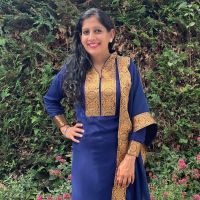

Running has always been precious 'me time'. As a carer, finding time for myself can be challenging, and this is my chance to switch off and recharge. Unfortunately, recent experiences have transformed what should be a fulfilling activity into an unpleasant ordeal.
Recently, in West London, someone shouted at me: “You can’t run, and you don’t belong here, Asian woman. Go back home.” I was proudly wearing my t-shirt that reads ‘Asian Women Run' - the name of the running club I founded to embody our strength and resilience.
I refuse to let fear dictate my routine, but I can't help feeling anxious before heading out for a run. My mind races with thoughts about where to go, making what should be an invigorating experience more stressful than anything else. I shouldn’t have to worry about driving and sitting in traffic to find a safe space to run. I deserve to run freely and confidently, and I won't let prejudice hold me back.

Minreet Kaur is a regular runner and the founder of Asian Women Run.
That’s why I started my own run club for Asian women to help more women like me feel safe. The group offers support to those who don't want to run alone, and now, many of the women in the group also don’t feel safe. I've changed my entire running plan, and with winter here, the days are darker. I probably won't be running much in the evenings at all, and if so, it will be at the track. Boring, yes, but it feels like the only safe option for the group.
Perhaps the saddest part is that it's not just us who feel this way - many other British Asian women are scared and anxious as well.
"When we are included and supported, the impact is transformative"
Khadija Patel, 39, received the Real Yellow Jersey award during the ten-year celebration of the Big Bike Revival this summer from Cycling UK. She leads a cycling group for Muslim women and girls in Bolton and advocates for their inclusion in the sport. She experienced a man shouting at her to "go back home" while out on a ride, and told me: "I've had eggs thrown and even been called a terrorist".
After insults, harassments, and unsafe situations, Khadija found it necessary to advise Muslim women not to cycle alone. As part of a new initiative, she organised a night cycling event as part of Cycling UK’s Glow Rides to advocate for safer streets - but expressed anxiety about potential negative comments in the run-up to the ride.
These incidents affect her and many women’s confidence, leading some to stop riding altogether, she says. Although Khadija appreciates the support from Cycling UK, she believes more needs to be done by authorities to address the racism and discrimination. For Khadija, continuing to show up and advocate for representation is crucial, as the experiences of Muslim women in cycling often go unseen.
“Many want to take part but don’t feel represented or safe," she tells me. "When we are included and supported, the impact is transformative. I’ve seen confidence grow, barriers fall, and women reclaim space through cycling, not just as a physical activity, but as a form of freedom, wellbeing, and belonging within their own communities.”
"People walking by typically don't intervene, so I continue with my run despite the abuse."
Ms Kaur*, 45, from North Yorkshire, has been running in her local area for eight years. "Over the past year, I have noticed an increase in racial abuse," she tells me. "One incident occurred around tea time, when there were many cars and people near a residential area. It was a normal day, and I was running after work, still in daylight. I was approached by white children who called me derogatory names and told me to go back home. Another incident involved a young white man who chased me, shouting offensive words.
“The messages driven by the media and politicians contribute to these attitudes. The abuse has become normalised and expected. We cross the road when we see boys or girls in a group, which I believe is very harmful, as we are living in fear of how we are seen by others.
"Unfortunately, I have come to expect verbal abuse from both white children and adults. People walking by typically don't intervene, so I continue with my run despite the abuse. After reporting the incidents to the police, I was asked for a statement two weeks later and questioned about what action I would like to take. This was very disappointing. There is a protocol for this sort of thing. I was a tick box. As long as they did the interview and shut the case, that was it. They came back with zero CCTV.”
After speaking to Ms Kaur, I reached out to the National Police Chiefs’ Council. A spokesperson gave me the following advice: “If someone’s behaviour makes you feel unsafe, you can report this to your local police force by calling 999 if the crime is ongoing, or 101 if it is something that has already happened. If you have suffered a hate crime, you can report it, either to the police, including through our True Vision web facility or to a trusted group like the Community Security Trust or Tell MAMA.”
"People's biases are becoming more overt."
Hema, 45, who lives at Stanmore, goes running weekly and leaves her house before her husband, as he runs faster. She planned to finish around the same time, but one day, he left the house a bit later, so she finished first.
While resting on a public bench on a main road, Hema noticed a woman staring at her, looking frightened. When Hema asked if she was okay, the woman approached and questioned her presence. Dressed in workout clothes and visibly exhausted, Hema explained she was resting after her run. The woman claimed Hema was on private land, but Hema pointed out that she was on a public street.
The woman insisted that Hema had to leave, but abruptly ended the conversation when she saw Hema's husband, who is of mixed race. The woman hurried across the road without waiting to see them together, but continued watching from a distance.
Feeling deflated afterwards, Hema realised the woman saw her as a threat. As a first-generation English citizen, Hema felt that people's biases are becoming more overt. Consequently, she changed her running route to avoid the area.
This Girl Can research tracker from November 2025 showed that 23% of Asian women worry about racism or religious discrimination in relation to doing physical activity (compared to 2% of white women). This rises to 32% for Asian Muslim women.
Kate Dale, Director of Sport England’s This Girl Can campaign, said: "Feeling unsafe or unwelcome outdoors is a major barrier to getting active that women can experience in different ways. For women from underrepresented communities, a combination of fear of harassment, cultural expectations and a sense of not belonging in public spaces can combine to prevent them from feeling able to participate in physical activity with confidence.”
With incidents such as these on the rise, community groups are changing how they operate. Selina, a participant in the fitness classes at the Pakistani Community Centre in Derby, has also faced racism while running outdoors and told me that women have had to alter their behaviour to fit in, making them feel unsafe and alienated.
These fitness classes, which take place inside the centre, have become a space where women feel they can be active in peace. “There is a need for a more compassionate and inclusive community in response to the issues of Islamophobia. As targets of such discrimination, these women do not want to be singled out. This is why they decided to create their own initiative, allowing them to engage in activities without the fear of encountering racist comments based on their appearance," she told me.

You must confirm your public display name before commenting
Please logout and then login again, you will then be prompted to enter your display name.