I've used the Lyma laser for 18 months - these are 7 things you should know before buying one
This skin-rejuvenating device comes with an army of A-list fans, clinic-level results, and a hefty price tag, so it pays to do your research


The LYMA laser is one of the most talked-about at-home skincare devices on the market, with claims to improve wrinkles, scarring, redness, sagging, and pigmentation in just 12 weeks without any pain, discomfort or downtime.
It’s beloved by facialists for pre-event skin prep, and frequently name-dropped by some pretty famous, fresh-looking faces. Sienna Miller, Nicole Scherzinger, Gillian Anderson, and Carey Mulligan are all devotees of the LYMA laser. But at nearly £2000, it’s a serious and sizeable investment.
I’ve been using it religiously for the past 18 months as part of my own skincare routine, so I’m using my first-hand experience, plus some expert insight, to help you learn more about the world’s first clinical-grade at-home laser device - and decide if it’s the right tool for you.
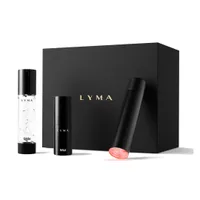
1. It’s not the same as LED
If you’re weighing up a new red light therapy device versus the LYMA laser, it’s not just the price that’s widely different. The technology and functionality are like chalk and cheese.
“As at-home light devices grow in popularity, the word ‘laser’ is being used more loosely,” admits Lucy Goff, Founder & CEO, LYMA. For Lucy, the difference is simple. “The LYMA laser is not an LED, and the most useful question you can ask of any light device is: what dose does it actually deliver?”
LED devices emit scattered light in multiple directions. This light acts on a more superficial level of the skin. Compare this with the LYMA laser, which uses a longer wavelength, travelling in a powerful single-direction beam to penetrate through multiple skin layers down to the deep plane tissue. Here, cells are effectively powered on, and switched into their rejuvenation phase to accelerate skin repair and stimulate collagen production. “No other at-home cold laser device delivers that power,” says Lucy.
In peer-reviewed research, the LYMA laser was found to influence 45 skin genes and raise SIRT1 - the longevity gene - almost six-fold. This was tested alongside an LED device, which was found to influence just one skin gene.

RRP: £1999
“You can glide it slowly over your face and neck in upward strokes, or hold it on one spot for three minutes if there's something specific you want to work on,” instructs Lucy. “Holding on the areas that bother you most, like crow's feet, a forehead line or a patch of pigmentation, three minutes in one spot works best. Most people end up doing both - a glide over everything as an overall treatment and then a hold where they want a bit more.”
2. It works on all skin tones
Traditional in-clinic lasers use heat to target pigmentation and trigger a healing response in the skin. This can actually cause damage, scarring and hyperpigmentation in darker skin tones, which are more likely to absorb that heat.
The LYMA laser, on the other hand, uses zero-damage cold laser light technology to reboot cell energy, which makes it safe and effective for all skin tones and skin types, even melanin-rich skin. It’s why you feel nothing when gliding it over your skin - there’s no heat, no pain, no discomfort at all.
3. You can use it over make-up
If you know how to use an LED mask, you’ll be aware it requires skin to be clean, dry, and free from product, which does restrict your treatment window somewhat. There have been times I’ve intended to sit under my Shark CryoGlow LED Mask before realising I’d already efficiently applied my nightly retinoid.
With the LYMA laser, the laser technology is so powerful, it penetrates every layer, whether that’s on clean skin, over make-up, SPF or tiers of skincare. The fact that you don’t need to pre-wash your face makes this extremely convenient. You could do it on your morning commute, over your lunch break, or after a gym sesh. As Lucy says, “It's one of my favourite things about it, because it means people actually use it.”
4. It takes time to see results
After dropping this much cash, you might be expecting miracles in the mirror. But exercise patience, my friend. I say this as someone who has very little - I want to wake up and look five years younger. Skin is an organ, and rejuvenation at a cellular level takes time to reveal itself at the surface. LYMA says it will take three months to see maximum results.
“What people tend to notice first is that their skin just looks better: brighter, fresher, more even,” says Lucy. “That often comes within the first month, and you may find that others comment on your skin before you immediately notice.”
Even after four months of pretty consistent use, my own results weren’t necessarily noticeable day-to-day. This is when I’d recommend comparing before and after pictures. It’s easier to play ‘spot the difference’ on side-by-side images, rather than studying yourself in the mirror every day.
5. It works anywhere on the body
Saggy knees? Crepey arms? Oven burn that’s left a scar? The LYMA laser can help with it all. The cordless handheld design can be used from top to toe, making it extremely versatile to treat hands, neck, and the rest of the body.
The LYMA laser is powerful enough to reach muscle, too, so it’s great for toning the neck. The key is to treat the nape, as well as the front. As Dr Graeme Glass, leading Craniofacial, Aesthetic and Plastic Surgeon. explains, “If we want to see profound transformation in skin quality across the neck and décolletage, we need to target muscle tone and reinforce skin’s underlying scaffolding, rather than merely the superficial skin on the surface. By strengthening the back of the neck at a deeper level, the full circumference of the neck is unilaterally lifted and smoothed.”
It is worth bearing in mind that if you’ve got larger areas you’d like to treat, like a crepey décolletage or slack upper arms, the LYMA PRO might be worth the extra investment. It has a larger 30cm² lens to treat more skin, more quickly, versus the 8cm² lens on the standard model. It’s more than double the price, though, so weigh up if that faster coverage will pay off for you.

RRP: £4995
For larger areas, the LYMA Laser PRO makes short work of skin rejuvenation across the body, with three 500mW near-infrared lasers compared to the standard model's one.
6. You need to be consistent
“The thing I'd really stress is consistency,” says Lucy. “Three minutes every day will do far more than an hour once a fortnight.” If you’re a bit of a device flitter, the LYMA laser might not be a wise investment, especially if it’s likely to end up in a gadget graveyard at the back of the drawer.
LYMA recommends using the device every single day for around three minutes on each treatment area for three months. After this point, you can follow a maintenance protocol of twice-weekly sessions.
I’m lucky I get to test lots of skincare devices, but that also means I’m always moving on to the next shiny new thing. I was tasked with reviewing the LYMA laser, so it was important to be consistent and dedicated. That’s part of my job, but of all the gadgets I’ve been fortunate enough to try, the LYMA’s the one I have kept up with.
I think that comes down to its convenience and portability. I like to do it when I’m watching some Netflix in bed, so my advice is to keep yours somewhere where you’re most likely to use it.
7. It plays nicely with tweakments
“It's a cold laser, so there's no heat and no damage, and it's fine to use over areas treated with Botox and fillers,” explains Lucy. It’s a great companion post-op to accelerate healing at home and improve the appearance of scar tissue. As Lucy says, “Plenty of surgeons and doctors use it themselves.”
