Prime Video’s Carrie is really dividing fans: The biggest differences between the book and the TV series explained
Book purists might be surprised to see their cult favourite updated for the social media era


When books are adapted into TV shows, there's no way of keeping everyone happy with the end result.
When a book like Stephen King's Carrie is given the 2026 treatment and becomes focussed on the perils of social media and the modern world, it can spark an all-out revolt.
What book purists might need to bear in mind with the new Prime Video Carrie series, is that Mike Flanagan, the mastermind behind it, has said he's "rebuilding" the story rather than "retelling" it.
Written over 50 years ago, the novel has already been retold in the form of the 1976 Oscar-nominated film, a Broadway musical, and two further movie outings that just covered the same material - it's been done a lot before, but this is the first time a series has been attempted, although one of the movie's did attempt to modernise it.
The updated rebuilding can be divisive, and fans really are splitting themselves into two camps over the new series that airs from September 7. But think of Carrie 2026 as the keeping the bones of the original novel while moving it into a new era. Life does constantly move forward after all.
Before you sit down to watch, here are the biggest differences between the book and the new show, so you can get a feel for what to expect before diving in to see how Summer H. Howell (Carrie) and Samantha Sloyan (Margaret) breathe new life into their roles.
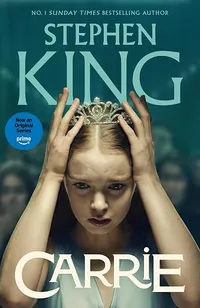
Right, so we already know the series is set in the present day. The original story played out in 1970s Maine, in the fictional town on Chamberlain.
We remain in Chamberlain for the series, but move into the 2020s and the psychological horrors that teens face because of social media, rather than from the internet-free bullying of the 70s.
Stephen King, serving as executive producer on the new outing, endorses the altered message of the book that a life spent online is damaging. Although ironically, he used his own social media to say Flanagan's Carrie is "brilliant," and insist, “What it has to say about social media is shocking and true."
Carrie's background has also been altered for 2026. 1970's Carrie has attended school and been subjected to psychological torment in the classroom from a young age, and has been brought up by her religious fanatic mother alone after her father died in a construction site accident before she was even born.
In the present day, Carrie has been home schooled by her mother, and her veteran father is still alive until she turns 16. Their religious zealoutry is swapped for being conspiracy theorists, and Carrie's parents kept their daughter home out of fear for what is happening in the world.
Carrie's father's death is the catalyst for her being forced to attend mainstream school for the first time. After he dies (still construction related in a tiny, faithful book moment,) Carrie and Margaret are found cowering in a cupboard in their home - nobody knows of their existence, as they've stayed hidden away, terrified of the outside.
This introduction to our protagonist paves the way for another key difference to be explored: In the novel, Carrie is seen as an abrasive and unlikeable character.
For the new adaptation, Summer H. Howell's Carrie is softer, moving, fragile and far more sympathetic. According to Flanagan, 2026 Carrie is "open to the world, earnest, curious and untraumatised", or in other words, the opposite of her novel counterpart.

With big changes to Carrie's character come equal differences to her mother, Margaret. Samantha Sloyan, a favourite of Mike Flanagan (she's collaborated with him in multiple projects including The Haunting of Hill House, The Midnight Club and The Fall of the House of Usher among others,) captures Margaret very differently to the book.
The book's Margaret doesn't have a huge amount of layers apart from being outright cruel. Sloyan's talent brings several new sides to Margaret, as we see that she loves and wants to protect her daughter, but her marriage and circumstances have hindered her ability to show the maternal side we can clearly see.
In the series, there's also the chance to explore Carrie's telekinesis in more detail. The book establishes that her powers are familial, and have been passed down through generations of her family.
In 2026, new characters with the same ability are introduced, opening viewers up to the opportunity that an entire, hidden telekinetic community could be hiding in plain sight.
Emaline has been created to illustrate this for the series - she appears to be a fellow high school outsider before revealing her own supernatural, astral-projecting abilities. The book only hints at others like Emaline being out there, in its closing moments.
Finally, the infamous, history-making prom scene, is a mixture of both staying faithful to the novel and bringing some new twists.
The catalyst for the prom incident, the shower scene, remains the same for the novel and series. A sheltered Carrie very publicly gets her first period in the gym shower and is relentlessly tormented for it. The more sinister difference in the modern day is that of course, people whip out their phones to record the incident.
The footage is later uploaded to a Gossip Girl-style account, polarising Carrie's ongoing shame and making it impossible to escape. This devastatingly reflects the casual cruelty that social media has normalised in teenagers in the world we live in.
For the prom itself, there's still pig’s blood, but Carrie doesn't revel quite so much in using her powers to cause destruction afterwards - there's no malevolent cackling as she's almost reluctant to play her trump card.
The key difference with this scene for the series, is that other girls with powers reveal themselves during the massacre. And while Carrie dies at the end of the novel, she survives in the series.
As with many multi-season arc shows in the current streaming era, her survival very much leaves the door open for a second outing.
Carrie airs on Prime Video from October 7.
